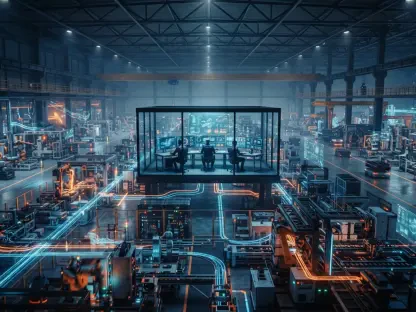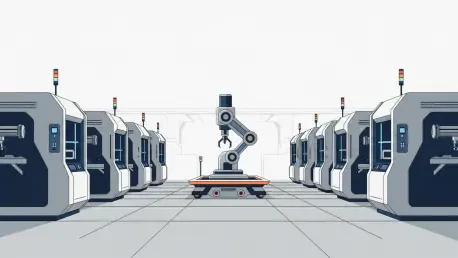

The glossy vision of a lights-out factory where humanoid robots navigate aisles with feline grace and pick parts with surgical precision often shatters the moment a real-world sensor gets covered in hydraulic fluid or a network lag causes a multi-million dollar collision. While the digital landscape has seen a meteoric rise in the capabilities of large language models and predictive algorithms, the translation of that intelligence into physical movement within industrial environments remains stubbornly difficult to achieve. Manufacturing leaders frequently find themselves caught between the immense pressure to innovate and the harsh reality that physical AI requires a level of environmental consistency that most existing facilities simply cannot provide. This creates a paradox where the tools meant to increase efficiency actually introduce new layers of complexity and maintenance that traditional plant managers are ill-equipped to handle. As the industry moves through the middle of the decade, the primary challenge has shifted from proving that AI can work in a controlled lab to ensuring it can survive the relentless, unscripted chaos of a busy production floor.
The Persistence of Pilot Purgatory: Why Trials Fail to Scale
Current research into industrial automation indicates that a staggering majority of manufacturers remain trapped in a phase often described as pilot purgatory, where high-potential projects fail to expand beyond a single test cell. Although approximately seventy percent of industry executives express a strong belief that AI will fundamentally reshape their assembly and logistics operations, only a meager nine percent have successfully transitioned these systems into a factory-wide or multi-site deployment. This massive disconnect is particularly visible in the deployment of sophisticated mobile robotics, such as quadruped platforms or bipedal humanoid workers, which are frequently showcased in promotional videos but rarely seen performing continuous, value-added tasks in high-volume settings. The reason for this stagnation is often the inability of these machines to adapt to the minor deviations that human workers handle instinctively. Without a scalable way to manage these edge cases, the systems remain relegated to small-scale experiments.
Furthermore, the difficulty of scaling stems from a fundamental divergence between the digital brain of the AI and its mechanical body, as software advancements continue to outpace the evolution of hardware durability. Writing code for a simulated environment allows for millions of iterations in seconds, yet the moment that intelligence is downloaded into a physical robot, it must contend with gravity, friction, and the inevitable wear and tear of mechanical components. Manufacturers are discovering that maintaining a fleet of autonomous mobile robots requires a specialized maintenance infrastructure that is far more demanding than the legacy equipment they were intended to replace. This realization has cooled the enthusiasm for rapid rollouts, as companies grapple with the fact that a digital solution is only as effective as the physical actuator it controls. Consequently, the focus has shifted toward refining the physical interfaces and environmental sensors that allow AI to perceive its surroundings with enough accuracy to avoid costly errors.
Technical Debt: Overcoming Infrastructure and Data Bottlenecks
One of the most significant structural barriers to the widespread adoption of physical AI is the staggering amount of technical debt found within older manufacturing facilities that rely on legacy hardware. Many plants currently utilize machines that were commissioned long before the era of interconnected sensors, meaning these tools lack the necessary communication protocols to feed data into a modern AI engine. The prospect of replacing an entire production line to accommodate new software is often financially ruinous and operationally prohibitive, leading to a stalemate between innovation teams and plant engineers. To circumvent this, successful organizations have begun to adopt a strategy of incremental modernization, where specialized edge computing modules are retrofitted onto older equipment to bridge the communication gap. This creates a repeatable pathway for data flow without requiring a total overhaul of the factory’s physical foundation. By focusing on modularity, these firms are transforming their legacy environments into smart hubs.
Beyond the physical constraints of the machinery, the lack of a unified data architecture prevents AI from functioning effectively across different departments or production stages. Physical AI relies on a continuous stream of high-quality, real-time data to make split-second decisions, yet most manufacturing data remains trapped in isolated silos that cannot be easily accessed or analyzed. This fragmentation leads to a situation where an AI system might optimize a single robotic arm while inadvertently creating a bottleneck further down the line because it lacks visibility into the broader process. Additionally, the industry is facing a severe talent shortage that bridges the gap between traditional mechanical engineering and modern data science, making it difficult to find professionals who can troubleshoot both a hydraulic leak and a neural network failure. Until companies invest in training a new generation of multidisciplinary workers and establishing a robust, integrated data backbone, the dream of a fully autonomous factory will remain hampered by these pervasive deficits.
Future Proofing: Financial Realities and Governance Frameworks
The financial reality of deploying physical AI is markedly different from the rapid returns seen in the software-as-a-service sector, as the heavy capital expenditure required for hardware results in much longer payback periods. Most manufacturing stakeholders now realize that they will likely not see a measurable return on their investment for at least three to five years, which requires a level of patience that is often at odds with quarterly earnings expectations. To mitigate this tension, forward-thinking leaders have shifted their evaluation metrics away from immediate profit margins and toward long-term operational improvements such as enhanced worker safety and reduced equipment downtime. By framing AI as a tool for resilience rather than just cost-cutting, these companies have managed to maintain executive support through the lean early years of implementation. This shift in perspective also helps justify the high costs of sensor integration and redundant safety systems that are necessary to ensure the AI operates reliably without constant supervision.
In the past, the absence of standardized governance and clear accountability structures created a culture of risk aversion that prevented many organizations from moving toward full autonomy. Decision-makers were hesitant to remove humans from the loop because there were no established protocols for managing the liability of an AI-driven mechanical failure or ensuring compliance with evolving safety regulations. To resolve these concerns, successful manufacturers implemented rigorous internal safety guardrails and transparency standards that documented every decision-making process of their autonomous systems. They established cross-functional committees that included legal, safety, and engineering experts to oversee the deployment of robotic fleets, ensuring that ethical considerations were integrated into the technical design. By prioritizing these governance structures early on, the industry began to foster the trust required to move from experimental trials to widespread operational reality. This disciplined approach provided a clear roadmap for scaling technology safely.