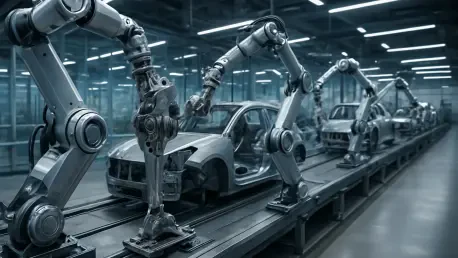

High manufacturing costs for actuators currently represent nearly half of the total production expense for a single humanoid robot. This financial barrier remains the primary obstacle to moving from bespoke laboratory prototypes toward the mass-market adoption seen in other high-tech sectors like consumer electronics or electric vehicles. As industry leaders look for ways to bridge this gap, the automotive sector has emerged as the most viable blueprint for industrial-scale robotics production. Modern cars are essentially sophisticated computers on wheels, utilizing complex electronic control units and powerful electric motors that bear a striking resemblance to the components required for bipedal machines. By leveraging established supply chains that have mastered the art of balancing precision with high-volume cost efficiency, robot manufacturers are finding that they do not need to reinvent the wheel. Instead, they are adapting existing motor architectures to meet the unique mobility needs of humanoids. This shift is driven by the realization that the demand for humanoid robots could soon rival the scale of the global car market. Consequently, the integration of automotive-grade manufacturing techniques is no longer just an option but a necessity for any company aiming to produce thousands of units per month. By utilizing automated assembly lines standard in car factories, the robotics industry is positioned to slash unit costs, making humanoid assistants a reality for logistics hubs worldwide.
Standardizing the Mechatronic Foundation
Repurposing Electric Vehicle Powertrains
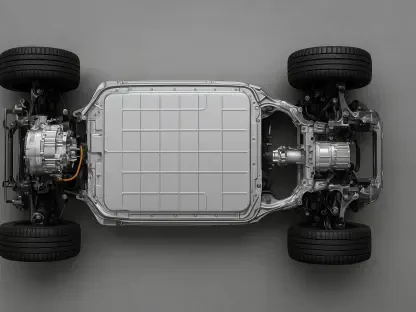
The parallels between electric vehicle (EV) drivetrains and humanoid joints are becoming increasingly clear as developers seek to optimize power density and thermal management. In an EV, the goal is to provide consistent torque across various speeds while maintaining energy efficiency, a requirement that mirrors the needs of a robot’s knee or hip joint. Current efforts are focused on adapting the permanent magnet synchronous motors found in modern steering systems for use in robotic actuators. These automotive components are already produced by the millions, ensuring that the raw materials and manufacturing processes are refined to the highest degree. By modifying the winding patterns of these motors, engineers can achieve the high burst torque necessary for dynamic humanoid movements without the astronomical costs associated with custom hardware. This cross-pollination of technology ensures that the reliability expected of a family sedan is built into the core of robotic systems. Furthermore, the shift toward 800-volt architectures in the automotive world provides a significant advantage for robotics in terms of power delivery and weight reduction. Thinner wires mean less bulk in the robot’s limbs, leading to improved range of motion and reduced inertia during rapid tasks. The standardized battery cell formats developed for EVs are also being repackaged into compact, high-density energy modules that fit within a robot’s torso. As these automotive-grade batteries become the building blocks for humanoid frames, the industry moves closer to a plug-and-play ecosystem.
Precision Engineering at Scale
One of the most significant challenges in humanoid development is the mass production of high-precision gearboxes, specifically strain wave drives, which provide the high torque required for fluid motion. Traditionally, these components have been the domain of specialized industrial robotics companies with limited production capacities and high price points. However, the automotive industry has long perfected the mass manufacture of complex transmissions using advanced metallurgy and automated CNC machining. By applying automotive die-casting and precision forging techniques to robotic gear components, manufacturers are now achieving tolerances previously thought impossible at high volumes. This transition allows for the creation of lightweight, durable gearsets that can withstand the repetitive stresses of bipedal walking. The application of high-throughput heat treatment and surface coating processes, standard in car engine manufacturing, further ensures that these robotic joints have a service life measured in years. Moreover, the implementation of modular design principles from the car industry is streamlining the assembly of these complex mechatronic systems. Automotive engineers have perfected the “sub-assembly” approach, where various parts of a vehicle are built separately and then integrated on a main line. This methodology is now being applied to humanoid robots, where an entire leg assembly can be tested as a single unit before being attached to the chassis. This approach drastically reduces the time spent on the final assembly line and minimizes the risk of defects, resulting in a dramatic increase in yield.
Leveraging Advanced Sensor Fusion and AI Integration
Adapting ADAS for Robotic Navigation
The development of Advanced Driver Assistance Systems (ADAS) has created a robust toolkit for humanoid robot navigation and environmental awareness. Technologies such as high-resolution LiDAR and multi-spectral camera arrays, which were once prohibitively expensive, have seen their prices plummet due to their inclusion in millions of passenger vehicles. Humanoid robots utilize these identical sensor suites to map their surroundings, recognize objects, and navigate complex human environments safely. Because these sensors are designed to withstand the harsh vibrations and temperature fluctuations of the open road, they provide a level of durability that is essential for robots working in industrial settings. The integration of automotive-grade silicon, specifically high-performance AI chips designed for real-time sensor fusion in autonomous cars, allows humanoid robots to process vast amounts of visual data with minimal latency, enabling them to react to dynamic obstacles in milliseconds. This synergy extends beyond hardware to the software stacks used for object detection. The millions of miles of data collected by autonomous vehicle fleets have contributed to sophisticated machine learning models that can be retrained for robotic tasks. For instance, the same algorithms that allow a car to distinguish a pedestrian are now being used to help robots differentiate between tools on a factory floor. Furthermore, the safety standards required for automotive software are being adopted to ensure that humanoids can operate alongside people without the risk of failure.
Scalable Supply Chains and Material Innovation
The ability to scale humanoid production depended heavily on a global supply chain capable of delivering specialized materials and components with consistent quality. The automotive industry’s vast network of Tier 1 and Tier 2 suppliers provided a ready-made infrastructure for sourcing everything from high-strength aluminum alloys to specialized lubricants. As robot manufacturers increased their order volumes, they gained the same bargaining power as major car brands, leading to further price reductions. This relationship also sparked innovation in materials science, with automotive suppliers developing new carbon-fiber-reinforced plastics specifically for the humanoid market. These materials offered the necessary strength-to-weight ratio to improve battery life while being compatible with high-speed injection molding processes. The result was a robotic frame that was both incredibly strong and cost-effective to produce. Beyond raw materials, the logistics expertise of the automotive sector proved invaluable for the global deployment of humanoid fleets. The systems for managing thousands of unique parts across multiple continents, ensuring “just-in-time” delivery to the assembly line, were directly applied to robot manufacturing facilities. Moving forward, stakeholders should focus on formalizing cross-industry training programs to bridge the gap between automotive assembly and robotic calibration. Organizations that prioritized the integration of modular service centers, modeled after the automotive dealership network, secured a significant competitive advantage. This alignment ensured the transition was sustainable and robust.