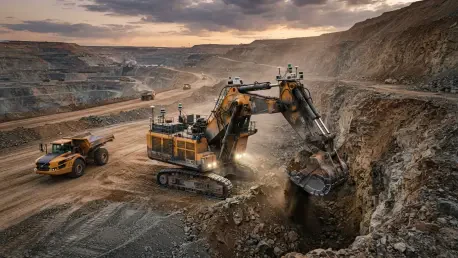

Deploying units in real-world scenarios creates a continuous feedback loop where every transfer operation provides fresh data to improve the machine’s ability to generalize. This fundamental principle sits at the heart of Zichuang Intelligent Machinery’s latest strategic expansion, which was recently fortified by the successful completion of an Angel+ round of financing. This funding round, totaling tens of millions of yuan, was led by Western Capital with significant participation from existing stakeholders like Yida Capital. The injection of capital is specifically designated for the refinement of large-scale artificial intelligence models and the massive expansion of industry-specific datasets necessary for high-level autonomy. By focusing on the concept of embodied intelligence—the seamless integration of advanced AI algorithms with physical robotic structures—the firm aims to move beyond experimental demonstrations into the widespread commercialization of unmanned loaders and excavators. This shift marks a pivotal moment for industrial automation.
Architecture: Bridging Cognitive Logic and Physical Performance
To achieve true autonomy in heavy machinery, a sophisticated dual-layer architecture is required to mimic the complex cognitive processes of a human operator. The first component of this framework, referred to as the Brain, functions as a high-level task planner that utilizes dedicated large models tailored specifically for construction and material handling scenarios. This cognitive layer allows the machine to interpret complex verbal or digital commands and translate them into actionable strategic plans without needing constant manual intervention from a remote workstation. By processing vast amounts of environmental data, the Brain can assess the layout of a storage yard or a mining site, identify obstacles, and calculate the most efficient path for material transport. This level of environmental perception represents a significant departure from older automation systems that relied on rigid, pre-programmed paths. This approach ensures that machines adapt to site conditions in real-time.
While the Brain handles the strategic overview, the second critical component, known as the Cerebellum, manages the nuanced physical interactions required for precision labor. This system is responsible for direct motion control, translating the high-level decisions into the specific hydraulic and mechanical adjustments needed to shovel, lift, and unload heavy materials. A cornerstone of this physical mastery is the integration of a specialized world model, which allows the AI to predict how different materials like sand, gravel, or wet soil will react when struck by a loader bucket. By anticipating physical resistance and shifting weight, the Cerebellum ensures that the machine maintains stability and fluidity, preventing the jerky or inefficient movements common in less advanced robotic systems. This synergy between mental planning and physical execution allows heavy equipment to perform with a level of finesse that was previously reserved for the most experienced human operators.
Development: Synergy Between Proprietary Data and Regulatory Rules
The long-term viability of autonomous machinery is fundamentally dependent on the breadth and depth of the data used to train its underlying models. Zichuang has addressed this challenge by establishing a proprietary database populated by units already operational in high-demand environments such as thermal power plants and mineral yards. Every interaction between the loader and its surroundings serves as a working condition sample, allowing the AI to learn from a diverse array of variables including material density, moisture content, and varying weather conditions. This continuous stream of information enables the model to iterate rapidly, moving beyond individual technical breakthroughs toward a more generalized capability. As the machine encounters more edge cases—such as operating in extremely narrow spatial constraints or handling rare material textures—it becomes more proficient at making accurate predictions in entirely new, unseen environments. This transition facilitates a truly commercialized product ready for the market.
Supporting these private sector innovations is a robust framework of national policy designed to accelerate the digital transformation of the industrial landscape. Recent guidelines released by the Ministry of Transport regarding artificial intelligence application scenarios in the water transport sector have provided a clear roadmap for companies like Zichuang. These directives specifically advocate for the deployment of 5G connectivity, Beidou satellite navigation, and advanced AI to facilitate the creation of unmanned terminals and automated logistics hubs. By focusing on the automation of high-risk and high-fatigue roles, such as horizontal transportation in busy ports and the berthing process for large vessels, the government is fostering an environment where technological adoption is both incentivized and regulated. Zichuang’s strategic focus on the water transport and construction sectors aligns perfectly with these national goals, positioning the company as a primary architect in the modernization of domestic infrastructure.
Implementation: Strategic Integration of Autonomous Systems
The implementation of these systems across the Yangtze River Delta provided substantial evidence of their economic and operational viability. In the busy inland ports of Jiangsu, unmanned loaders successfully managed high-load assignments, effectively reducing the safety hazards previously faced by manual laborers in high-traffic zones. Furthermore, the deployment in material mixing stations demonstrated that autonomous units could navigate confined spaces with a level of precision that surpassed human capability during extended shifts. Investors, particularly Western Capital, recognized that these efficiencies translated into a significant competitive advantage for site operators by enabling continuous, 24/7 productivity. By eliminating the variance in performance caused by human exhaustion, the machines offered a stabilized output rate that fundamentally improved the financial outlook for industrial logistics. This success established a new benchmark for “hard technology” investments in the region’s infrastructure.
Following these achievements, industry stakeholders determined that the broad adoption of autonomous machinery necessitated the establishment of unified data sharing protocols. Experts concluded that the integration of multi-brand fleets would only be possible if equipment manufacturers agreed on common communication standards for real-time site coordination. Additionally, the development of remote supervision frameworks allowed for a transition where human workers were upskilled into strategic monitoring roles rather than manual operation. By prioritizing these steps, the sector successfully began the process of scaling embodied intelligence from regional hubs to a nationwide logistical standard. These efforts proved that the digital transformation of heavy industry was a matter of strategic coordination as much as technical innovation. Ultimately, the transition to unmanned systems provided a blueprint for creating a more resilient, efficient, and human-safe industrial landscape for the coming decades.