
Kwame Zaire stands at the forefront of a seismic shift in how we conceive of industrial production. As an expert in electronics and manufacturing management, he has spent years navigating the complex intersection of high-output engineering and the increasingly urgent demands of environmental stewardship. In 2026, the conversation has moved far beyond the theoretical; Zaire speaks from a reality where electrification is the standard and digitalization is the nervous system of the factory floor. His perspective is rooted in the practicalities of predictive maintenance and the hard math of resource intensity, offering a roadmap for companies trying to survive a decade where competitiveness is defined by how little a plant can waste while maximizing what it creates.
Our conversation dives deep into the transformation of the global automotive sector, specifically the massive surge in electric vehicle production and the ripple effects this has on battery manufacturing and regional infrastructure. We explore the evolving role of capital planning, where energy draw and renewable integration have become as critical as labor costs or raw material supply. Zaire also breaks down the transition of smart manufacturing from pilot projects into full-scale operations, highlighting how agentic AI and real-time sensors are now essential tools for managing water and power. Finally, we address the looming shadow of water stress in key industrial hubs and why sustainability is finally being treated as a high-stakes engineering problem rather than a secondary corporate goal.
With global electric vehicle sales having officially crossed 21 million units annually—taking a one-in-four share of the market—how are you seeing manufacturers adapt their physical infrastructure to keep pace with this 20 percent year-on-year growth?
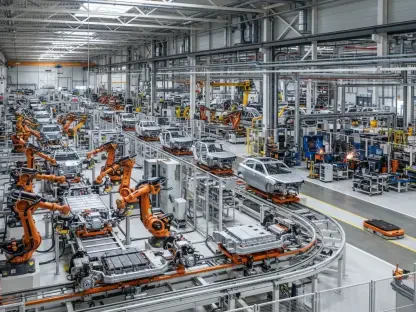
The sheer velocity of this transition is staggering when you see it from the factory floor. We aren’t just talking about changing the components on an assembly line; we are talking about a total reimagining of the manufacturing footprint to handle a 20 percent annual jump in volume. In India alone, we saw EV sales touch a record 2.3 million units, which is a massive 75 percent increase from just a year ago. This forces a parallel build-out in battery manufacturing and charging infrastructure that is incredibly resource-intensive. When you walk through these new plants, you can feel the heat of the battery lines and the massive cooling requirements they demand. The competitive edge is no longer just how fast you can build, but how you scale that production while managing the energy and water risks that come with such a heavy industrial load. We are seeing a move toward factories that are designed from the ground up to be lean, not just in labor, but in their metabolic consumption of resources.
Energy efficiency has moved from a bullet point in a sustainability report to a core component of capital planning. With battery storage capacity hitting 108 gigawatts and renewables making up 17 percent of global electricity, how are plant managers restructuring their power draw?
Plant managers are now acting like energy traders and grid stabilizers because the numbers demand it. When global battery storage grows by 40 percent in a single year to reach that 108-gigawatt milestone, it changes the fundamental math of a factory’s capital planning. We are seeing record-breaking renewable additions of 800 gigawatts worldwide, and that puts immense pressure on a facility to align its peak production hours with the availability of solar and wind energy. In the past, you just plugged into the grid and paid the bill, but in 2026, the goal is to see how much of that draw you can meet without adding any fossil fuel demand. It’s a sensory shift; you see the massive battery arrays outside the facility and the intelligent switching systems that manage high-draw machinery. This is about mitigating operational risk—if you can’t manage your energy draw efficiently, you are essentially leaving your profit margins at the mercy of a volatile energy market.
We’ve seen a significant shift in digitalization, with a recent survey of 600 executives showing that 80 percent are putting a fifth of their budgets into smart manufacturing. What does it look like when a plant moves from isolated AI pilots to running agentic AI across full production lines?
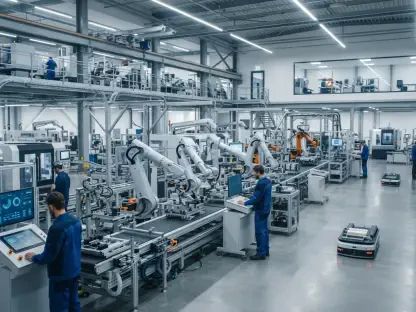
The era of the “pilot project” is dead, and it has been replaced by a deep, systemic integration of data. When 80 percent of executives are committing 20 percent of their improvement budgets to smart tech, you stop seeing gadgets and start seeing a fully sentient production line. This transition to agentic AI means the machines are no longer just following a script; they are monitoring themselves via sensors and cloud computing to identify abnormal energy spikes or water leaks before they happen. You can hear the difference in a plant that uses real-time monitoring—there’s less downtime, fewer emergency alarms, and a rhythmic consistency that comes from predictive maintenance. It’s no longer just about productivity in the traditional sense; it’s about moving from simply measuring what you consume to actively managing it. If a pump starts to lose efficiency, the system catches it, flags the maintenance need, and prevents a cascade of resource waste that would have previously gone unnoticed for weeks.
Water stress is projected to expose $70 trillion of global GDP to high risk by 2050, particularly in regions like India, Mexico, and Egypt. How is this turning water availability from a local operational concern into a central pillar of long-term planning?
For any manufacturer operating in a high-stress region like India, water is now a more significant strategic threat than almost any other supply chain disruption. When you realize that nearly a third of the world’s GDP is at risk, you stop looking at water as a utility and start looking at it as a finite, precious asset. We are seeing a surge in Zero Liquid Discharge systems, which used to be rare, specialist investments but are now becoming standard requirements as water tables continue to fall. The engineering focus has shifted toward reuse and recycling loops that are incredibly complex; you are essentially building a water treatment plant inside your manufacturing facility. This is a survival move—if you don’t have a plan for water recovery, you won’t get the permits to expand or even operate in these high-growth corridors. It’s a stark reality where the absence of water can shut down a multi-billion dollar EV battery line just as fast as a power outage could.
Sustainability is increasingly being treated as an engineering problem with a measurable return on investment. How is this changing the way procurement teams handle tenders for intelligent pumping and water-treatment systems?
Procurement has become a lot more sophisticated because they are now asking for sustainability as a baseline engineering specification rather than a “nice-to-have” upgrade. When a tender comes through today for high-efficiency pumping technology, the team isn’t just looking at the initial cost; they are looking at the energy draw per unit of output. We are seeing energy efficiency and water recovery written into the base specifications of every major project across the auto component and general industrial sectors. It’s a shift toward measuring resource intensity—how many kilowatts or gallons are used per vehicle or per battery pack produced. This makes efficiency a measurable part of operational performance, just like uptime or defect rates. The equipment itself is smarter now, with digital monitoring tools that flag maintenance needs before a failure occurs, ensuring that the “green” metrics are also the most profitable metrics.
Collaboration seems to be a recurring theme in reaching validated climate targets and net-zero pathways. How do you see the relationship between manufacturers, regulators, and the local community evolving over the next few years?
The walls of the factory are effectively coming down, not physically, but in terms of resource transparency and collaboration. No company can hit net-zero in a vacuum; you have to work with the technology providers, the regulators, and the communities that share your water basin and power grid. We are seeing more manufacturers participate in collective water management and grid-balancing initiatives because their own stability depends on the health of the local ecosystem. By 2028 and beyond, the most successful plants will be those that act as partners in their regions, helping to stabilize the infrastructure they rely on. This collaboration is driven by a shared necessity—when the water table falls, it falls for everyone, and when the grid is stressed, everyone pays the price. The move toward validated climate targets is becoming a collective effort where data sharing and joint infrastructure investments are the only way to ensure long-term viability.
What is your forecast for the manufacturing sector as it balances the need for increased EV production with the tightening constraints of energy and water?
My forecast is that resource efficiency will become the primary competitive differentiator between those who lead the market and those who are forced out of it. We will see a massive divide between the plants that treat energy and water as design parameters from day one and those that try to retroactively fix their consumption patterns. As we head toward 2030, the winners will be the organizations that have fully integrated digital tools and high-efficiency treatment technology into their daily rhythm. The plants of the future are not just places where things are made; they are highly efficient, data-driven ecosystems that produce more value with a fraction of the environmental footprint we saw even a decade ago. If you aren’t planning for resource scarcity today, you are essentially planning for your own obsolescence, because the era of cheap, infinite resources is officially over.