
Kenya’s reliance on fertilizer from countries like Russia and China makes its food supply vulnerable to geopolitical tensions, driving the push for domestic manufacturing. To counter this instability, the nation has unveiled the Green Hydrogen Innovation Centre at Nyeri Hill Farm, a facility that merges renewable energy with industrial production. This site represents a significant departure from traditional aid-dependent models, focusing instead on building local capacity to produce essential chemicals. Managed by the Catholic Archdiocese of Nyeri and supported by the United Nations Industrial Development Organization, the project is designed to tackle the high cost of farming inputs while simultaneously providing critical medical resources. By using decentralized solar power, the center transforms a standard agricultural plot into a high-tech hub for green hydrogen. This shift toward self-sufficiency is a response to the volatile prices seen in the global market, ensuring that the country can maintain food security without being at the mercy of international trade fluctuations or distant political conflicts.
Engineering a Dual-Purpose Energy System
Technical Processes and Production Mechanics
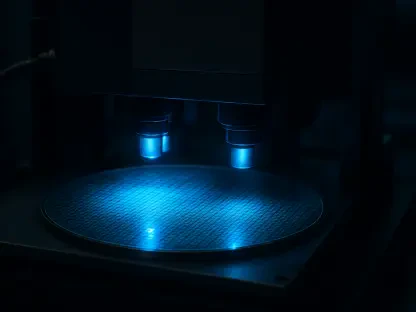
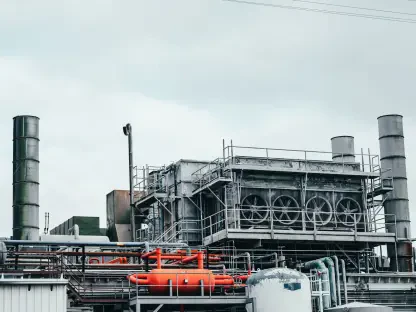
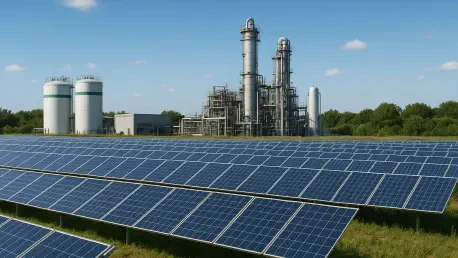
At the heart of the 3,000-acre Nyeri Hill Farm lies a sophisticated solar photovoltaic array that serves as the primary energy source for a high-efficiency electrolyzer. This technology facilitates the electrolysis of water, a process that splits water molecules into their fundamental components: hydrogen and oxygen. The captured hydrogen is then channeled into a synthesis unit where it reacts with nitrogen harvested directly from the surrounding atmosphere. This chemical reaction produces green ammonia, which acts as the foundational feedstock for both liquid and solid fertilizers used across the farm’s vast coffee plantations. Unlike conventional ammonia production, which relies heavily on natural gas and emits substantial carbon dioxide, this method is entirely carbon-neutral. It demonstrates how heavy industrial processes can be downscaled to a localized level, allowing individual agricultural enterprises to generate their own inputs using only sunlight and water, thus significantly reducing the carbon footprint of the final crop.
While hydrogen is the focus for fertilizer production, the electrolysis process generates substantial volumes of oxygen as a byproduct, which the facility purifies to medical-grade standards. The design capacity is impressive, aiming to produce approximately 56.4 million liters of medical oxygen alongside 56.8 tonnes of green ammonia annually. To manage the inherent variability of solar energy, the installation incorporates an advanced infrastructure of battery storage and specialized hydrogen tanks. These storage solutions allow the facility to maintain a consistent output even during periods of low solar irradiation or at night, ensuring that industrial and medical needs are met without interruption. This technical resilience is crucial for establishing green hydrogen as a reliable pillar of the local economy. By integrating energy storage with chemical manufacturing, the project bypasses the limitations of the traditional power grid, creating a self-sustaining ecosystem that supports both industrial growth and vital healthcare services in the Nyeri region.
Strategic Partnerships and Industrial Design
The implementation of the Green Hydrogen Innovation Centre is supported by a robust financial and collaborative framework that brings together international expertise and local leadership. Primary funding for the project originated from the United Nations Industrial Development Organization’s Accelerate-to-Demonstrate Facility, which is backed by the United Kingdom government. This is further bolstered by co-financing from the Archdiocese of Cologne’s Starkmacher Impact Revolving Fund, illustrating the role of impact investment in advancing green technology. The technical execution involves a diverse consortium of partners, including Indonesia’s PT MBR Global and the German electrolyzer specialist Enapter, alongside firms like Nium and Soventix. This multifaceted partnership model is essential for managing the high upfront capital costs and technical risks associated with pioneering green hydrogen projects in developing markets. By pooling resources and expertise, the coalition has created a sustainable financial structure that allows the Nyeri facility to serve as a beacon for future renewable industrial investments in Africa.
Beyond the financial backing, the facility’s industrial design is tailored to the specific geographical and operational needs of a 3,000-acre agricultural estate. The integration of advanced battery storage systems alongside dedicated hydrogen storage units ensures that the plant can operate with a high degree of autonomy. This setup is specifically designed to mitigate the intermittent nature of solar energy, which can fluctuate based on seasonal weather patterns in the Nyeri region. By maintaining a buffer of stored energy and hydrogen, the center guarantees a steady supply of ammonia for the farm and oxygen for the local medical facilities. This technical resilience transforms the site into a reliable utility, demonstrating that decentralized green hydrogen is not just a theoretical concept but a viable industrial solution. The site’s architecture serves as a blueprint for other rural enterprises looking to decouple their production cycles from the limitations of the national power grid and the volatility of the global energy market.
Securing the Agricultural Supply Chain
Economic Independence and Local Production
The strategic importance of this facility becomes clear when examining Kenya’s current agricultural vulnerabilities and its heavy dependence on foreign inputs. Each year, the country consumes roughly 500,000 tonnes of fertilizer, the vast majority of which is imported from suppliers in Saudi Arabia, Russia, and China. This reliance has historically left local farmers exposed to the sudden price spikes and logistics bottlenecks that characterize the global commodity trade. In the 2026 fiscal cycle, the financial burden of these imports remains a major concern for the government, as high prices for nitrogenous fertilizers directly translate into higher food costs for the population. By establishing a local production base at Nyeri Hill Farm, the initiative provides a practical roadmap for reducing the landed cost of essential nutrients. It bypasses the complex network of international shipping, customs, and middleman markups that often double the price of fertilizer by the time it reaches the farm gate in rural Kenya.
This push for localized manufacturing is not an isolated effort but a core component of the National Agricultural Soil Management Policy. This policy prioritizes the development of domestic blending and production capabilities to ensure that soil health is maintained without bankrupting the farming community. Although the current output of the Nyeri facility represents only a fraction of the national requirement, its value as a proof of concept cannot be overstated. It demonstrates that decentralized, renewable-powered systems can effectively replace centralized, fossil-fuel-dependent supply chains. As the government continues to allocate significant portions of the national budget toward agricultural subsidies, models like this offer a way to make those subsidies more effective by lowering the baseline cost of production. If scaled, these decentralized hubs could transform the agricultural landscape, providing a buffer against international shocks and empowering local communities to take control of their own food systems through technological innovation.
Healthcare Symbiosis and Resource Optimization
The integration of medical oxygen production within an agricultural facility exemplifies the concept of industrial symbiosis, where the strengths of different sectors are combined to maximize efficiency. In rural Kenya, the cost of medical oxygen has historically been a significant burden for local clinics and hospitals, with transportation and supply logistics accounting for a large portion of the expense. The Green Hydrogen Innovation Centre addresses this by providing a consistent and localized source of high-purity oxygen, specifically aimed at supporting the Consolata Hospital Mathari. This direct link between energy production and healthcare delivery ensures that the benefits of the solar investment are felt throughout the entire community. By eliminating the need for long-distance transport of oxygen cylinders, the project not only reduces operational costs for the hospital but also improves the speed and reliability of emergency medical care. This model demonstrates how green infrastructure can be multi-purposed to solve complex social and logistical challenges simultaneously.
The initial success of the Green Hydrogen Innovation Centre depended on the careful management of local resources and the cultivation of a specialized workforce. Because electrolysis is a water-intensive process, the facility utilized strict sourcing and recycling protocols to avoid competing with the irrigation needs of the coffee farm or the domestic requirements of nearby communities. Beyond the physical resources, the project prioritized the training of local engineers and technicians in the complexities of chemical synthesis and renewable energy management. Moving forward, the focus must shift toward creating a standardized framework for these decentralized facilities to be implemented in other counties. Policy leaders should consider tax incentives for renewable industrial equipment and the establishment of technical vocational centers focused on green hydrogen. This ensured that the expertise gained at Nyeri Hill Farm could be disseminated across the region, allowing Kenya to lead the transition toward a carbon-neutral industrial base that empowers both farmers and patients through innovation.