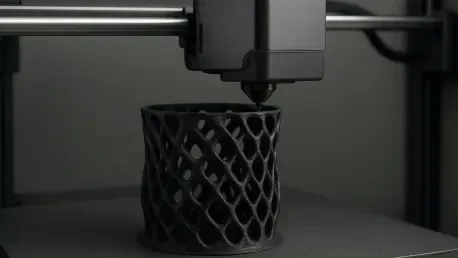

Digitizing the tracking of chemical and physical histories for metal powders eliminates the dangerous black box of material contamination in additive processes. This fundamental shift marks the transition from additive manufacturing as a mere fabrication tool to a sophisticated data-driven ecosystem where information is as valuable as the metal itself. In industries like aerospace, defense, and medicine, the physical existence of a part is insufficient; it must be accompanied by a comprehensive digital pedigree that validates its integrity. The digital thread serves as this vital connection, weaving together design intent, raw material sourcing, and real-time production metrics into a unified record. Without this transparency, manufacturers face immense risks ranging from catastrophic mechanical failure to regulatory non-compliance. As the industry scales, the focus has pivoted toward ensuring that every layer of a printed component is backed by actionable data, thereby transforming 3D printing into a robust, industrial-grade solution.
Building a Foundation of Traceability and Expertise
Material Management and Powder Genealogy
Metal powders in 2026 are no longer treated as simple commodities but as complex assets with intricate lifecycles involving frequent reuse and blending. When a manufacturer sifts and reuses titanium or nickel alloys, the chemical properties can shift subtly over time, potentially compromising the structural integrity of the final product. The digital thread addresses this by establishing a meticulous powder genealogy that tracks every batch from the moment it leaves the supplier to its final deposition in a build chamber. By integrating material-handling software directly with the 3D printer’s internal sensors, companies can monitor how specific environmental factors influence powder quality during production. This level of granularity ensures that any deviation in the material’s performance is immediately flagged, preventing the use of contaminated or degraded feedstocks that could lead to hidden defects in critical aerospace components or medical implants.
Beyond immediate quality control, this digitized traceability provides an essential safety net for long-term operational liability and investigative processes. In the event of a field failure, engineers can retrospectively analyze the digital thread to determine if a specific material batch was the root cause, rather than guessing based on incomplete paper logs. This move away from manual record-keeping eliminates human error and ensures that data remains tamper-proof and accessible throughout the multi-year lifecycle of a component. Furthermore, the ability to blend virgin and recycled materials with high precision allows for more sustainable manufacturing practices without sacrificing the rigorous standards required by regulatory bodies. By maintaining a continuous loop of data that links material history to machine parameters, manufacturers can confidently expand their use of additive processes for mission-critical parts while maintaining oversight.
Knowledge Retention and Human Capital
A significant hurdle in the maturation of additive manufacturing has been the over-reliance on tribal knowledge, where critical production insights are siloed within the minds of individual technicians. For years, the specific nuances of machine calibration, such as how to adjust laser power for a specific geometry or how to manage heat dissipation in complex lattices, were often undocumented. As the workforce remains mobile, the departure of a single key engineer could result in a devastating loss of institutional expertise, forcing companies to relearn complex processes through expensive trial and error. The digital thread mitigates this risk by serving as a centralized repository for human expertise, capturing every manual intervention and strategic decision made during the production workflow. This systematic approach ensures that the collective intelligence of an organization is preserved, allowing for more consistent output across different shifts and global facilities.
Implementing a centralized software platform to manage these workflows also streamlines the training of new personnel, as the digital thread provides a clear roadmap of established best practices. Instead of navigating fragmented spreadsheets and disconnected databases, operators can access real-time guidance and historical data that informs their decision-making process. This transformation from artisan-led production to a standardized, software-augmented environment is crucial for scaling 3D printing from local prototyping labs to massive industrial factories. Moreover, the integration of these digital records facilitates compliance with international manufacturing standards, such as AS9100 or ISO 13485, by automatically generating the necessary documentation for audits. By treating human input as a structured data point within the digital thread, organizations protect their intellectual capital and ensure that high-quality production standards are maintained regardless of staff turnover.
Revolutionizing the Global Supply Chain through Data
Point-of-Need Production and Efficiency
The shift toward a digital supply chain is fundamentally changing how industries manage logistics, moving away from centralized warehousing toward point-of-need production. Historically, maintaining a massive inventory of spare parts for aging aircraft or specialized medical equipment was both costly and inefficient, often leading to long lead times and logistical bottlenecks. By utilizing the digital thread, companies can now store their intellectual property in secure, encrypted digital vaults and transmit files to localized 3D printing hubs only when a part is required. This decentralized approach allows for the rapid fabrication of components in remote locations, such as military bases or offshore oil rigs, effectively eliminating the need for international shipping of physical goods. This strategy not only reduces the carbon footprint associated with global transport but also ensures that critical repairs can be completed in hours rather than weeks, significantly enhancing operational readiness.
Efficiency gains within this digital framework are most visible in the reduction of administrative overhead and the acceleration of the certification process. In the aerospace sector, for instance, major manufacturers have demonstrated that digitizing the creation of technical data packages can save hundreds of labor hours per component. Previously, engineers spent significant time manually compiling disparate data points from machine logs, inspection reports, and material certifications to prove a part’s airworthiness. The digital thread automates this synthesis, providing a ready-to-use certification file as soon as the print job is finished. This dramatic reduction in documentation time allows engineers to focus on design innovation rather than clerical tasks, while also providing a higher degree of accuracy in the final reports. As this technology continues to evolve, the ability to rapidly certify and deploy 3D-printed parts will be the primary differentiator for companies seeking to lead.
AI Integration and Dark Data Management
The next evolutionary step for the digital thread involves the integration of artificial intelligence to capture and organize what is known as dark data. In many manufacturing environments, critical project information is frequently scattered across unstructured formats, including internal chat logs, emails, and handwritten notes that are often ignored by traditional management systems. Modern AI algorithms are now being deployed to harvest this hidden intelligence, automatically classifying and linking it to the relevant part records within the digital thread. This process creates a more holistic narrative of a component’s development, ensuring that a subtle observation made by a design engineer during a brainstorming session is not lost but is instead integrated into the final quality assessment. By converting these informal communications into searchable, actionable data, AI-enhanced digital threads provide context that was previously unachievable.
The convergence of data science and additive manufacturing redefined the fundamental concept of a physical component in the industrial landscape. A part was no longer just a physical object but a dual entity, with its digital twin serving as an indispensable counterpart containing its entire life history. This digital twin, maintained via the digital thread, allowed for predictive maintenance and real-time performance monitoring long after installation. Moving forward, organizations must prioritize the integration of machine learning to predict potential build failures before they occur, based on historical patterns stored in the thread. This proactive approach to quality assurance solidified 3D printing’s role as a cornerstone of the global economy, providing the transparency required for intelligent production. Future strategies should focus on establishing interoperable data standards across different machine brands to ensure the digital thread remains unbroken, regardless of the hardware used.