
The discovery of a microscopic hairline fracture on a turbine blade costing several hundred thousand dollars frequently leads to the immediate and costly decommissioning of a multi-million dollar asset. Traditionally, the aerospace and defense sectors have operated under a brutal economic reality where even minor wear results in high-value components being sent to the scrap heap. This cycle creates a dependency on long manufacturing lead times and massive inventory investments to avoid grounding critical operations.
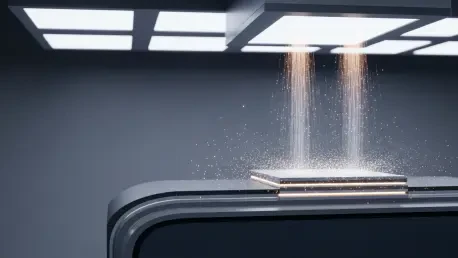
Cold Spray Additive Manufacturing (CSAM) is now emerging as a powerful alternative to this wasteful “discard and replace” culture. This technique utilizes supersonic gas flows to accelerate metal powders toward a substrate, creating a dense, metallurgical bond upon impact. Unlike traditional welding, the process remains well below the melting point of the materials, which prevents the thermal stress and distortion that often ruin the structural integrity of specialized alloys.
The High Cost of Replacement: The Shift Toward Restoration
In high-stakes industrial environments, the decision to replace a part is rarely just about the unit price; it is about the operational downtime that ripples through the entire supply chain. When a critical engine component fails, the wait for a replacement can stretch into months, stalling projects and compromising readiness. This logistical bottleneck has forced a strategic pivot toward advanced restoration technologies that can return equipment to service in a fraction of the usual time.
However, moving toward a restoration-first mindset requires more than just the ability to apply new metal to an old surface. It demands a fundamental change in how engineers view the lifecycle of a component. By treating hardware as a platform that can be perpetually renewed rather than a consumable item, industries can significantly reduce their environmental footprint and stabilize their maintenance budgets against the rising costs of raw materials.
Bridging the Gap: Experimental Research and Industrial Survival
Despite the clear benefits, the transition from experimental laboratory success to frontline industrial survival is fraught with skepticism. In sectors like energy production and national defense, the primary barrier to adoption is not a lack of sophisticated machinery, but a lack of comprehensive performance data. Engineers are often hesitant to trust a repaired part with their most vital missions unless they have absolute certainty that the fix will not fail under load.
This urgency for reliable sustainment strategies has catalyzed a push for manufacturing readiness. The focus has shifted from the basic mechanics of cold spray to the rigorous validation of its long-term durability. Industry leaders are no longer satisfied with visual repairs; they require a deep understanding of how these supersonic bonds behave when subjected to the extreme vibrations and pressures typical of high-performance machinery.
Scientific Rigor: Part Restoration and Life Extension
A strategic collaboration between the National Center for Additive Manufacturing Excellence (NCAME) at Auburn University and 6K Additive is currently addressing this data vacuum. By employing the VRC Gen IV Cold Spray machine, researchers are conducting a meticulous analysis of how various feedstock materials react during high-velocity impacts. This partnership is transforming the repair process from an art form into a precise, quantifiable science that can be replicated across different platforms.
The core of this research involves generating high-quality strength data to predict the remaining lifespan of restored parts accurately. By identifying the specific mechanical limits of various alloys, the initiative provides the defense and aerospace sectors with the evidence needed to certify field-ready repair techniques. This scientific foundation ensures that every application of cold spray is backed by a data-driven guarantee of safety and performance.
Expert Perspectives: Collaborative Innovation and Material Standards
The industrialization of cold spray technology depends heavily on the synergy between academic research and private-sector expertise. Experts like NCAME Director Nima Shamsaei and 6K Additive Technology Director Pete Bochinni argue that solving modern engineering challenges requires a unified approach to material characterization. They contend that the hardware itself is only one part of the equation; the real value lies in the standardized protocols that guide its use.
Establishing national manufacturing priorities is a collaborative effort that builds trust among decision-makers responsible for critical infrastructure. When researchers and manufacturers align on material standards, it creates a common language for quality control. This alignment is essential for scaling cold spray technology from specialized niche applications to a standard operating procedure in maintenance facilities worldwide.
Implementing Cold Spray Strategies: Sustainable Maintenance
To successfully integrate cold spray technology, organizations adopted a structured path that began with identifying high-value components where replacement costs were most prohibitive. Maintenance teams utilized validated feedstock data to select materials that matched the parent metal’s mechanical properties, effectively ending the reliance on guesswork during field operations. This systematic approach allowed for a seamless transition from legacy repair methods to advanced additive solutions.
By adhering to standardized testing protocols, industries transitioned from experimental patches to certified, long-term structural repairs that stood up to the most demanding environments. This evolution not only extended the service life of vital assets but also established a framework for a more resilient and decentralized industrial supply chain. The shift toward these innovative maintenance strategies ultimately secured the operational future of high-cost machinery across the globe.