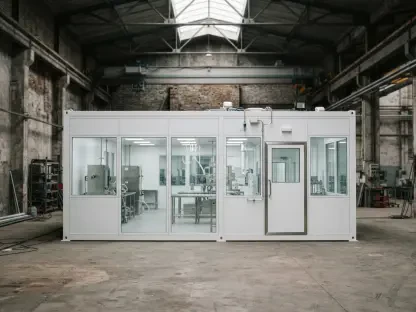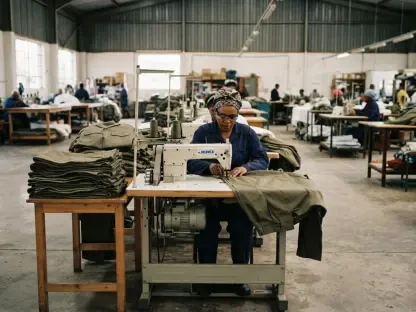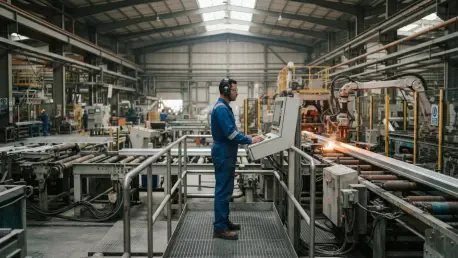

A critical distinction must be made between the strategic design of Bahrain’s industrial policy and the demonstrated productivity adjustments within its domestic factories. The Kingdom is currently navigating a pivotal era where the traditional reliance on hydrocarbon revenues is being intentionally superseded by a sophisticated digital infrastructure. This evolution, as examined in recent scholarship by Muhamed Abdallah of Gulf University, represents more than a mere software upgrade; it is a fundamental reconfiguration of the national economic engine. By centering the Fourth Industrial Revolution at the heart of its development, Bahrain aims to transform its manufacturing sector into a high-tech powerhouse capable of competing on a global stage. The transition focuses on integrating cyber-physical systems and advanced robotics into the local production landscape to ensure long-term fiscal sustainability. This strategic redirection is essential for a small island nation looking to secure its place within the rapidly changing international trade environment of 2026.
Strategic Framework: Building a Resilient Foundation
The current research utilizes a qualitative policy analysis design that meticulously examines official state documents and strategic investment roadmaps from the Bahrain Economic Development Board and the Ministry of Industry and Commerce. This methodological approach provides a comprehensive look at how the government has structured its shift toward advanced manufacturing by triangulating data from various national initiatives and readiness indices. The study is deeply grounded in industrial policy and absorptive capacity theories, which focus on the ability of small and medium-sized enterprises to integrate complex, automated systems into their existing workflows. By analyzing the structural framework through these theoretical lenses, the research identifies the specific mechanisms intended to foster a high-tech, export-oriented industrial base. This focus on institutional design ensures that the transition is not merely reactive but is guided by a clear, long-term vision for economic stability.
Building upon this theoretical foundation, the analysis explores seven distinct categories that define the national industrial readiness and support mechanisms currently in place. These categories include policy architecture, implementation tools, and the availability of capital, which together form a cohesive environment for technological adoption. A significant portion of the strategy involves assessing the technological maturity of individual factories to ensure that resources are allocated effectively. By identifying the specific needs of different manufacturing sub-sectors, the government can tailor its support to maximize the impact of new technologies like artificial intelligence and big data analytics. This level of granular planning is intended to diminish the historical dependence on fossil fuel revenues by creating a more diversified and technologically advanced economy. The systematic approach to policy design reflects a commitment to modernization that is both ambitious and structured, providing a blueprint for other small economies facing similar challenges.
Institutional Support: Facilitating Industrial Modernization
Bahrain has successfully established a coherent institutional framework by coordinating the efforts of key entities such as the Ministry of Industry and Commerce and Tamkeen. A central element of this coordinated strategy is the iFactories initiative, which serves as a vital bridge between government policy and factory-floor implementation. This initiative utilizes the Smart Industry Readiness Index to provide structured assessments of manufacturing facilities, allowing owners to identify gaps in their digital capabilities. These assessments are designed to guide local enterprises through the complexities of digital transformation, ensuring that the adoption of new technology aligns with international standards. By providing a clear roadmap for modernization, the iFactories program helps to prevent haphazard technology adoption that could lead to wasted resources. This institutional synergy is a hallmark of Bahrain’s approach, creating a unified front that supports manufacturers as they transition into the digital era.
Furthermore, the availability of financial instruments and institutional aid acts as a primary driver for this industrial evolution by lowering the significant barriers to entry for local firms. High initial costs associated with advanced robotics, the Internet of Things, and cyber-physical systems often deter smaller manufacturers from pursuing modernization. To address this, targeted support programs managed by Tamkeen offer capital and expert guidance to mitigate the financial risks of upgrading production lines. This financial backing is essential for achieving the goals of the Industrial Sector Strategy running through 2026, which aims to make Bahraini production processes more efficient and competitive. By providing a safety net for innovation, the government encourages enterprises to experiment with new production methods that can lead to increased output and improved product quality. This proactive financial strategy ensures that the benefits of Industry 4.0 are accessible to a wider range of businesses, rather than just the largest industrial players.
Accountability Measures: Bridging the Implementation Gap
Despite the sophisticated policy design, a significant gap remains between formal strategic targets and verified empirical outcomes on the manufacturing floor. Current public data often lacks concrete evidence regarding specific productivity adjustments or shifts in export performance directly tied to technology adoption. While the government has shared various success stories, there is a clear need for more transparent tracking of how these digital interventions influence the global competitiveness of Bahraini-made goods. Furthermore, the evolution of skills within the workforce remains a critical area where more detailed reporting is required to verify that employees are successfully adapting to high-tech environments. Without verified metrics, it is difficult to determine if the high-level policy goals are translating into tangible benefits for the average worker or the national economy. This disconnect highlights the importance of moving beyond strategic planning toward a more rigorous, data-driven evaluation of industrial performance.
The transition from a strategic blueprint to a verified industrial reality required a fundamental shift in how success was measured within the national framework. The authorities recognized that while sustainability was a core pillar of the national narrative, few documented metrics existed to prove modernized factories actually reduced their carbon footprints. Consequently, the government prioritized the development of monitoring systems that tracked real-time resource usage and private-sector employment shifts. These steps ensured that the ambitious policy goals were not just aspirational but were backed by demonstrated impact and environmental accountability. By focusing on factory-level outcomes, the state reinforced its commitment to a high-tech future where every technological investment yielded a measurable return. This move toward transparency provided the necessary insights to refine future strategies and ensured that the industrial sector remained a reliable engine for growth. The kingdom thus successfully bridged the gap between policy and practice by fostering an environment of continuous improvement and empirical verification.