
The success of the Intel Foundry Services initiative depends entirely on securing major commitments from tech giants like Amazon or other high-volume clients. For years, the chipmaker reigned supreme as the leader of the semiconductor world, but recent financial turbulence has stripped away its former aura of invincibility. In a stunning reversal, the company’s market valuation plummeted by forty-five percent in a single month, marking a period of volatility that has left analysts questioning the long-term viability of its current business model. This contraction occurred during a trading session that saw one of the worst single-day drops in fifty years, erasing billions in shareholder value. As the firm attempts to pivot from a traditional manufacturer to a contract foundry service, it faces an existential threat that requires immediate stabilization and a clear demonstration of technical competence to prevent further erosion of its legacy in the competitive industry.
Internal Struggles and Competitive Disparities
The internal transformation required to support this new business model is fraught with structural challenges that go beyond simple manufacturing adjustments. Moving away from a proprietary design focus means the company must now cater to a diverse array of client requirements, each with unique architectural demands and optimization needs. This shift has placed immense pressure on the research and development teams to ensure that the foundry can handle external intellectual property with the same efficiency as its own. Moreover, the capital-intensive nature of building and upgrading fabrication plants has strained the balance sheet. As the organization attempts to juggle these competing priorities, it must also address cultural barriers that have historically favored internal products over third-party collaborations. Without an overhaul of these processes, the ambition of becoming a premier global foundry will remain an expensive and unfulfilled goal.
Operational Hurdles in the Foundry Model
Transitioning to a foundry model requires a fundamental shift in reliability. One of the most significant barriers currently facing the organization is the concern over yield rates, which represent the percentage of functional chips produced from each silicon wafer. High yields are the lifeblood of a profitable foundry, yet there remains skepticism among potential clients regarding whether the company can maintain the precision necessary for high-volume orders. Furthermore, a persistent conflict of interest complicates the expansion of the Intel Foundry Services division. Potential customers are wary that their designs might be deprioritized in favor of internal product lines during periods of limited production capacity. This lack of trust, combined with the staggering capital expenditures required to modernize legacy plants, has resulted in substantial losses that the firm must now address through transparent performance metrics and a new commitment to strict operational neutrality.
The Widening Gap with TSMC and the AI Boom
The contrast between American manufacturing and the record-breaking success of the Taiwan Semiconductor Manufacturing Company has reached a peak. While the domestic giant struggles with its pivot, its primary rival has capitalized on the global surge in Artificial Intelligence infrastructure. The Taiwanese leader recently reported another quarter of record profits, driven by demand for advanced processors that power modern neural networks. The disparity is deeply technological; the competitor is already scaling 3-nanometer and 2-nanometer production lines for leaders like Apple and Nvidia. In contrast, the American firm is still racing to stabilize its upcoming process nodes, effectively missing the initial wave of the AI chip explosion. This delay has allowed competitors like AMD to systematically erode traditional market shares in the data center sectors, making the need for a successful technological leap more urgent than ever for the company’s survival.
National Security and the Path Forward
The geopolitical landscape provides a unique set of incentives and pressures that further complicate the company’s path toward recovery. As global tensions continue to influence trade policies, the reliance on concentrated semiconductor production in East Asia has become a risk for Western governments. This has positioned the domestic firm as a vital instrument of national policy, tasked with securing the technological future through localized manufacturing. However, this strategic importance brings with it a level of regulatory oversight that can often slow down decision-making. While government subsidies provided by the CHIPS Act offer a necessary financial cushion, they also come with expectations for rapid progress. The company must navigate these external pressures while maintaining the operational flexibility required to compete. Balancing national security objectives with the cold realities of market competition is a delicate act that requires flawless execution.
Geopolitical Stakes and Domestic Manufacturing
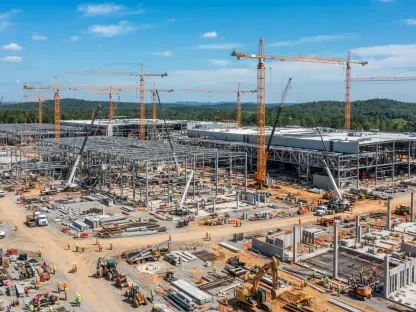
Beyond the corporate balance sheet, the stability of the semiconductor industry is a matter of national security. The government has recognized the urgent need for a robust domestic supply chain. The CHIPS Act was designed to facilitate this transition, providing billions in subsidies to ensure that vital technology is manufactured on American soil. As the only domestic firm with the theoretical capacity to match the scale of Asian fabrication giants, the company carries the weight of national strategic expectations. However, recent market volatility suggests that government funding alone may not be enough to overcome fundamental structural flaws. Policymakers are now forced to consider the implications of a scenario where their primary strategic partner fails to deliver on its manufacturing promises. Success in this area is not just about profit; it is about ensuring the resilience of the technological infrastructure that supports the entirety of the modern global economy.
The 18A Node as a Final Opportunity
The final phase of this recovery effort required a disciplined approach to technical validation and a focus on long-term scalability. To ensure the viability of the 18A node, the company prioritized rigorous stress testing and transparent reporting of yield improvements to its early partners. This strategy focused on building a verifiable track record that could eventually lure tech giants away from established providers. Leaders emphasized the importance of creating a customer-centric service model that treated external designs with the same priority as internal ones. Looking forward, the organization identified the need for continuous investment in next-generation lithography to stay ahead of the curve. By aligning its manufacturing capabilities with the demands of the AI era, the firm sought to create a sustainable revenue stream. These actions were essential for stabilizing the brand’s reputation and securing its role in the supply chain.