
The demand for high-density interconnect boards used in AI servers has revitalized the circuit board industry away from low-margin smartphone markets. The Chinese electronics information manufacturing sector has recently unveiled a performance report that, on the surface, appears to defy traditional manufacturing logic. According to data from the Ministry of Industry and Information Technology covering the first eight months of 2026, the industry achieved a staggering 12.8 trillion yuan in operating revenue, marking a 20.1% year-on-year increase. However, the truly provocative figure lies in the bottom line: total profits reached 847.5 billion yuan, representing a surge of 1.1 times, effectively doubling the profit margins from the previous year. This phenomenon, where profit growth outpaces revenue growth by a factor of five, prompts a critical investigation into the underlying structural shifts within the world’s largest manufacturing hub. While the global narrative frequently credits artificial intelligence as the sole catalyst for this boom, a granular analysis suggests a more complex interplay of operational efficiency, shifting demand structures, and a fundamental transition from price-based competition to capability-driven value creation. This evolution marks a departure from the historical reliance on massive volume and razor-thin margins that once defined the region’s industrial strategy.
The Mechanics: Why Efficiency Matters
Section 1: Operational Efficiency and Leverage
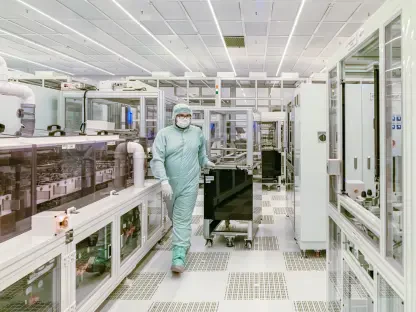
To understand how a 20% revenue increase translates into a 110% profit explosion, one must examine the widening gap between income and expenditure that has emerged across the 2026 manufacturing landscape. During this reporting period, while revenue grew significantly, operating costs rose by only 16.7%. In the context of high-volume electronics manufacturing, this 3.4% delta is monumental, directly feeding the bottom line of major enterprises. This efficiency is largely a byproduct of the capital-intensive nature of the industry, where massive investments in automated production lines, cleanroom environments, and specialized robotics dominate the balance sheet. In previous years, many facilities operated significantly under their maximum capacity due to global supply chain disruptions and fluctuating consumer demand. As high-value orders for advanced computing components surged throughout the early months of 2026, these factories achieved far higher capacity utilization rates. Because fixed costs such as depreciation, rent, and administrative overhead remain relatively static regardless of output, every additional unit produced after the break-even point contributes substantially more to the net profit than the units that came before it.
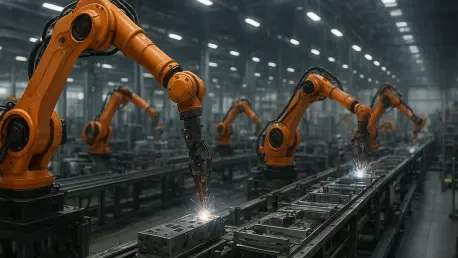
The transition toward automated, high-precision manufacturing has further insulated large-scale producers from the inflationary pressures typically associated with labor and raw materials. By integrating sophisticated industrial internet platforms, manufacturers in 2026 have been able to optimize their energy consumption and minimize material waste in real-time. This level of operational leverage means that as the scale of production for AI-specific hardware expands, the cost per unit continues to decline even as the market price for these sophisticated components remains high. This synergy between rising demand and optimized production cost structures has created a perfect storm for profit expansion. Factories that once struggled with the inefficiencies of legacy assembly lines have found new life by pivoting toward high-output, low-intervention processes that prioritize precision over sheer manpower. The result is a manufacturing ecosystem that is more resilient to external shocks and more capable of capturing the value created by the current technological transition. As fixed-asset investment continues to climb, the industry is effectively doubling down on this high-leverage model to ensure long-term profitability.
Section 2: Restorative Growth and Product Mix
The current surge in profitability is also heavily influenced by a restorative bounce-back from the market conditions observed throughout 2025. That period was characterized by significant inventory corrections as retailers and hardware providers worked through the surpluses accumulated during the post-pandemic supply chain recalibration. With those excess stocks finally cleared by the start of 2026, the electronics sector entered the current year with a much leaner profile and a renewed appetite for fresh production. This “low base effect” means that the comparison between the current year’s performance and the suppressed margins of the previous year makes the profit doubling appear even more dramatic. However, it is not merely a return to the status quo; it is a fundamental reconfiguration of the industry’s product mix. Manufacturers have shifted their focus away from the saturated and low-margin consumer electronics segments, such as entry-level smartphones and basic household appliances, in favor of specialized industrial and infrastructure components that offer much higher margins per unit.
This shift in the product mix represents a strategic migration toward the high-value segments of the global value chain. For instance, the transition from assembling finished consumer devices to producing the complex sub-assemblies required for high-performance computing allows Chinese firms to capture a larger share of the total product value. In the 2026 market, the revenue generated from a single high-density interconnect board or a specialized power management module for an AI server often yields a profit margin several times higher than that of a standard consumer laptop. By focusing on these critical components, manufacturers are less susceptible to the aggressive price wars that frequently plague the final assembly stage of consumer products. This strategy has allowed the industry to achieve record-breaking profits without necessarily needing to double its total output volume. The emphasis has clearly moved from “how much” a factory can produce to the intrinsic value and technological complexity of what is coming off the line. This transformation is cementing the sector’s reputation as a provider of advanced engineering solutions rather than just a source of low-cost manufacturing capacity.
The AI Catalyst: Driving Infrastructure Demand
Section 1: Shifting Focus to Computing Power
The traditional cornerstones of the electronics sector—consumer gadgets like smartphones and laptops—are no longer the primary engines of high-margin growth as we move through 2026. Instead, the global push toward artificial intelligence has redirected immense amounts of capital toward the physical infrastructure required to sustain large language models and advanced generative applications. The National Bureau of Statistics has highlighted that the acceleration of AI training and reasoning applications has triggered a massive expansion in computing power infrastructure. This includes not just the servers themselves, but the entire ecosystem of high-performance computing chips, where integrated circuit output has reached a staggering 386 billion units. These components are vastly more complex than their predecessors, requiring specialized manufacturing processes that only the most advanced facilities can provide. This transition is significant because infrastructure-grade hardware typically commands much higher price points and more stable margins than price-sensitive consumer commodities, which are often subject to fickle fashion trends and rapid obsolescence cycles.
Furthermore, the infrastructure demand extends deep into the networking and storage layers of the modern data center. The move toward decentralized AI clusters and edge computing requires higher bandwidth and lower latency, directly benefiting the manufacturers of optical fibers, high-speed networking switches, and advanced storage arrays. In 2026, the production of these components has become a major profit center, as they are essential for the seamless operation of global AI networks. Manufacturers who have successfully transitioned their production lines to meet these rigorous data center standards are seeing their order books filled by hyperscale cloud providers and enterprise technology giants. This shift represents a broader trend where the “brains” of the digital economy—the servers and networking hardware—are becoming the most lucrative part of the electronics manufacturing landscape. As the world continues to integrate AI into every facet of business and daily life, the demand for this underlying hardware is expected to remain robust, providing a long-term runway for the companies that provide the backbone of the digital revolution.
Section 2: Specialized Growth Zones in the Supply Chain
Profit growth within the electronics sector is not distributed uniformly; rather, it is concentrated in specific “hot zones” within the supply chain that have become indispensable to the AI revolution. One of the most striking areas of growth in 2026 is the electronic special materials sector, which has seen a profit increase of over 230%. Modern AI chips and high-frequency circuits require advanced substrates, chemical precursors, and high-purity materials that were virtually unknown in standard manufacturing a few years ago. These products have incredibly high entry barriers due to the sophisticated chemical engineering and material science expertise required for their production. Consequently, the few companies capable of delivering these materials to the necessary specifications enjoy significant pricing power and insulation from competition. This specialized segment has become the silent engine of the industry’s profit explosion, providing the foundational materials without which the most advanced processors could not function.
Other sectors showing robust performance include optoelectronic devices and semiconductor discrete devices, which are essential for managing the massive data throughput and power consumption of AI clusters. Optoelectronic components, in particular, have seen profits rise by 72%, driven by the global upgrade to high-speed optical modules that can handle the terabytes of data generated by AI training sessions. Similarly, semiconductor discrete devices are seeing a 51.8% profit jump as power management becomes a critical concern for high-density computing environments. The heat and energy requirements of modern AI servers necessitate advanced power modules that can operate efficiently under extreme stress. These are not simple commodities; they are highly engineered solutions that require deep technical integration with the systems they support. By dominating these critical niches, manufacturers are moving beyond the “commodity trap” and establishing themselves as essential partners in the global technology ecosystem. This focus on specialized components ensures that the current profit boom is built on a foundation of genuine technical necessity rather than temporary market hype.
Strategy: The Evolution of Capability
Section 1: From Price Wars to Technical Capability
For decades, the standard operating procedure for electronics manufacturing was focused on achieving cost leadership through massive scale and the minimization of labor costs. However, the 2026 cycle indicates a definitive pivot toward “capability leadership,” where technical prowess is the primary differentiator. AI-related components are inherently more complex than standard consumer electronics; they must operate reliably 24/7 under high thermal stress and maintain signal integrity at extreme frequencies. This requirement has fundamentally shifted the customer’s priority from finding the lowest bid to ensuring the highest level of technical reliability and performance. In the current market, a manufacturer’s ability to meet stringent technical specifications and maintain high yields in difficult manufacturing processes is more valuable than their ability to offer a discount. This shift has effectively created a “blue ocean” for technically sophisticated manufacturers who can deliver these high-spec components, while leaving those stuck in low-end assembly to compete in an increasingly crowded and unprofitable “red ocean.”
This move toward capability-driven competition means that suppliers are no longer chosen solely on their production volume, but on their engineering contributions and quality assurance protocols. If a factory cannot guarantee the signal integrity of a high-speed backplane or the thermal dissipation efficiency of a specialized chip housing, they are effectively excluded from the high-margin AI market regardless of their pricing strategy. This has forced a wave of modernization across the industry, as companies invest in advanced testing equipment and high-precision surface-mount technology lines to prove their worth to global tech giants. The winners in this new era are those who can provide deep technical support and co-engineering services, moving them up the value chain from simple executors to strategic partners. This evolution is reshaping the very identity of the manufacturing sector, turning factories into centers of innovation where the focus is on solving the complex physical challenges of the next generation of computing hardware.
Section 2: Regional Dynamics and Industrial Layout
The geographical distribution of growth in 2026 provides a clear window into the future of the industrial landscape, showing a distinct migration of different manufacturing tiers across the country. While the Eastern region, including established hubs like Guangdong, Jiangsu, and Zhejiang, remains the heavyweight in terms of absolute revenue and high-end R&D, the Central region is experiencing an explosive growth rate of 48%. This suggests a strategic de-layering of the industry, where lower-end manufacturing and basic assembly are moving inland to seek more competitive land and labor costs. This migration allows the coastal clusters to shed their low-margin activities and double down on high-value-added segments such as semiconductor design, advanced materials, and complex systems integration. The Pearl River Delta, for instance, has evolved into a world-class hub for joint product development, where local engineers work side-by-side with international tech giants to design the next generation of AI-ready hardware.
The competitive advantage of the established coastal regions is no longer “cheap labor” or even “concentrated factories,” but the unparalleled speed and sophistication of their local supply chains. In a city like Shenzhen, the proximity of component suppliers, testing labs, and logistics providers allows for a “design-to-prototype” cycle that is measured in days rather than weeks. This agility is crucial in the fast-moving AI market, where hardware specifications can change rapidly as new models are released. For the manufacturers in these regions, the path forward involves becoming more integrated into the global design phase, offering not just the capacity to build, but the engineering expertise to optimize. Meanwhile, the rapid growth in Central China indicates that the infrastructure and logistics in those regions have matured enough to support large-scale electronics production, creating a more balanced and resilient national industrial network. This two-tier development model ensures that the industry can maintain its global competitiveness across the entire spectrum of technology, from high-end specialized components to mass-market assembly.
Future: Identifying the Next Phase of Growth
Section 1: Risks for Small and Medium Enterprises
Despite the record-breaking macro-level data, the situation for individual factory owners—particularly those managing small and medium enterprises—remains fraught with significant risks that could dampen the long-term outlook. Entering the high-margin AI supply chain is not as simple as flipping a switch; it requires massive upfront capital expenditure for high-precision SMT lines, advanced environmental controls, and sophisticated testing rigs. For many smaller players, the current “profit” they are generating is almost entirely being consumed by the depreciation of this expensive machinery and the servicing of the debt taken on to acquire it. There is also a pervasive risk of customer concentration, as the vast majority of high-margin AI orders come from a very small handful of global tech leaders. While these contracts are incredibly lucrative, they also grant the buyer immense bargaining power. A manufacturer that becomes overly reliant on a single “Tier 1” client risks catastrophic failure if that contract is lost or if the client decides to squeeze margins in future negotiations.
Another critical concern that has emerged in the 2026 manufacturing environment is the persistent squeeze on cash flow. In the world of industrial manufacturing, profit reported on an accrual basis does not always translate directly into liquid cash in the bank. As revenue scales up with the production of expensive AI servers and components, accounts receivable often balloon simultaneously. If the payment cycle from a major global client is 90 to 120 days, a factory can find itself in the precarious position of being technically “highly profitable” on paper while simultaneously facing a severe liquidity crisis. This makes it difficult to pay upstream suppliers for raw materials or to meet the payroll demands of a highly skilled workforce. Smaller firms, which lack the deep credit lines of their larger competitors, are particularly vulnerable to these timing mismatches. Success in the next phase of the manufacturing boom will therefore require not just technical skill, but highly sophisticated financial management and the ability to navigate the complex credit landscapes of modern international trade.
Section 2: Identifying Future Winners and Opportunities
The long-term sustainability of the current profit boom hinges on whether the massive investments in AI continue to translate into sustained demand for physical hardware. The data from 2026 suggests that future opportunities will increasingly consolidate around three specific pillars: computing infrastructure support, material science breakthroughs, and intelligence-driven process optimization. Beyond the processor itself, there is a burgeoning and highly profitable market for the “connectors and protectors” of the AI world. This includes advanced liquid cooling systems, high-speed cabling solutions, and specialized power supplies that can handle the massive energy demands of modern data centers. Companies that can innovate in these auxiliary areas—which are often less crowded than the chip market itself—will likely see the most stable and long-term growth. As electronic devices become more powerful and compact, the primary limitations are often physical—heat management, electromagnetic interference, and material fatigue—making the solution-providers in these areas indispensable.
Furthermore, the integration of AI into the manufacturing process itself is creating a wider gap between the industry’s leaders and its laggards. The winners of the 2026 to 2028 window will be those who use artificial intelligence to build the next generation of AI hardware. Factories that implement “lights-out” manufacturing, AI-driven optical inspection, and predictive maintenance are already seeing their yields rise significantly while their waste and downtime drop. This optimization further expands the margin between revenue and cost, allowing these technologically agile firms to reinvest in the next wave of material science breakthroughs. Whether it is developing higher-performance substrates or molecular-level thermal interface materials, the next decade of growth will be defined by the ability to manufacture what was previously considered impossible. For the participants in this evolving ecosystem, the focus has moved permanently from “how much” is being produced to “how well” it is being manufactured, signaling a new, mature era for the global electronics industry.
The electronics sector adopted a rigorous focus on technical differentiation and operational leverage that ultimately redefined the boundaries of profitable manufacturing. Leaders in the industry recognized that the transition from consumer-led demand to infrastructure-driven growth required more than just new machinery; it demanded a total overhaul of the manufacturing mindset. Manufacturers moved away from the volatile smartphone markets and successfully integrated themselves into the more stable, high-value AI supply chains that provided the foundation for the current economic success. By prioritizing engineering solutions and material science innovations, the sector transformed its profit potential and insulated itself from the traditional cycles of the consumer electronics market. The lessons learned during this period of doubling profits provided a roadmap for sustainable growth, emphasizing that technical capability is the only lasting competitive moat in an increasingly complex global economy. The industry successfully demonstrated that by embracing complexity and investing in precision, it could turn the challenges of the AI revolution into a historic era of prosperity.