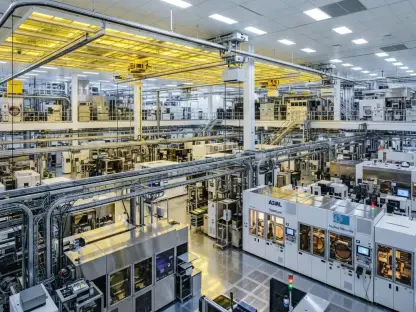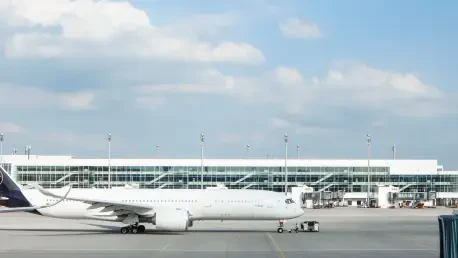

Strategic research is currently underway to determine whether self-driving jet bridges can safely navigate the complex movement areas of commercial airports without interfering with existing navigation aids. As modern airports transform into intricate ecosystems of high-tech machinery, the Federal Aviation Administration (FAA) is expanding its investigation into the integration of Autonomous Ground Vehicle Systems (AGVS). This strategic initiative, recently updated through the Aviation Research Broad Agency Announcement, focuses on maintaining the rigorous safety standards essential to commercial aviation while embracing the benefits of automation. By thoroughly examining technical vulnerabilities and operational risks, the agency aims to build a validated framework where self-driving machinery can safely coexist with manned aircraft and ground crews. This research covers a wide spectrum of equipment, ranging from automated baggage tractors and tugs to specialized de-icing robots that operate in high-traffic zones.
Safeguarding Communication and Signal Integrity
The operational environment of a commercial airport is saturated with critical radio-frequency signals, making the introduction of new autonomous systems a significant technical challenge. One of the most pressing hurdles involves the mitigation of electronic interference where autonomous vehicles might disrupt existing infrastructure. Because these vehicles rely on wireless signals to navigate and receive remote commands, there is a distinct risk that their chosen frequencies could interfere with essential FAA navigation aids, weather radar, or sensitive debris detection systems. Conversely, the dense electronic noise characteristic of major aviation hubs could potentially drown out the command signals that these vehicles require to operate safely. Current research efforts are focused on identifying specific, isolated frequency bands for AGVS to ensure that these emerging technologies and legacy safety systems can function simultaneously without signal bleeding or data loss.
Mitigating Electronic Interference and Signal Overlap
Ensuring electromagnetic compatibility requires a deep understanding of how autonomous sensors interact with high-powered aviation transmitters. Research is currently identifying the exact spectral footprint of automated tugs and shuttles to prevent them from “drowning out” the surveillance signals used by air traffic control. Engineers are testing various shielding techniques and frequency-hopping spread spectrum technologies to maintain a clear line of communication even in congested airwaves. This process involves rigorous field testing at active facilities to measure the impact of autonomous movement on ground-based augmentation systems and instrument landing systems. By establishing strict emission limits and dedicated spectral lanes, the agency is creating a protected environment where automation does not degrade the accuracy of navigation tools. This work is foundational for moving from isolated vehicle trials to a fully integrated airport surface where wireless signals remain reliable and clear.
Establishing Protocols for Lost Communication Links
Despite their designation as autonomous, these ground systems are rarely left entirely to their own devices; they rely on a constant communication link known as a command-and-control safety tether. A central pillar of the FAA’s current inquiry involves determining exactly how a vehicle should respond if this vital digital link is severed. In a lost-link scenario, an autonomous unit must adhere to a predictable, safety-validated logic to prevent it from becoming an obstacle to taxiing aircraft or ground personnel. This might involve an immediate controlled stop, a transition to a pre-programmed safe zone, or a slow return to a maintenance bay. Developing these standardized behavioral protocols is particularly crucial in active movement areas, such as taxiways and ramp spaces, where the margin for error is non-existent. These rules ensure that even in the event of a total communication failure, the vehicle remains a predictable element within the busy airport landscape at all times.
Defending Systems Against Digital and Operational Risks
As ground operations become increasingly interconnected and reliant on digital networks, the potential for malicious interference grows exponentially. The FAA is currently analyzing vulnerabilities across the entire AGVS ecosystem, which includes the vehicles themselves, the centralized command hubs, and the various mobile devices used by airport staff for oversight. This research seeks to develop robust methodologies for detecting, preventing, and responding to cyberattacks in real-time. Beyond initial security, the agency is establishing rigorous post-entry validation processes to ensure that once an autonomous system is deployed, it remains resilient against evolving threats through regular software updates and secure hardware patches. This comprehensive approach to digital hardening ensures that a breach in one part of the network cannot be leveraged to gain control over heavy machinery, thereby maintaining the integrity of the airfield and protecting both human life and high-value aviation assets.
Hardening Cybersecurity and System Resilience
The technical focus of digital defense extends to the embedded computing systems that drive vehicle logic and sensor fusion. Research is prioritizing the creation of “immutable” safety kernels that prevent unauthorized overrides of critical stop-and-steer functions during a security event. By implementing zero-trust architectures, airport authorities can ensure that every command sent to a baggage tractor or fuel truck is authenticated and verified before execution. Furthermore, the agency is investigating the use of decentralized ledgers to maintain an unalterable log of vehicle movements and software changes, which aids in forensic analysis following any system anomaly. These efforts are designed to create a “fail-secure” environment where the system can detect an intrusion and immediately transition to a manual or limited-functionality mode. Such resilience is vital for maintaining continuous operations at major hubs that cannot afford the downtime associated with a significant digital security breach.
Transitioning to a Standardized Safety Framework
The progression toward fully automated ground services represented a significant shift toward a system-of-systems approach to aviation safety. The FAA successfully identified that safety was not just the result of isolated technical fixes but rather the product of interconnected reliability across spectrum management, link stability, and digital defense. By mandating accelerated research cycles, the agency provided airport authorities and vehicle manufacturers with a comprehensive toolkit for safe implementation. These initiatives established that as the industry moved toward a future with less direct human intervention, every automated system defaulted to a state that prioritized the protection of aircraft and personnel. Stakeholders recognized that the standardization of these protocols allowed for the seamless integration of diverse technologies into the global aviation network. This collective effort ensured that the transition to autonomous ground operations served to enhance the safety of the world’s most complex transportation hubs.