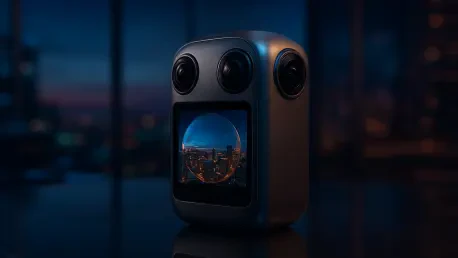

The landscape of portable cinematography has undergone a radical transformation over the past decade, culminating in a device that bridges the gap between consumer accessibility and professional-grade imaging standards. The release of the X6 represents more than a chronological milestone; it serves as a testament to the brand’s maturation into a global leader in the high-end consumer electronics sector. At a price point of seven hundred dollars, the device intentionally steps away from the race-to-the-bottom pricing that has plagued the action camera industry for years. This strategic shift occurred just as competitors began to close the gap in sensor quality and software efficiency, forcing a total rethink of what a flagship 360-degree camera should offer. By prioritizing a more robust hardware architecture and a sophisticated software ecosystem, the company aimed to secure a dominant position before the market became oversaturated with mid-range alternatives. This launch arrived during a pivotal moment of expansion, where the distinction between professional tools and consumer toys became increasingly blurred, setting the stage for a new era of immersive storytelling that prioritized resolution and ease of use over mere novelty.
Evolution of Hardware: Setting New Professional Benchmarks
The technical architecture of the X6 centers around a significantly upgraded imaging pipeline that utilizes a 1/1.1-inch sensor, delivering performance metrics that effectively rival traditional one-inch sensors found in more cumbersome professional equipment. This advancement allowed the camera to push the boundaries of spherical recording, achieving a native 8K resolution at 50 frames per second, which provided the necessary pixel density for high-quality reframing in post-production workflows. Unlike previous iterations that struggled with noise in low-light environments, the enhanced sensor size and processing capabilities ensured that footage remained crisp and color-accurate across a variety of challenging lighting conditions. Furthermore, the inclusion of 10-bit i-Log and Dolby Vision support transformed the device from a simple action camera into a legitimate tool for cinematographers who required high dynamic range and specific color-grading flexibility to match footage from larger cinema rigs. This leap in quality addressed the long-standing complaint that 360-degree video lacked the professional polish needed for mainstream commercial and cinematic applications.
Physical design improvements complemented these internal upgrades to create a device that felt as premium as its technical specifications suggested. A larger 2.32-inch OLED touchscreen dominated the front of the device, offering a much more responsive interface for navigating complex menus and previewing high-resolution spherical content in real-time. To streamline the shooting experience, a dedicated Quick Switch button was integrated, allowing creators to jump between preset modes instantly without fumbling through digital interfaces during fast-paced action. Recognizing the logistical hurdles of high-bitrate video, the addition of 47GB of internal storage provided a critical safety net, ensuring that users could start capturing footage the moment they took the camera out of the box, regardless of whether they had an external memory card prepared. This focus on reliability and immediate utility signaled a shift toward a more user-centric design philosophy, where the hardware was built to remove friction from the creative process rather than adding to it through technical limitations or storage constraints.
Competitive Moats: Redefining Value in a Crowded Market
Analyzing the underlying strategy behind this flagship release revealed a departure from traditional corporate thinking regarding competitive advantages and long-term sustainability. The leadership argued that in the modern hardware industry, physical moats—such as unique components or patented designs—were inherently temporary because competitors could eventually replicate or reverse-engineer almost any hardware feature. Consequently, the focus shifted toward a more dynamic form of competition that prioritized the rapid identification of unmet customer needs and the cultivation of deep brand loyalty through consistent innovation. By anticipating what creators would require two or three years into the future, the company sought to establish a lead that was based on timing and market insight rather than just raw technical superiority. This approach relied on the belief that being the first to solve a complex user problem, such as efficient 8K stitching or seamless mobile editing, created a psychological connection with the user base that competitors would find much harder to break than simply matching a specification list.
This philosophy was clearly manifested in the premium pricing of the X6, which was a calculated move to avoid the destructive price wars that often eroded margins in the consumer electronics space. By positioning the product at a higher price point, the brand asserted its value proposition as a comprehensive ecosystem rather than a standalone piece of hardware. The goal was to train consumers to view the device as an investment in a creative solution that integrated hardware, software, and community support into a single, cohesive experience. This strategy focused on building a sustainable business model that could fund future research and development while cementing the brand’s reputation as the default choice for anyone serious about 360-degree imaging. It moved the conversation away from cost-per-unit and toward the total value of the user experience, ensuring that the brand remained synonymous with quality and reliability in an increasingly crowded market where cheaper, less capable alternatives were becoming more common.
The AI Revolution: Solving the Editing Bottleneck
The integration of the PanoMind AI multimodal model served as the primary solution to the editing bottleneck, which had long been identified as the single greatest barrier to the widespread adoption of 360-degree cameras. Many potential users were intimidated by the prospect of manually framing spherical footage, a process that required significant time and technical expertise to produce a coherent narrative. The X6 addressed this by using AI to automate the most labor-intensive aspects of post-production, such as identifying key subjects and generating smooth camera transitions between focal points. Instead of treating artificial intelligence as a superficial marketing feature, the company deeply embedded these algorithms into the mobile and desktop applications to streamline the entire workflow from capture to share. This practical application of technology allowed casual users to generate professional-looking content in a fraction of the time, effectively democratizing high-end cinematography and making it accessible to those who previously lacked the patience or skill for traditional video editing.
Within the broader ecosystem, tools such as the AI Director and Auto Edit 2.0 played a crucial role in highlighting the most compelling moments of a recording session without requiring manual review of hours of raw footage. These tools analyzed visual data to find highlights, such as a skier landing a jump or a speaker making a gesture, and automatically suggested the best camera angles and movements to showcase the action. For more complex projects, cloud-based editing services were introduced to offload the heavy processing requirements to remote servers, allowing users with less powerful smartphones to still benefit from advanced AI-driven features. Despite the heavy reliance on these automated systems, the company maintained that the technology was intended to serve as a creative assistant rather than a replacement for human intent. The focus remained on empowering the user to tell their story more effectively by removing the technical hurdles that often discouraged people from sharing their experiences in the first place.
Strategic Outlook: Navigating the Global Imaging Frontier
As the industry consolidated into a competitive two-horse race between major players, the X6 established a new benchmark that competitors were forced to respond to in their upcoming product cycles. By setting 8K resolution and high-frame-rate performance as the standard for 2026 and beyond, the company created a significant hurdle for rivals who were still refining their 5.7K or 4K offerings. The competition evolved beyond simple lens specifications to encompass the entire user experience, including audio quality, mounting versatility, and the speed of the software interface. This rivalry drove a period of rapid innovation that benefited the entire imaging sector, as each brand vied to provide the most seamless and integrated solution for modern creators. The focus shifted toward creating a sticky ecosystem where the hardware was just the entry point into a much larger world of smart editing tools and social sharing platforms, making it difficult for users to switch brands once they became accustomed to a specific workflow.
The launch of the X6 provided a clear roadmap for the future of the imaging industry, emphasizing that hardware excellence must be paired with intelligent software to remain relevant. In the years following this release, creators who adopted these advanced 360-degree tools found that their ability to capture unscripted moments improved significantly as the technology handled the technical complexities of framing. The industry looked toward a future where thermal management and real-time processing became the next major hurdles, with the goal of eliminating the delay between filming and global distribution. Professionals were encouraged to integrate these spherical tools into their standard production pipelines to capture perspectives that traditional cameras simply could not achieve. By moving toward a more automated and high-resolution future, the technology eventually became an essential component of the digital creator’s toolkit. The focus remained on finding new ways to integrate these devices into the fabric of daily life, ensuring that the act of recording became as intuitive as the act of seeing.