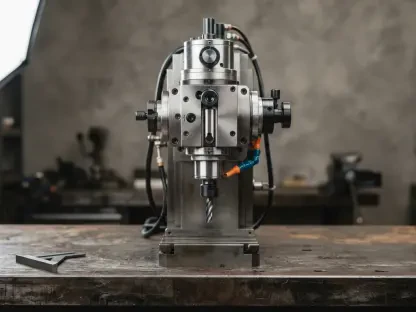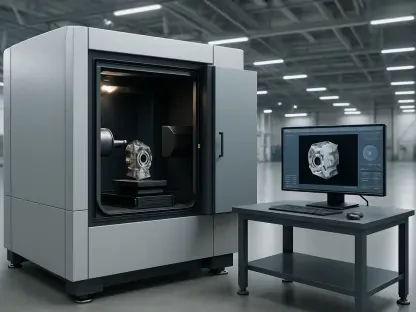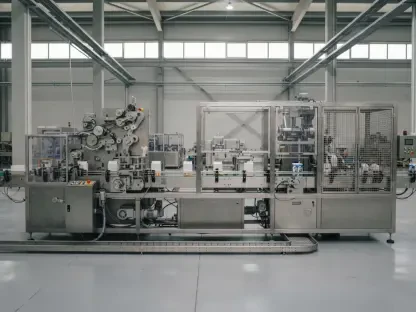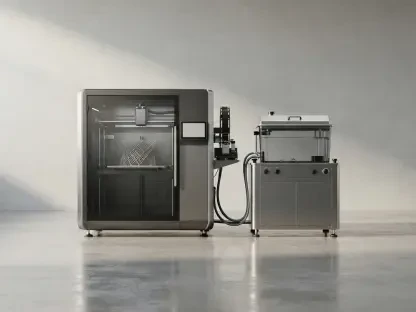

Investment in CNC machinery and expanded welding programs at local colleges has proven essential for attracting global manufacturing firms to smaller industrial communities. In Sheridan, Wyoming, this strategic focus has catalyzed a remarkable shift in the local economy, where the traditional fear of automation is being replaced by a sense of industrial optimism. As manufacturing hubs across the country grapple with fluctuating market demands and a changing workforce, Sheridan has emerged as a blueprint for how mid-sized towns can maintain their competitive edge. The local industrial sector is no longer defined by manual toil alone but by a sophisticated blend of advanced robotics and human ingenuity. This transition has not occurred in a vacuum; it is the result of deliberate investments in technology that empower workers rather than sideline them. By fostering an environment where machines handle the heavy lifting, the community has seen a surge in productivity that supports both local businesses and global supply chains.
Addressing the Skilled Labor Shortage
Robots: Solving the Chronic Hiring Crunch
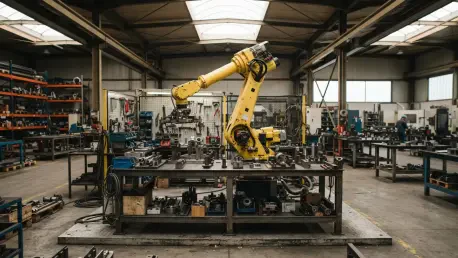
The primary driver for the adoption of automation in the American West is the severe scarcity of skilled tradespeople, particularly certified welders. Companies like EMIT Technologies have reported a persistent gap between their ambitious production goals and the actual pace of human recruitment, often finding themselves dozens of workers short of what the local market can provide. This “hiring crunch” has forced executives to reconsider the role of technology on the shop floor. By deploying specialized robotic arms to manage highly repetitive welding tasks, these manufacturers have effectively found a way to bridge the labor gap without slowing down operations. This approach does not seek to displace current employees but rather to supplement a workforce that is already stretched to its limits. The integration of robotics allows a facility to maintain consistent output even when traditional hiring cycles fail to keep up with the demands of a booming national economy.
Scalability: Navigating the Finite Talent Pool
Scaling a manufacturing operation in a region with a finite talent pool requires a fundamental shift in how labor is allocated across the production line. Automation has become the essential tool for this scalability, serving as a force multiplier that enables existing teams to achieve significantly more within the same timeframe. When machines take over the repetitive aspects of production, the focus shifts toward optimizing the entire workflow rather than just filling empty seats. This strategy has proven that the available talent pool is not a hard ceiling on growth but a baseline that can be elevated through smart technology. In 2026, the emphasis remains on using robotics to handle low-dexterity, high-volume components, which ensures that companies can accept larger contracts that would otherwise be impossible to fulfill. This method of growth provides a sustainable path forward for companies that want to expand their footprint while remaining rooted in their local communities.
Leveraging Local Culture and Education
The Power: Wyoming’s Manufacturing IQ
A unique competitive advantage for rural manufacturing hubs is the high “manufacturing IQ” found in communities with strong mechanical and agricultural roots. Local industry leaders have observed that a culture populated by “gearheads” and “farm kids” provides a natural aptitude for mechanics and innovative problem-solving that is increasingly rare in urban centers. This inherent work ethic and familiarity with complex machinery allow local firms to implement advanced robotic systems more rapidly and with fewer technical hurdles. Because many of these workers grew up maintaining heavy equipment or troubleshooting hardware on the fly, they transition into roles as robotic technicians with remarkable ease. By prioritizing the quality and innate skill set of the local workforce over the sheer size of the population, these regions are redefining how rural economies can compete on a global scale. This cultural foundation serves as the bedrock for a modern industrial identity.
Education: Establishing the Training Pipeline
The successful integration of robotics is inextricably linked to the presence of a robust educational infrastructure and specialized technical programs. History has shown that a lack of trained operators can cause a city to lose significant business prospects to more prepared regions, making local colleges the frontline of economic development. In Sheridan, the college has invested heavily in modern CNC equipment and expanded its welding curriculum to meet the precise needs of high-profile manufacturers like Vacutech and Weatherby. These programs are designed to do more than just teach traditional trades; they are training the next generation of industrial technicians to program, maintain, and optimize the very robots they will work alongside. This direct correlation between technical training and industrial growth ensures that the local workforce remains compatible with the latest technological advancements. It creates a self-sustaining cycle where education feeds industry, and industry provides the high-wage jobs that keep the community thriving.
Maximizing Efficiency and Economic Growth
Collaboration: Synergy in Human-Machine Systems
There is a growing consensus among industry experts that the human element remains the indispensable driver behind every robotic tool on the factory floor. Whether it is designing specialized fixtures, programming the intricate logic of a machine, or simply initiating a new production run, human intellect is what makes automation truly effective. This collaboration acts as a force multiplier, allowing small shops to punch above their weight class and compete with much larger, more established firms. The focus is never on replacing the worker but rather on providing the worker with more powerful tools to increase their individual output and overall value to the company. In 2026, the most successful manufacturing environments are those where humans and robots operate in a shared space, each playing to their specific strengths. While the robot offers precision and tireless repetition, the human provides the critical thinking and adaptability required to handle non-routine challenges and quality control.
Expansion: Driving Growth Through Efficiency
Real-world data confirms that the increased efficiency gained from robotics consistently leads to more business, which in turn necessitates hiring more people to manage the higher volume. Firms that have aggressively automated their production lines have often seen their total employee headcounts increase rather than shrink, as higher output drives a need for more logistical, engineering, and administrative support. The ultimate goal for many forward-thinking entrepreneurs is the realization of “lights-out” manufacturing, where machines can process raw materials overnight without direct supervision. This increase in production capacity generates the necessary revenue to hire more high-level designers and specialized engineers, proving that technological advancement stimulates workforce expansion. By automating the most basic tasks, companies create the financial stability required to invest in human talent for more complex, creative, and rewarding roles within the organization.
Strategic Integration: Building Industrial Resilience
The industrial community concluded that the integration of robotics was a vital necessity for maintaining local economic resilience. Manufacturers throughout the region prioritized the upskilling of their current workforce, ensuring that employees transitioned from manual tasks to technical oversight roles. This shift demonstrated that automation could coexist with human labor when supported by a dedicated educational pipeline and a culture of mechanical innovation. To maintain this momentum, industrial leaders recommended that smaller communities continue to invest in specialized training programs and seek out technologies that complement rather than replace the unique skills of their residents. The collaborative model established in Wyoming served as a practical guide for other regions looking to modernize their production capabilities without sacrificing job security. Ultimately, the successful merger of high-tech tools and local expertise provided a sustainable framework for long-term industrial growth and community prosperity.