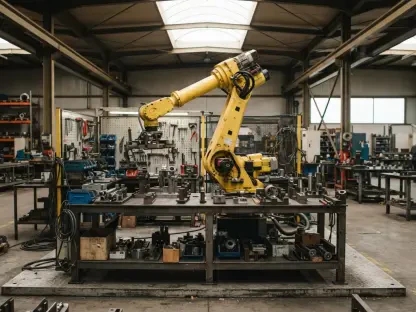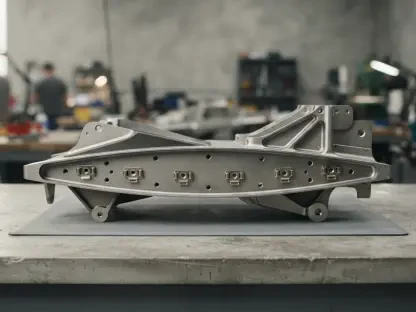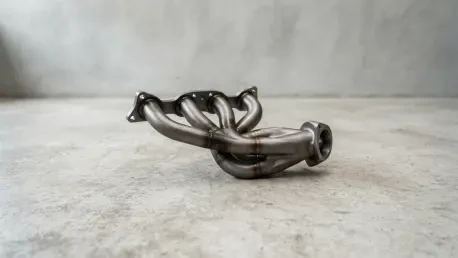

The use of powder-fused thermoplastic elastomers in the production of the movie “Wicker” demonstrates how 3D printing creates complex wearable prosthetics that traditional methods cannot achieve. This specific application serves as a significant milestone in the current additive manufacturing landscape, which stands at a historical crossroads as of late 2026. The convergence of innovation at events like Formnext 2026 has highlighted four decades of evolution, transitioning from foundational stereolithography to high-performance industrial applications. Today, the industry is moving beyond simple prototyping to become a cornerstone of global manufacturing, as seen in the validation of metal 3D printing for high-stress environments. Specifically, Directed Energy Deposition technology, such as wire-laser metal deposition, is now a standard tool in the aerospace, defense, and automotive sectors. A prime example is the high-performance stainless steel exhaust header developed for the Abarth 595, which has endured thousands of miles of track and road testing. This success underscores the ability of additive manufacturing to optimize geometric flow and structural integrity in ways that traditional casting cannot match, marking a new era of reliability and engineering excellence for the manufacturing world.
Celebrating Four Decades of Innovation
How Has the 3D Printing Industry Matured?
The maturity of the additive manufacturing sector is deeply rooted in the legacy of 3D Systems and the pioneering work of Chuck Hull. Since the invention of stereolithography in the early 1980s, the industry has expanded through a collaborative spirit among various inventors who secured foundational patents for technologies like Fused Deposition Modeling and Selective Laser Sintering. These milestones provided the necessary framework for the multifaceted ecosystem we see today, where specialized materials and high-speed production systems are the norm. The retrospective celebrations at Formnext 2026 emphasize that the current success of the industry is not an overnight phenomenon but the result of forty years of continuous refinement. By moving from the first liquid resin prints to the complex, multi-material systems currently in use, the industry has proven that its fundamental principles are robust enough to support the most demanding industrial requirements.
The transition from rapid prototyping to serial production represents the most significant shift in the industry’s recent history. While early 3D printers were primarily used for creating non-functional visual models, modern systems are now capable of producing end-use parts at scale. This evolution is particularly evident in the automotive and energy sectors, where Directed Energy Deposition is used to reinforce critical components. For instance, the selective addition of material to steel wheels allows engineers to achieve the stiffness and performance characteristics of high-end alloys while maintaining a significant weight advantage. Furthermore, the ability to print complex shapes that optimize exhaust gas flow within combustion engines highlights how 3D printing has become a primary choice for high-performance engineering. This shift toward functional, end-use parts is supported by improved process control and a deeper understanding of materials science, ensuring that every printed component meets the rigorous safety and durability standards required for modern transportation and infrastructure.
What Drives the Economic Growth of Additive Manufacturing?
The economic trajectory of the additive manufacturing market reflects its increasing importance to the global supply chain. From a market value of approximately $16 billion in late 2025, the sector is on a path toward a projected $65 billion by 2035. This massive growth is driven by the widespread adoption of 3D printing in large-scale manufacturing environments where efficiency and customization are paramount. Companies are no longer viewing additive tools as peripheral assets but are instead integrating them into the heart of their production lines. This investment is fueled by the realization that additive manufacturing can significantly reduce lead times and eliminate the need for expensive tooling. As more industries validate these technologies for mass production, the resulting economies of scale are making 3D printing a more cost-competitive alternative to traditional subtractive methods, further accelerating its expansion into the global commercial landscape.
Sustainability and the “repair-over-replace” mentality are also playing a crucial role in the industry’s economic and environmental evolution. The use of 316L stainless steel to repair obsolete components in critical centrifugal pumps is a prime example of how additive manufacturing supports a circular economy. Instead of discarding entire machines due to a single worn-out part, industrial customers can now use wire-laser deposition to modernize and restore components, often with better corrosion resistance than the original. This strategy not only extends the life of existing infrastructure but also significantly reduces the carbon footprint associated with manufacturing new parts from scratch. By focusing on selective material deposition, engineers can achieve the structural integrity of a new component while minimizing raw material waste. This approach to sustainable maintenance is becoming a standard practice for industrial leaders who are looking to balance operational efficiency with environmental responsibility in an increasingly resource-conscious world.
Advancing Industrial Materials and Medical Science
What Role Do Specialized Materials Play in Modern Manufacturing?
The focus of the additive manufacturing industry has shifted from common plastics and steels to “hard materials” that offer extreme durability and heat resistance for specialized applications. A significant breakthrough in this area is the strategic partnership between HP Additive Manufacturing and Hyperion Materials & Technologies, which has advanced the commercial availability of tungsten carbide through binder jetting technology. Tungsten carbide is highly prized for its exceptional hardness and wear resistance, yet its high melting point and inherent brittleness have traditionally made it notoriously difficult to machine. By utilizing the HP Metal Jet S100 system in combination with specialized powders, manufacturers can now create complex, consolidated components that were previously uneconomical or impossible to produce. This development allows for the creation of high-performance tools and industrial wear parts that can withstand the harshest environments, effectively pushing the boundaries of what is possible in heavy industry and specialized engineering.
The integration of advanced materials science into binder jetting workflows is providing a “full-stack” solution for industrial customers who require customized, high-strength parts. This process streamlines the path from rapid prototyping to the final sintering and finishing stages, allowing for the production of parts with intricate geometries that improve operational efficiency. For example, consolidating multiple parts into a single 3D-printed component reduces assembly time and eliminates potential points of failure, such as joints or fasteners. This capability is particularly valuable in sectors like oil and gas, where equipment is subjected to extreme pressure and abrasive conditions. By utilizing tungsten carbide and other advanced alloys, companies can significantly increase the lifespan of their machinery, leading to lower maintenance costs and reduced downtime. The ongoing commercialization of these hard materials represents a major step forward in the industry’s ability to provide tailored solutions for the world’s most challenging manufacturing environments.
How Is Bioprinting Transforming the Future of Healthcare?
The induction of Jennifer Lewis, Sc.D., into the National Academy of Medicine signifies the profound impact that additive manufacturing is having on the future of global healthcare. Her work at the Wyss Institute at Harvard represents the cutting edge of the field, specifically in the 3D bioprinting of soft and living materials. One of the greatest challenges in tissue engineering has always been vascularization—the creation of the complex circulatory systems necessary to keep lab-grown tissues alive. Dr. Lewis has led the development of innovative techniques to create vascularized organoids and human tissues, providing a critical foundation for the next generation of medical treatments. This recognition by the medical community highlights a consensus that 3D printing is no longer just an engineering curiosity; it is a vital biological technology that will define the next century of therapeutic repair and personalized medicine, offering new hope for patients with organ failure or complex tissue damage.
The development of advanced biological inks and multi-material printing capabilities is enabling new opportunities for drug discovery and disease modeling. By creating complex, heterogeneous structures that mimic the natural diversity of human biology, researchers can now test the efficacy and safety of new medications on lab-grown human tissues. This approach has the potential to significantly reduce the industry’s reliance on animal testing while providing more accurate data on how the human body responds to various treatments. Furthermore, the path toward 3D-printed organs for transplant is becoming increasingly clear as bioprinting technology continues to mature. The ability to print functional tissue scaffolds that can be integrated with a patient’s own cells represents the ultimate goal of regenerative medicine. As these technologies move from the laboratory to clinical applications, they will revolutionize the way we treat chronic illnesses and traumatic injuries, making healthcare more effective and accessible for populations around the world.
Democratizing Technology and Creative Arts
How Are Prosumer Tools Currently Evolving?
The desktop fabrication space continues to blur the lines between hobbyist equipment and professional-grade machinery, driven by the release of multi-functional platforms like the Creality Falcon T1. These modern 5-in-1 laser systems reflect a broader trend toward modularity in the prosumer market, allowing users to swap between different laser wavelengths to process a wide variety of materials. Whether a creator needs to work with metals, glass, or organic materials, a single modular chassis can now handle tasks that previously required multiple expensive machines. This democratization of advanced tools is empowering a new generation of makers, small business owners, and designers to produce high-quality work in residential or small studio settings. The shift toward versatile, all-in-one systems is making digital fabrication more accessible and affordable, fostering a culture of innovation where the only limit is the user’s imagination and their ability to master these sophisticated new platforms.
Artificial intelligence is also being integrated into these desktop tools to simplify complex workflows and improve the overall user experience. Built-in AI systems can now assist with color engraving and 3D relief path generation, making it easier for non-experts to achieve professional results with minimal training. Additionally, as high-power industrial tools enter the home and studio environment, safety has become a primary concern for manufacturers. Features such as Class 1 safety enclosures and integrated air purification systems are now standard, ensuring that users are protected from harmful emissions and laser radiation. These advancements in safety and ease of use are critical for the continued growth of the prosumer market, as they allow for the safe operation of powerful fabrication technology in non-industrial settings. By combining industrial-grade performance with intuitive software and robust safety features, manufacturers are successfully bridging the gap between the professional factory floor and the individual creator’s workspace.
Why Is AM Essential for Modern Visual Storytelling?
In the entertainment industry, the role of additive manufacturing has shifted from making simple props to creating highly complex, wearable prosthetic suits that integrate seamlessly with practical effects. The production of the movie “Wicker” serves as a definitive case study for this application, where Wētā Workshop utilized 3D printing to create the intricate character of the “wicker” husband. The process began with a full-body precision scan of the actor to ensure that the 3D-printed appliances were perfectly tailored to his unique anatomy. By using thermoplastic elastomer via powder fusion, designers were able to create flexible “weaves” that mimicked the appearance of natural wicker while allowing the actor to move freely and naturally on set. This level of detail and functionality would have been impossible to achieve with traditional manual weaving or molding techniques, demonstrating how additive manufacturing has become an essential tool for modern cinematic storytelling and character design.
The success of these cinematic applications relies on a hybrid manufacturing approach that combines 3D printing with traditional craftsmanship. In the case of the “Wicker” costume, fifty individual 3D-printed pieces were stitched onto a specialized spandex suit, highlighting the industry’s ability to handle complex geometries and specific material properties. This fusion of digital fabrication and manual assembly allows artists to achieve specific artistic visions that were previously hindered by the limitations of physical materials. The ability to iterate quickly and produce highly detailed, durable components has made 3D printing a preferred choice for leading special effects houses around the world. As materials science continues to evolve, providing new polymers with varying degrees of flexibility and strength, the creative possibilities for visual storytelling will continue to expand. Whether creating alien landscapes or realistic biological prosthetics, additive manufacturing is providing the technical foundation for the most ambitious projects in modern film and television.
Strategic Integration and Global Manufacturing Outlook
The additive manufacturing industry successfully pivoted toward a model of sustainable and functional production that prioritized material performance over mere visual representation. Manufacturers moved away from the “replace-all” mentality, instead adopting additive repair strategies that extended the operational life of critical infrastructure while reducing environmental waste. The integration of artificial intelligence and modular hardware allowed for a more decentralized production model, empowering both industrial giants and individual creators to achieve professional-grade precision. Moving forward, stakeholders should focus on the standardization of specialized material powders and the continued development of vascularized biological scaffolds to ensure long-term viability in medical and industrial markets. By investing in hybrid manufacturing techniques that combined 3D printing with traditional craftsmanship, the sector demonstrated its ability to enhance creative expression without sacrificing structural reliability. These steps laid the foundation for a global economy where customization and efficiency were no longer mutually exclusive goals, ensuring that additive manufacturing remained an indispensable pillar of modern technological achievement.