
A fundamental shift in consumer behavior is extending the demand for connected technology into the very fabrics people wear for daily protection and style. The global apparel industry is undergoing a radical shift, moving beyond simple aesthetics and protection to become a sophisticated, interactive platform for data collection. This transformation is led by electronic textiles, commonly known as e-textiles, where traditional manufacturing meets cutting-edge sensors, wireless connectivity, and flexible circuitry. Unlike rigid wearables such as smartwatches, these garments integrate functionality directly into the fabric using conductive fibers and miniaturized processing units. This seamless integration allows for unprecedented data collection and user interaction. The market is now entering a high-growth phase, fueled by the demand for personalized data and advancements in material science. While the market valuation sits at approximately $7.1 billion in 2026, the long-term momentum suggests a leap to $28.1 billion by 2033, driven by this deep integration.
Drivers of Market Expansion
Evolution of Wearables: The Move Toward Biometrics
As the novelty of traditional wrist-worn devices matures, consumers are seeking less obtrusive ways to track their health and performance. Smart clothing provides a much larger surface area for sensor placement, allowing for more accurate and comprehensive data collection than a watch can offer. This transition represents a move toward integrated technology that monitors the body without interfering with daily movement or style. By embedding sensors into base layers, manufacturers can capture high-fidelity electrocardiogram signals and precise respiratory rates that wrist sensors often miss due to motion artifacts. This shift is turning clothing from a passive cover into an active diagnostic tool that provides a 360-degree view of human physiology. Furthermore, the unobtrusive nature of these garments ensures that users are more likely to wear them consistently, leading to better longitudinal data sets for both personal health management and professional medical analysis.
Global healthcare systems are increasingly pivoting toward remote patient monitoring and preventative care to reduce hospital strain. Smart garments enable the continuous tracking of vital signs—such as heart rate, respiratory patterns, and body temperature—without bulky equipment. This capability is becoming vital for elderly care, chronic disease management, and post-operative rehabilitation, making medical monitoring a passive part of a patient’s routine. In the current landscape of 2026, hospitals are already deploying smart shirts to recover heart surgery patients at home, significantly lowering the risk of readmission. These garments alert medical staff to arrhythmias or fluid buildup in the lungs before the patient even feels symptoms. By integrating these sensors into soft, washable fabrics, the medical community is overcoming the primary barrier to long-term monitoring: patient compliance. The result is a proactive healthcare model that saves lives while reducing the massive financial costs associated with emergency care.
Performance Analytics: Excellence in Sports and Fitness
In the world of sports and fitness, data-driven performance has become the industry standard for excellence across all levels of competition. Athletes and fitness enthusiasts now utilize smart garments to analyze muscle engagement, movement efficiency, and recovery metrics in real-time. This trend has moved beyond elite professional circles and is being rapidly adopted by the prosumer market—serious amateurs who invest heavily in technology to gain a competitive edge. These garments provide the deep bio-analytics necessary to optimize training and prevent overexertion by monitoring biometric fatigue indicators. For instance, smart leggings can now detect muscle imbalances that could lead to ligament injuries, allowing the wearer to adjust their gait before an injury occurs. This preventative aspect is a major selling point for athletes who want to prolong their careers or maintain high-intensity training schedules. This democratization of sports science is a key factor in the market’s rapid expansion.
The integration of haptic feedback into athletic gear is another major development driving the sports segment of the smart clothing market. Modern compression shirts can now provide gentle vibrations to guide a user’s posture during yoga or weightlifting, acting as a virtual coach that exists within the fabric itself. This level of interaction goes far beyond simple data logging; it creates a closed-loop system where the garment perceives the user’s actions and provides immediate, actionable feedback. As these technologies become more refined, we are seeing a surge in specialized apparel for niche sports, such as smart cycling jerseys that monitor aerodynamic drag or swimsuits that track stroke efficiency through water. The ability to quantify every aspect of physical movement is turning the human body into a source of actionable insights, making smart clothing an essential tool for anyone serious about their physical health. The convergence of artificial intelligence and textile sensors is expected to further refine these capabilities.
Regional Market Variations
Leadership Dynamics: North America and Europe
North America currently holds a dominant position in the smart clothing market, supported by a robust ecosystem of tech giants and research institutions. The region’s advanced healthcare infrastructure and high consumer appetite for electronics provide a fertile ground for market expansion. Significant investment in flexible electronics research ensures that North American companies remain at the forefront of innovation. This dominance is bolstered by a culture that quickly adopts new technologies to enhance lifestyle and health. Major tech hubs in Silicon Valley and Boston are collaborating with traditional fashion houses to create products that bridge the gap between high fashion and high tech. Furthermore, the presence of major military and defense contractors in the United States is accelerating the development of ruggedized smart clothing for tactical use. This cross-pollination between consumer electronics and military-grade durability is creating a unique market environment that prioritizes both functionality and performance.
Meanwhile, the European market is characterized by a unique blend of heritage textile expertise and a modern focus on sustainability. European manufacturers are increasingly integrating smart technology into industrial safety gear and high-end fashion. There is a strong regional emphasis on developing green e-textiles that balance technical sophistication with environmental responsibility. This focus on durability and ethical manufacturing helps Europe carve out a niche in functional apparel that meets strict safety and environmental standards. For example, German and Italian textile mills are leading the way in creating biodegradable conductive fibers that do not contribute to microplastic pollution. This commitment to the circular economy is attracting a growing demographic of environmentally conscious consumers who want technology without the ecological footprint. By focusing on high-quality, long-lasting smart garments, European brands are positioning themselves as leaders in the premium segment of the market, where quality often outweighs cost.
Growth Engines: The Asia Pacific Corridor
The Asia Pacific region is identified as a massive growth engine for the industry, benefiting from its status as the world’s primary textile hub. Countries like China, South Korea, and Japan house some of the most advanced electronics manufacturing corridors globally. The synergy between textile production and electronics allows for large-scale manufacturing and cost optimization. This efficiency is expected to make smart clothing more accessible to the mass market, driving adoption across a broader demographic of consumers. In China, the integration of smart textiles into the massive manufacturing sector is already well underway, with smart uniforms used to monitor worker fatigue and safety in real-time. This industrial application provides a steady volume of production that allows for rapid iteration and price reduction. As the middle class in this region continues to grow, their demand for health-conscious technology is expected to fuel a domestic market that could eventually rival North America.
The technological prowess of South Korea and Japan is particularly evident in the development of advanced materials, such as self-powering textiles. Research facilities in these nations are perfecting fabrics that can harvest energy from body movement or solar radiation, eliminating the need for bulky, external batteries. This innovation is critical for the next stage of market growth, as it addresses one of the primary complaints consumers have regarding smart clothing: the need for frequent charging. By leveraging their expertise in semiconductor manufacturing and polymer science, Asia Pacific companies are creating the building blocks of the intelligent wardrobe. Furthermore, the region’s strong focus on 5G and 6G connectivity ensures that these smart garments can communicate with cloud-based AI systems with minimal latency. This infrastructure is essential for applications like real-time language translation through e-textiles or augmented reality overlays that interact with the physical movements of the wearer’s body.
Technological Innovation and Challenges
Advancements: Seamless Textile Integration
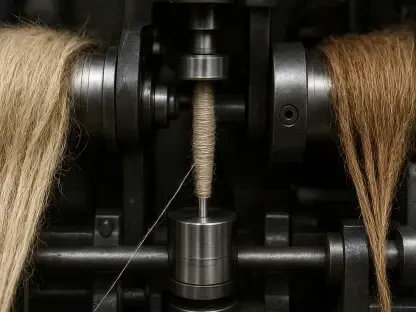
The market has recently shifted away from gadget-like apparel toward truly textile-centric solutions that prioritize comfort. Early iterations were often uncomfortable due to visible wires and bulky battery packs, but modern innovations have changed the landscape. Development in flexible and printed electronics allows circuits to bend and stretch with the fabric. Furthermore, engineers are now spinning conductive materials directly into the yarn, making the technology virtually invisible and imperceptible to the wearer. This breakthrough means that a smart shirt feels no different from a standard cotton tee, yet it possesses the processing power of an early-generation smartphone. These advancements are crucial for gaining mainstream acceptance, as consumers are generally unwilling to sacrifice comfort for functionality. The integration of organic light-emitting diodes directly into fabric is also opening new avenues for expressive fashion, allowing garments to change color or display information on the sleeve.
In addition to improved comfort, the latest generation of smart clothing is benefiting from advancements in low-power communication protocols. Modern sensors can now transmit data to a smartphone or a hub using a fraction of the energy required only a few years ago. This energy efficiency, combined with the development of flexible, thin-film batteries, has significantly extended the battery life of smart garments. Some high-end jackets can now operate for weeks on a single charge, making them practical for long-term use in remote environments. Designers are also focusing on the ergonomics of sensor placement, ensuring that conductive paths follow the natural contours of the body to prevent signal loss during intense physical activity. This holistic approach to design ensures that the technology supports the wearer’s lifestyle rather than dictating it. As these manufacturing processes become more standardized, the cost of production is expected to drop, further accelerating the transition toward smart-enabled daily wear.
Technical Hurdles: Durability and Maintenance
Despite these advancements, the industry faces significant structural hurdles, most notably the washability problem. Ensuring that electronic components can survive repeated cycles in a standard washing machine remains a major technical challenge. Exposure to water, heat, and detergents can degrade sensors and conductive paths over time, leading to device failure. Manufacturers are currently experimenting with advanced encapsulation techniques, where electronic components are sealed in a microscopic layer of waterproof polymer. While these methods show promise, achieving true long-term durability that matches the lifespan of a traditional garment remains an elusive goal for many brands. Additionally, the mechanical stress of spinning and agitation in a washer can cause micro-fractures in flexible circuits, which eventually break the electrical connection. Solving this issue is paramount for the mass-market adoption of smart clothing, as consumers expect their high-tech garments to be as easy to maintain as their regular wardrobe.
The manufacturing process itself is far more labor-intensive and expensive than traditional garment production, which often results in higher retail prices that can deter price-sensitive consumers. Creating a smart garment requires a complex supply chain that involves textile mills, electronics manufacturers, and software developers. The assembly of these products often requires specialized equipment that traditional garment factories do not possess, leading to a bottleneck in production capacity. Moreover, the environmental impact of disposing of e-textiles is a growing concern, as the mixture of organic fibers and electronic components makes recycling incredibly difficult. Separating conductive fibers from polyester or cotton requires specialized chemical processes that are not yet widely available. As the market grows toward 2033, the industry must address these sustainability and production challenges to ensure that smart clothing is both economically viable and environmentally responsible. Balancing the rapid pace of electronic innovation with the slow, durable nature of textiles is the central challenge.
Future Outlook: The Intelligent Wardrobe
As the market moves toward 2033, the future of e-textiles is one of deep integration where clothing acts as a second skin. People are approaching a reality where garments not only monitor health but also communicate with the environment and adjust thermal properties based on body temperature. In high-risk sectors like firefighting or military operations, smart clothing provided life-saving data through real-time location and health tracking. This evolution represented a fundamental reimagining of apparel, turning wardrobes into essential tools for safety and performance. Organizations that invested in textile research during this period gained a significant competitive advantage as the lines between fashion and technology blurred completely. The transition toward intelligent fabrics fundamentally altered how humans interacted with their own biology and the digital world around them.
The successful expansion of this market ultimately rested on the ability of manufacturers to merge the worlds of software and soft goods seamlessly. Stakeholders had to prioritize the development of standardized protocols to ensure that smart clothing from different brands could communicate within a unified digital ecosystem. For consumers, the shift meant moving away from isolated gadgets toward a holistic, connected lifestyle where their clothing served as the primary interface for their digital lives. Industry leaders focused on solving the durability issues while maintaining the aesthetic appeal that drives the fashion industry. By the time the market reached its predicted valuation, smart clothing had transitioned from a niche luxury to a standard component of modern living, proving that the most successful technology is the kind that becomes invisible. Looking ahead, the next step involves refining these systems to provide even more proactive assistance in daily life.