
By bridging the gap between raw material availability and advanced manufacturing, Amaero ensures the United States has the physical resources to match its digital design innovations. This strategic initiative centers on the establishment of a premier manufacturing facility in McDonald, Tennessee, which represents a critical pivot toward securing the domestic supply chain for high-performance metal powders. For years, the aerospace and defense sectors faced significant vulnerabilities due to a reliance on overseas suppliers for the specialized materials required for additive manufacturing. By centering operations within the American industrial heartland, the company is effectively insulating critical national projects from the volatility of global logistics. This move is not merely about physical space but about asserting material sovereignty over the titanium and refractory alloys that define modern defense. As high-speed flight becomes a standard requirement for national security, the ability to produce these powders at home creates resilience.
Industrial Scaling: Advanced Atomization Technology
At the technological heart of the Tennessee facility lies a suite of three Electrode Induction Gas Atomization (EIGA) systems, which represent the pinnacle of current metallurgical processing. These systems are designed to transform solid metal feedstock into high-quality, spherical powders with unparalleled purity and consistency. By utilizing induction melting in a vacuum or inert gas environment, the process eliminates the risks of ceramic contamination that often plague traditional melting methods. The current operational capacity allows for the production of approximately 480 metric tons of titanium alloys and 200 metric tons of specialized refractory materials annually. This level of output is transformative for the domestic market, as it moves the industry beyond the limitations of small-batch experimental runs into the realm of sustained manufacturing. The precision of these atomization systems ensures that every grain of powder meets the rigorous standards required for mission-critical aerospace components.
Building on this foundation, the expansion specifically targets the production of specialized alloys like C103, a niobium-based material that is essential for the fabrication of rocket engines and propulsion systems capable of withstanding extreme thermal environments. Previously, sourcing such high-melting-point materials in sufficient quantities was a persistent bottleneck for American defense contractors. By scaling production to meet these demands, the facility serves as a primary engine for the rapid prototyping and deployment of hypersonic vehicles and satellite launch platforms. This shift from reliance on external vendors to a robust internal capacity allows for a more streamlined transition from design to physical part. Furthermore, the ability to handle the entire lifecycle of these materials—from raw alloy to atomized powder—within a single domestic ecosystem reduces the lead times that have historically delayed advanced defense programs. This localized expertise ensures the United States remains at the forefront of material science.
Enhancing Efficiency through Collaborative Standardization
The success of this manufacturing expansion is deeply intertwined with strategic partnerships involving industry leaders like America Makes and standards organizations such as ASTM International. These collaborations are focused on the continuous refinement of powder metallurgy processes to enhance the overall efficiency of additive manufacturing. One of the primary objectives of this joint research is to improve powder yields and develop more effective recycling methods for used materials. In the high-cost world of titanium and refractory alloys, the ability to reuse powder without compromising the structural integrity of the final part is a major economic driver. By establishing rigorous quality controls and standardized testing protocols, these partnerships ensure that 3D-printed components are reliable enough for flight-critical applications. This collaborative environment also fosters the development of more sophisticated niobium-based alloys, which offer engineers the flexibility to design complex, lightweight parts.
Moreover, beyond the immediate benefits of material production, these industry alliances facilitate a broader transformation in how the aerospace sector approaches part design and procurement. The data generated through these research initiatives allows for a more granular understanding of how powder characteristics influence the final properties of printed components. Consequently, engineers are now able to push the boundaries of geometry and weight reduction, leading to aircraft and spacecraft that are significantly more fuel-efficient and agile. This integrated approach to research and production lowers the barrier to entry for smaller defense contractors, who can now leverage standardized, high-quality materials to compete in the advanced manufacturing space. The ongoing refinement of these metallurgical processes ensures that the domestic supply chain is not just a source of raw materials, but a source of innovation. By aligning production capabilities with international standards, the outputs are compatible with global infrastructure.
Strengthening the Maritime Defense Infrastructure
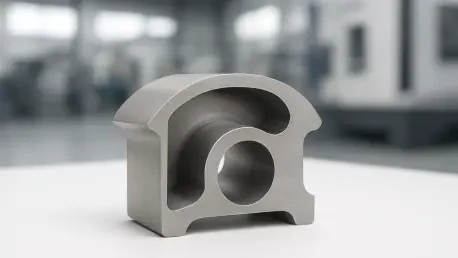
The impact of domestic powder production extends into the maritime sector, where the company provides essential support for the U.S. Navy’s manufacturing requirements. A key focus area is the use of Powder Metallurgy Hot Isostatic Pressing (PM-HIP), a process that utilizes high-performance metal powders to create dense, near-net-shape components. These parts possess mechanical properties that are often superior to traditional forgings, making them ideal for the harsh environments of submarine and surface ship construction. Historically, the procurement of large-scale forgings for naval vessels has been plagued by multi-year lead times and a dwindling number of qualified domestic suppliers. By providing a reliable source of high-quality metal powder, the Tennessee facility enables the rapid production of these critical components through HIP technology. This capability is vital for maintaining the readiness of the submarine fleet, as it allows for the swift replacement of parts and accelerated construction.
Ultimately, in the recent past, the successful integration of these advanced materials into the naval supply chain demonstrated a clear path forward for resolving long-standing logistical hurdles. The transition to domestic powder sourcing allowed maritime engineers to bypass the uncertainties of international shipping and foreign export restrictions. This shift provided the defense industrial base with a tangible solution for the production of high-strength components that remained resilient under extreme hydrostatic pressure. The strategic investment in the McDonald facility effectively closed the loop on the domestic production cycle, ensuring that every stage of manufacturing—from raw material processing to final component pressing—occurred within a secure environment. Moving forward, the focus shifted toward expanding these capabilities to include even more complex alloy systems, further reducing the reliance on traditional casting methods. This evolution in manufacturing strategy addressed the urgent need for shorter acquisition cycles.