
The colossal logistical undertaking of moving a Marion 8200 dragline across the expansive Texas terrain represents one of the most significant engineering feats of the modern industrial era, challenging our traditional perceptions of land management and heavy equipment operation. While the immediate focus of such a monumental operation often remains on the sheer technical difficulty of transporting nine million pounds of steel, the long-term environmental consequences offer a more profound narrative. These massive excavators are typically viewed as agents of destruction, yet their movements across the landscape initiate a sequence of events that results in the formation of entirely new habitats. As these machines strip away the earth to reach valuable resources, they leave behind immense structural voids that eventually serve as the foundation for vibrant biological communities. This intersection of heavy industry and natural reclamation forces a reevaluation of how human activity permanently alters the earth’s surface and the potential for unintended ecological benefits.
The Engineering and Logistics of a Walking Giant
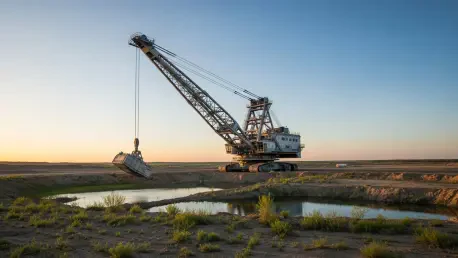
The Marion 8200 stands as a pinnacle of mechanical engineering, boasting a boom that pierces the sky at over 300 feet and a bucket capable of displacing 80 cubic yards of soil in a single motion. Such immense proportions render traditional propulsion systems like wheels or continuous tracks entirely impractical, as the concentrated pressure would cause the machine to sink into any but the hardest surfaces. Consequently, designers equipped this giant with a unique walking mechanism, utilizing massive pontoons that lift the entire frame and shift it forward in slow, deliberate steps. This ingenious method allows the excavator to navigate the unstable, muddy terrain found in surface mines, providing it with mobility that belies its staggering weight. However, this same specialized design necessitates a complete disassembly when the time comes to transport the unit across public roads or between different mining sectors. Each component must be treated as a separate logistical project to ensure safety.
Successfully relocating this titan across the Texas landscape required the coordination of 27 individual convoys, utilizing specialized heavy-haul trailers designed to distribute weight across dozens of axles. Engineering teams spent months surveying the route, identifying every utility line that needed lifting and every bridge that required structural reinforcement to prevent catastrophic failure during the passage. The largest of these loads exceeded 135 feet in length, while the single heaviest component weighed 412,000 pounds, pushing the limits of modern transportation technology to their absolute brink. Because the reassembly process is as complex as the initial manufacturing, the machine was not expected to return to full operational status until the latter half of 2026. This extended downtime underscores the massive investment of time and capital required to maintain the machinery that drives the energy sector. Such operations demonstrate that the physical movement of industrial assets is as challenging as the mining itself.
Nature’s Reclamation of Industrial Voids
Once the dragline finishes its work and the extraction phase concludes, the deep pits left in the earth undergo a surprising and largely unintended metamorphosis. In regions across the American South and Midwest, these excavations naturally fill with a combination of rainwater and seepage from local aquifers, transforming industrial scars into deep-water lakes. This process creates significant bodies of water in geographic areas where natural deep-water lakes are historically rare or non-existent. Within a single decade, these accidental lakes often develop sophisticated food webs as aquatic plants take root and nutrients accumulate in the basin. The depth of these pits provides a thermal stability that shallow ponds cannot match, allowing for a diverse range of species to flourish throughout the changing seasons. What began as a sterile industrial site eventually becomes a permanent water resource, providing ecological services that were absent from the original landscape prior to human intervention.
These man-made reservoirs have emerged as critical sanctuaries for a wide variety of wildlife, ranging from predatory fish like largemouth bass to apex avian hunters like ospreys and great blue herons. Perhaps the most notable development is the arrival of the American white pelican, which has begun utilizing these former mine sites as essential stopovers during its grueling annual migration. By mimicking the deep, clear environments typically associated with northern glacial lakes or ancient river oxbows, these mine pits offer high-quality habitats for species that might otherwise struggle to find suitable resting grounds. The structural complexity of the submerged mine benches creates ideal spawning conditions for fish, which in turn attracts larger predators and enriches the local biodiversity. This evolution highlights a fascinating paradox where the tools of extreme land disturbance become the primary architects of new, thriving environments. The legacy of the machine is thus written in the flora and fauna.
Sustainable Strategies for Future Environmental Stewardship
The successful integration of industrial voids into regional conservation strategies demonstrated that the future of mining lies in intentional ecosystem design rather than mere site abandonment. Industry leaders shifted their focus toward pre-planning the final topography of mines to maximize the ecological benefits for local bird and fish populations. Engineers collaborated with biologists to ensure that the slopes created by the Marion 8200 would support specific shoreline vegetation, which significantly improved the water quality of the resulting lakes. This shift in perspective transformed mine closures from a liability into a proactive environmental contribution. Regulatory bodies recognized the value of these deep-water habitats and provided frameworks for their long-term management as public recreational areas or wildlife preserves. By treating the physical footprint of the dragline as a biological canvas, the sector established a blueprint for turning mechanical destruction into lasting ecological wealth.