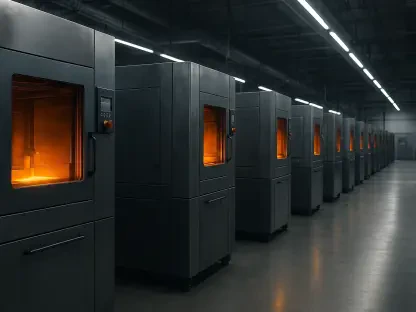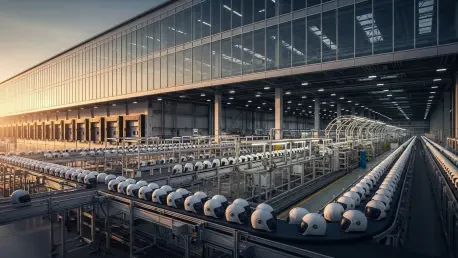

The relentless hum of machinery operating at near-total capacity might appear to be a sign of industrial perfection, yet for a global leader, it serves as a flashing red warning light that current infrastructure can no longer sustain burgeoning market ambitions. Studds Accessories Ltd is currently navigating this exact paradox, as the sheer volume of its success has pushed its existing four plants to a staggering 94% utilization rate. This high-stakes reality triggered a decisive move toward aggressive expansion, marking the transition from a dominant domestic powerhouse to a serious contender for global market leadership.
The significance of this expansion lies in the delicate balance between meeting today’s orders and preparing for tomorrow’s growth. For a company that already commands a massive portion of the Indian market, standing still is equivalent to falling behind. The decision to break ground on a new facility represents more than just a capital expenditure; it is a strategic maneuver designed to break through the production ceiling that currently limits the company’s ability to capture untapped international demand and solidify its reputation for safety and innovation.
The 94% Ceiling: Why Peak Efficiency Is a Catalyst for Expansion
Operating at a 94% capacity utilization rate represents a critical threshold where any minor equipment failure or logistical hiccup can lead to a cascading failure in the supply chain. In the manufacturing world, this level of activity is often viewed as a bottleneck rather than a victory, as it leaves no room for experimentation, sudden order surges, or the flexibility required to pivot toward new product lines. For Studds, this reality signaled that the existing infrastructure had reached its absolute limit, making the Faridabad expansion a fundamental necessity for survival in a competitive global landscape.
Managing Director Sidhartha Bhushan Khurana championing the “90% Rule” provided a clear rationale for this industrial shift. From his perspective, reaching 100% efficiency is a logistical impossibility due to the inherent requirements of routine maintenance, quality checks, and the unpredictability of human labor. When a plant crosses the 90% mark, it is effectively fully utilized, and any further pressure only risks compromising the integrity of the manufacturing process. Consequently, the push for a fifth facility is less about luxury and more about creating the operational breathing room required to maintain quality standards while scaling upward.
The ₹150 Crore Blueprint: Addressing the Global Protective Gear Shortage
The strategic investment of ₹1.5 billion into a fifth manufacturing facility in Haryana serves as a direct response to the widening gap between supply and demand in the protective gear sector. This capital is being channeled into advanced infrastructure that will allow the company to leapfrog current production constraints and prepare for a more integrated global presence. By focusing on the Haryana region, the company leverages existing logistical networks while creating a specialized hub that can handle the increased complexity of modern safety equipment production.
This expansion is deeply intertwined with the surging two-wheeler market in India and a growing international appetite for safety-certified headgear. As regulations regarding road safety become more stringent across emerging markets, the demand for affordable yet certified helmets has skyrocketed. The roadmap for the Faridabad plant is ambitious, aiming to increase the total annual production capacity from 9 million units to 12 million units, ensuring that the company can meet the needs of both local commuters and safety-conscious riders in over 70 countries.
A Phased Approach to Dominance: Managing Risk and Market Absorption
To mitigate the financial risks associated with such a large-scale project, the company adopted a phased commissioning strategy that aligns production growth with market absorption. Phase I is set for commercial operation in the second quarter of the upcoming 2026-27 financial year, bringing 1.5 million units online to capture the immediate recovery of the domestic market. This measured start allows the company to iron out operational kinks and gradually train its workforce without the pressure of an immediate, full-scale rollout that could lead to excessive overhead costs.
The integration of Phase II, slated for the 2027-28 fiscal year, will complete the capacity addition while ensuring that revenue streams remain ahead of operational expenses. Central to this growth is a dual-brand identity that targets different market segments with surgical precision. The core Studds brand provides a high-value proposition for price-sensitive regions, while the SMK premium brand utilizes measured automation and advanced materials to meet the rigorous safety standards of the United States and European markets. This bifurcation ensures that the company does not dilute its brand equity while simultaneously penetrating diverse economic demographics.
The OEM Ecosystem: Strengthening Alliances with Motorcycle Giants
The company’s industrial standards are continually validated through deep-rooted partnerships with original equipment manufacturer giants like Honda, Suzuki, and Royal Enfield. These alliances require a level of consistency and volume that only a massive manufacturing footprint can provide. By expanding its capacity, Studds reinforces its position as the preferred partner for motorcycle manufacturers who require reliable, large-scale supplies of safety gear to accompany their vehicle sales. This ecosystem creates a stable revenue floor that supports more adventurous forays into the international retail market.
Despite geopolitical volatility and the inherent pressures on global supply chains, the company has maintained an export footprint that spans more than 70 countries. This resilience is supported by a strong financial backbone, further bolstered by the 2025 listing on the National Stock Exchange and Bombay Stock Exchange. The access to public capital markets has provided the necessary funding for aggressive industrial scaling, allowing the company to navigate short-term price fluctuations in raw materials while keeping its long-term expansion goals firmly in sight.
Strategic Frameworks for Long-Term Industrial Growth
The successful management of capacity required a careful balance between high-volume output and the agility needed to pivot between domestic and international demands. Supply chain insulation became a priority, with strategies implemented to maintain material availability and pricing stability even during periods of global economic uncertainty. This robust framework allowed the company to focus on its market bifurcation strategy, ensuring that both the value-driven consumer and the premium enthusiast were satisfied without internal competition between the brands.
In the end, the construction of the fifth facility served as the final piece of a puzzle that transformed the company’s operational philosophy. The decision-makers recognized that industrial dominance was not merely about the number of units sold, but about the reliability of the manufacturing process itself. By opting for a phased rollout and securing diverse revenue streams through both OEM partnerships and a dual-brand retail strategy, the leadership team successfully navigated the risks of overexpansion. They ultimately achieved a balanced production environment that supported long-term growth while insulating the company from the volatility of individual geographic markets.