
As the manufacturing landscape shifts toward a more integrated digital-to-physical workflow, the merger between 3D Prod and Sculpteo represents a significant pivot in the European additive manufacturing sector. By combining high-volume industrial production with sophisticated digital design platforms, this new entity is positioned to bridge the gap between rapid prototyping and full-scale industrial series. This discussion explores the strategic alignment of their facilities, the expansion into high-performance metals like titanium and stainless steel, and the logistical roadmap for supporting a global customer base. We delve into how these synergies will drive revenue toward ambitious targets while maintaining the precision required for the aerospace and healthcare industries.
3D Prod and Sculpteo are merging to combine industrial production capacity with a digital manufacturing platform. How will you integrate the specific finishing expertise of the Vosges site with the design knowledge in Villejuif, and what steps will ensure a seamless experience for your 7,000 corporate customers?
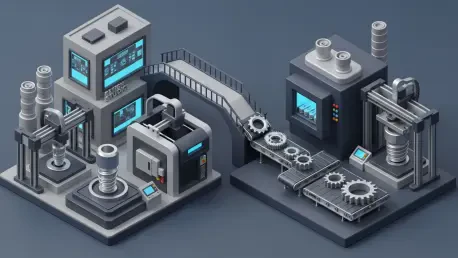
The integration is built on creating a “digital-to-physical” bridge where the design intelligence at Villejuif informs the technical execution at the Vosges site. We are harmonizing Sculpteo’s digital interface with 3D Prod’s hands-on finishing mastery to ensure that a customer’s vision transitions smoothly from a screen to a high-quality, tactile component. For our 7,000 corporate customers, this means they can leverage advanced design optimization tools early in the process, which are then physically realized through specialized post-processing techniques that only an industrial-scale facility can provide. We are implementing unified project management protocols to ensure that whether a client needs a rough prototype or a polished final product, the quality remains consistent across both locations. The goal is to make the complexity of the merger invisible to the user, providing a single, streamlined point of entry for a vastly expanded range of capabilities.
The new group aims to produce over 1.25 million parts annually across sixty-two countries. Beyond current polymer offerings, how will you scale the production of aluminum, titanium, and stainless steel 316L components, and what specific technical challenges do you anticipate when moving these materials into large-scale industrial series?
Scaling to a volume of 1.25 million parts requires a rigorous shift from the flexible mindset of prototyping to the disciplined consistency of series production, particularly with metals. When working with aluminum, titanium, and stainless steel 316L, the primary technical hurdle is managing thermal stresses and ensuring metallurgical integrity across thousands of identical units. We are focusing on optimizing build parameters and cooling cycles to prevent the warping or internal porosities that can plague large-scale metal runs. Furthermore, expanding our reach to sixty-two countries demands a highly synchronized supply chain to manage the weight and logistical sensitivity of metal components. By investing in standardized quality control sensors and predictive maintenance for our machines, we ensure that the first part in a series of ten thousand is identical to the last.
With a revenue target of €20 million by 2027, the strategy involves optimizing commercial synergies between prototyping and series production. What metrics will you use to evaluate the success of this transition, and how will your investment in new equipment at the Île-de-France facilities specifically support the aerospace and healthcare sectors?
Our primary metric for success will be the “conversion rate” of one-off prototypes into multi-year series production contracts, which is essential to hitting our €20 million revenue target by 2027. We will also closely monitor lead-time reduction and the “first-time-right” ratio, ensuring that our industrial efficiency matches our commercial growth. The upcoming equipment investments at our Île-de-France facilities are specifically chosen to meet the stringent traceability and precision standards of the aerospace and healthcare sectors. For healthcare, this means deploying machines capable of producing biocompatible components with microscopic accuracy, while for aerospace, we are focusing on high-strength-to-weight ratios in our metal builds. These investments represent a commitment to moving beyond simple models and into the realm of mission-critical, flight-ready, and surgical-grade hardware.
The combined entity serves diverse industries from automotive to design. Could you provide a step-by-step breakdown of how the expanded material portfolio will reduce development cycles for manufacturers, and what role will the recruitment of additional staff play in maintaining quality control across such a high volume of parts?
The expanded material portfolio accelerates development by allowing manufacturers to use the final production material—whether it’s titanium or a specific polymer—during the very first iteration. Initially, a manufacturer uses the Villejuif design expertise to optimize the geometry; then, they immediately move to 3D Prod’s facility for a functional prototype in the actual end-use metal, bypassing the need for temporary “look-alike” materials. This “live-material” testing eliminates the redesign phases typically required when moving from a plastic prototype to a metal production part. To support this high-speed workflow, we are recruiting specialized technicians who act as quality gatekeepers at every stage of the 1.25-million-part annual output. These experts will oversee automated inspection systems, providing the human intuition necessary to catch subtle surface defects that machines might miss, ensuring that “industrial scale” never comes at the cost of “artisan quality.”
Supporting French, European, and American manufacturers requires navigating different regulatory and logistical landscapes. How do you plan to leverage your dual manufacturing sites to optimize supply chains for international clients, and what specific localized services will you introduce to better support the expansion of the additive manufacturing sector?
By utilizing both our Vosges and Villejuif sites, we can strategically distribute production loads based on the specific logistical needs and regulatory requirements of French, European, and American clients. We plan to use the Île-de-France location as a high-speed hub for international design collaboration, while the Vosges site acts as the heavy-duty engine for industrial-scale manufacturing and shipping. To better support our global expansion, we are introducing localized technical consulting services that help manufacturers navigate regional certification standards, such as AS9100 for aerospace or ISO 13485 for medical devices. This dual-site approach allows us to reduce shipping times and carbon footprints by producing parts closer to their final destination whenever possible. Ultimately, we are building a localized support network that provides the responsiveness of a neighborhood shop with the horsepower of a global industrial leader.
What is your forecast for the metal Additive Manufacturing market?
I anticipate that the metal additive manufacturing market will transition from a “specialty” niche to a core industrial pillar, with a particular focus on the democratization of high-performance alloys like 316L stainless steel and titanium. As we target our €20 million revenue goal by 2027, I believe we will see a massive shift where mid-sized manufacturers, not just industry giants, begin integrating metal 3D printing for end-use series production. The “prototype-only” mindset is fading, and the next few years will be defined by the ability to deliver hundreds of thousands of metal parts with the same reliability as traditional casting or machining. This evolution will be driven by smarter software that predicts metal fatigue during the design phase and more robust finishing techniques that deliver aerospace-grade surfaces right off the build plate. For the sector to truly explode, we must continue to prove that 3D printing is not just a faster way to make a part, but a better way to make a more complex, lighter, and more durable product.