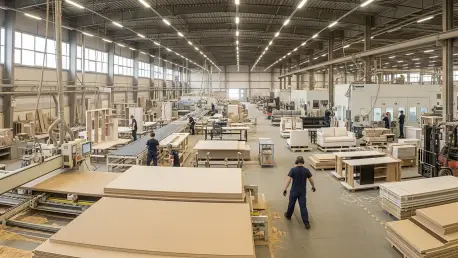

The global furniture landscape is witnessing a seismic shift as India transitions from a fragmented landscape of small-scale artisanal workshops into a unified, high-output industrial force capable of competing on the international stage. This transformation is not merely a result of organic growth but stems from a deliberate, multi-pronged strategy involving massive infrastructure investments and regulatory overhauls aimed at creating a robust manufacturing ecosystem. By leveraging a vast pool of skilled labor and integrating advanced automated technologies, the nation is positioning itself as a credible alternative to traditional manufacturing hubs that have long dominated the Western markets. This evolution reflects a broader ambition to capture a significant portion of the global home and office furnishing demand, which has increasingly sought diversified supply chains to mitigate geopolitical risks. As the sector matures, the focus has moved from bespoke, one-off pieces to the production of standardized, high-quality goods that meet rigorous global standards and timelines.
Trade Agreements and Industrial Scaling: Policy and Production
The strategic deployment of Free Trade Agreements serves as a critical engine for India’s burgeoning export capabilities, effectively lowering the barriers that previously hindered market entry in high-value regions. Recent pacts with the United Arab Emirates, Australia, and the European Free Trade Association have fundamentally altered the pricing dynamics for Indian exporters by eliminating prohibitive import duties. This fiscal relief allows domestic manufacturers to offer competitive pricing in international showrooms without sacrificing the quality of materials or design. Furthermore, these agreements facilitate smoother customs procedures and regulatory alignment, which reduces the lead times that often deter large-scale international buyers. By creating a more transparent and predictable trade environment, these policies have encouraged a surge in foreign direct investment, as global furniture brands look to set up manufacturing bases within the country to take advantage of the preferential trade terms and an evolving local supply chain that began its expansion in 2026.
To secure a significant share of the global market, Indian manufacturers are pivoting from fragmented, artisanal production to standardized, industrial-scale manufacturing that meets strict international quality benchmarks. This transition is essential for meeting the safety requirements required by major consumers in the United States, Germany, and the United Kingdom, where certifications regarding structural integrity and chemical safety are non-negotiable. Companies are increasingly investing in advanced technology and specialized materials, such as flame-retardant surfaces and high-quality veneers, to ensure their products align with the aesthetic and regulatory demands of Western markets. This shift moves beyond unique craftsmanship toward reliable, mass-produced quality, allowing domestic firms to participate in high-volume tenders for hospitality and corporate sectors. By integrating computer-aided manufacturing and precision tools, the industry is creating a new tier of suppliers capable of delivering consistency and durability across large product lines.
Market Competition and Future Sustainability: Strategic Growth
Despite the optimistic growth trajectory, the sector faces significant hurdles, including the volatility of raw material prices and stiff competition from established hubs like China and Vietnam. These neighboring competitors benefit from mature logistics networks and lower production costs, making it difficult for new Indian players to maintain high profit margins while scaling up. Furthermore, the transition to modern export models requires substantial capital investment, posing a financial risk for smaller domestic firms that lack the resources for backward integration or the ability to control their own supply of timber and chemicals. Addressing these supply chain risks requires a coordinated effort to improve port infrastructure and reduce internal transport costs, which currently act as a bottleneck for export growth. Success in this competitive landscape depends on the ability to mitigate these external pressures through strategic partnerships and the development of local clusters that provide centralized access to raw materials and specialized manufacturing services.
The future of the sector depended on the ability of private firms to execute at scale and effectively utilize the framework provided by trade policies. Success was measured by specific performance indicators, such as a steady increase in export revenue share and high capacity utilization in newly built factories. Observers watched for technological innovation and the stability of supply chains, as these factors determined whether companies could withstand global commodity price fluctuations. To move forward, it was necessary that manufacturers prioritized the cultivation of a specialized workforce adept in digital design and sustainable forestry practices. Strengthening the domestic raw material supply through local chemical production and eco-friendly timber sourcing was essential for insulating the sector from shocks. By focusing on these actionable areas, the industry established a foundation for resilient growth that exceeded its previous boundaries. The focus shifted toward a circular economy where recycled materials defined the next generation of global furniture, ensuring that the sector remained profitable.