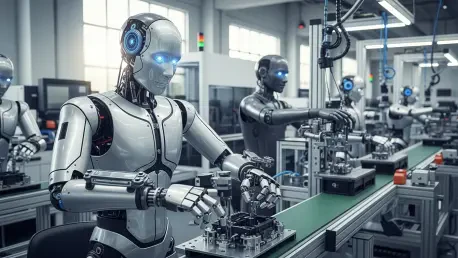

Industrial production has reached a pivotal juncture where the isolation of digital intelligence from physical execution is finally being bridged by advanced engineering solutions. Instead of treating artificial intelligence as a separate software layer that simply processes data, current developments focus on integrating these cognitive abilities directly into the mechanical bodies of robots. This transition to embodied intelligence allows machines to interact with their environment in a way that mimics biological organisms, enabling them to perceive sensory inputs and make real-time decisions without external guidance. By merging high-fidelity hardware with autonomous decision-making protocols, manufacturing facilities are moving beyond the era of static assembly lines toward dynamic, self-optimizing ecosystems. This change represents more than just an incremental upgrade; it is a fundamental shift in how physical work is conceptualized and executed on a global scale.
Overcoming Limitations: Enhancing Collaborative Intelligence
Traditional automation has long been constrained by rigid programming and the inability of systems to adapt to unforeseen changes on the factory floor. The current strategy involving embodied intelligence aims to dismantle these barriers by providing robots with the necessary sensory feedback and processing power to handle variability. Rather than following a set of hardcoded instructions that fail when a component is slightly out of place, these intelligent systems use vision and force sensing to adjust their actions dynamically. This adaptability is essential for high-precision tasks that were previously too complex for standard industrial robots. By fostering an environment where machines can understand the physical context of their surroundings, production cycles become more resilient. This evolution effectively transforms the machine from a tool into a partner, capable of working alongside human technicians to achieve outcomes that require both precision and judgment.
The integration of machine precision with human-like situational awareness has unlocked new levels of flexibility across the entire manufacturing sector. In practical terms, this means that robots are no longer confined to safety cages but can safely navigate complex workspaces shared with personnel. This collaborative framework relies on sophisticated algorithms that allow the machine to predict human movements and adjust its pathing or force output accordingly. For instance, in tight assembly spaces where every millimeter counts, embodied AI can manage intricate wiring and component placements with a level of delicacy that rivals human touch. Furthermore, the operational efficiency gained from this synergy reduces downtime and minimizes material waste. As these systems become more prevalent, the focus shifts toward optimizing the interaction between biological and artificial actors, ensuring that the strengths of both are utilized to maintain a competitive edge in high-stakes industries.
Specialized Robotics: Deploying Advanced Industrial Platforms
Current hardware developments have introduced a diverse portfolio of specialized robotics designed to address the specific needs of modern industry. The SUYUAN bipedal robot serves as a prime example, featuring forty-one degrees of freedom that allow it to mimic the walking patterns and maneuverability of a human. Its hot-swap battery system ensures that it can remain operational for extended periods without the need for significant downtime. In a similar vein, the automotive sector has seen the introduction of the TUOYUAN wheeled humanoid, which utilizes hybrid force control to manage tasks such as sheet metal handling and connector insertion. These robots utilize multimodal visual sensing to build a comprehensive map of their environment, allowing them to interact with physical objects in three dimensions. By deploying these advanced platforms, manufacturers can automate hazardous or repetitive tasks with a higher degree of reliability than what was possible with previous technology.
Beyond general-purpose humanoids, specialized units like the Mermaid bionic robot have been developed to handle technical maintenance and control tasks autonomously. These robots are capable of navigating complex control panels and manipulating various switches and dials without the need for manual programming or constant human oversight. For infrastructure projects, the autonomous pipe-inner-wall chamfering robot provides an essential service by operating in confined spaces with precision tolerances held within a single millimeter. This shift toward task-specific robotics demonstrates a sophisticated understanding of how AI can be tailored to meet unique mechanical challenges. The ability of these machines to perform intricate tasks that once required the specialized skills of human technicians indicates a broader trend toward total system autonomy. As these specialized tools are integrated into existing workflows, they provide a scalable solution for maintaining complex industrial infrastructure without increasing labor costs.
Architectural Innovation: Building the Future of Autonomous Factories
To support the massive physical requirements of industrial artificial intelligence, the focus has expanded to include the development of high-performance mechanical components. Innovations such as planetary roller screws have been introduced to provide triple the load capacity of standard parts, ensuring that the physical robot can handle the stresses of heavy-duty operation. Additionally, the development of the DexHand robotic hand provides the necessary finesse for complex gripping and manipulation tasks that require a human-like touch. These core components are vital for translating the digital commands of an AI brain into precise physical movements. Without such robust hardware, even the most advanced software would be limited by the physical constraints of the machine. By prioritizing the evolution of these mechanical systems, the gap between cognitive intention and physical execution is effectively closed. This commitment to hardware excellence ensures that robots are capable of performing high-force and high-precision tasks.
The transformation of industrial production culminated in the deployment of AI-native factory architectures that replaced traditional hierarchies with streamlined management systems. The integration of platforms like StarCloud enabled the hosting of dozens of specialized AI agents that managed the entire lifecycle of a product from inception to final maintenance. These digital tools turned human expertise into a permanent data asset, ensuring that the factory brain could optimize production schedules in real time. It was observed that the use of a physical twin provided a perfect digital mirror for analyzing every physical action, which allowed for a continuous loop of self-correction and optimization. Moving forward, manufacturers should prioritize the adoption of unified digital-physical standards to ensure that varied robotic systems can communicate seamlessly. Investing in modular hardware that supports rapid battery swaps and multimodal sensing will be essential for maintaining 24-hour production cycles. The transition demonstrated that the true value of AI lies in its ability to inhabit the physical world.