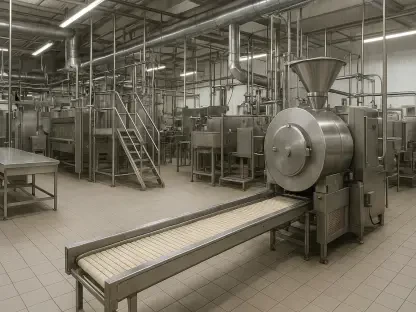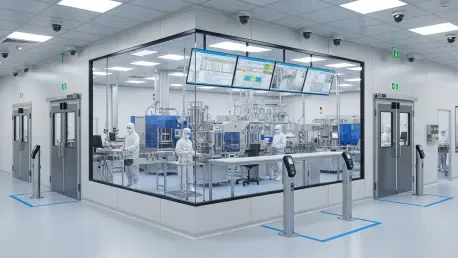

The United States is currently navigating a fundamental reorganization of its pharmaceutical security as the federal government moves to detach the nation from its long-standing dependence on international manufacturing hubs for essential medications. This strategic shift is crystallized in the proposed Fiscal Year 2027 discretionary budget, which earmarks a substantial $325 million increase for the Center for Industrial Base Management and Supply Chain. This funding is not merely a financial injection but a calculated attempt to modernize the Administration for Strategic Preparedness and Response capabilities. By focusing on the domestic production of 26 critical drugs identified as vital to national security, the administration is establishing a mandatory six-month stockpile of active pharmaceutical ingredients. This initiative moves beyond simple procurement, aiming to foster a resilient, high-tech domestic infrastructure that can insulate American patients from the volatile fluctuations of global trade and manufacturing crises.
Advanced Manufacturing: From Batch Processing to Continuous Flow
The traditional “batch” manufacturing method, which has defined the pharmaceutical industry for decades, is being systematically replaced by “continuous flow” technology to overcome the cost disadvantages of domestic labor. Companies like Bright Path are leading this transition by deploying patented spinning tube-in-tube reactor technology to produce high-demand medications such as lidocaine and carboplatin. Unlike batch processing, which requires stopping and starting production cycles, continuous flow allows for a constant, automated output that is significantly faster and more consistent. This efficiency is critical because it enables American facilities to compete with the low-cost manufacturing centers in Asia without sacrificing quality or safety. By utilizing these advanced systems, domestic firms can react instantly to shortages, scaling production up or down as the market dictates, while maintaining a digital footprint that simplifies the entire regulatory reporting process for the manufacturers.
Artificial intelligence is also playing a central role in this industrial rebirth, with entities like the Mark Cuban Cost Plus Drug Company integrating machine learning into the very fabric of the production line. Through the EQUIP-A-Pharma program, AI systems are now capable of performing real-time quality assessments using in-line metrology, which measures chemical compositions as they move through the system. This eliminates the need for time-consuming post-production laboratory testing, which often delays the release of life-saving drugs by weeks or even months. By identifying microscopic deviations in the manufacturing process immediately, these AI tools ensure that every dose of medication, such as diltiazem for heart conditions, meets precise pharmaceutical standards. The integration of such technology transforms the factory floor into a smart environment where waste is minimized and throughput is maximized, proving that technical superiority can effectively offset the financial hurdles.
Regulatory Reforms: Streamlining the Path to Market
To match the rapid pace of technological innovation, the federal government is allocating $9 million to the Food and Drug Administration to expand its specialized workforce and implement the “FDA PreCheck” program. This initiative represents a significant departure from traditional oversight by encouraging manufacturers to engage with regulators during the earliest stages of facility design and construction. By providing a clear roadmap for compliance before a single brick is laid, the program minimizes the risk of expensive regulatory delays that have historically stifled domestic investment. Furthermore, the hiring of nineteen new full-time employees dedicated to advanced manufacturing applications ensures that the agency has the technical expertise required to evaluate complex AI-driven systems and continuous flow reactors. This proactive regulatory posture is essential for creating a predictable environment where private companies feel confident investing in the domestic infrastructure necessary to secure the drug supply.
Beyond staffing and early consultation, the administration is focusing on modernizing the Chemistry, Manufacturing, and Controls review process to better accommodate non-traditional production methods. The introduction of the National Priority Voucher program and risk-based assessment models allows the FDA to prioritize drugs that are most vulnerable to shortages, ensuring that essential medicines reach the public without bureaucratic friction. Industry advocates emphasize that the current approval pathways for generic drugs, primarily built around the parameters of legacy batch manufacturing, must evolve to reflect the flexibility of modular technology. If the regulatory framework fails to adapt, the speed and cost-efficiency gains offered by continuous flow systems could be negated by administrative bottlenecks. Consequently, the push for regulatory modernization aims to create a streamlined, science-based approach that upholds the highest safety standards while fostering the rapid deployment of innovation.
Strategic Next Steps: Building a Sustainable Ecosystem
Achieving long-term pharmaceutical independence required more than just capital investments; it necessitated a complete overhaul of how the domestic industry interacts with federal procurement agencies. By prioritizing domestic manufacturers in government contracts and ensuring that the updated list of 86 essential medicines was backed by a robust supply of local active ingredients, the administration began to insulate the market from external shocks. The goal shifted from reacting to shortages to preventing them through a self-sustaining ecosystem where technological efficiency drove down costs naturally over time. Experts observed that the success of this transition hinged on the ability of private industry to maintain high throughput while adhering to the rigorous transparency requirements of the modern supply chain. This approach effectively turned a national security vulnerability into a source of economic strength, as high-tech American factories began to set a new global standard for quality.
Looking toward the immediate horizon, the integration of real-time digital monitoring and decentralized manufacturing hubs emerged as the primary solution for a fragmented global market. Stakeholders recognized that for this pharmaceutical renaissance to endure, the FDA had to finalize the merger of advanced review concepts from new drug applications into the generic drug approval process. This systemic change allowed for the rapid reconfiguration of production lines to meet sudden spikes in demand, such as during public health emergencies. Moving forward, the focus remained on refining these automated systems and ensuring that the workforce was trained to operate the sophisticated AI tools and chemical reactors that now defined the industry. By focusing on these actionable regulatory reforms and continuing to support private-sector innovation, the United States successfully laid the groundwork for a future where its medicine cabinets were no longer subject to the geopolitical tensions.