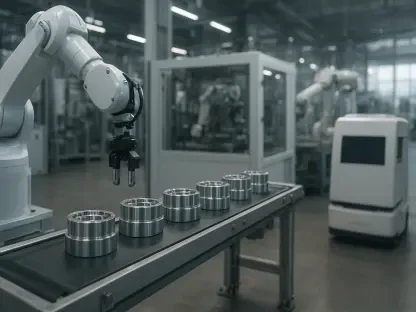

The aerospace industry relies on the structural integrity of every bolt and bracket, yet the hidden evolution of 3D-printed alloys under intense thermal stress remains a critical frontier for modern engineering. Researchers at Loyola Marymount University, collaborating with industry giant Boeing, recently conducted an extensive investigation into how post-process heat treatments affect the structural longevity of AlSi10Mg. This 3D-printed aluminum alloy has become a staple in aerospace manufacturing due to its lightweight properties and complex geometry capabilities, but its behavior under sustained high-temperature conditions was not fully understood. The study aimed to address a significant knowledge gap in additive manufacturing by scrutinizing how extreme thermal environments influence both the fatigue life and the internal porosity of these printed components. By merging advanced academic theory with rigorous industrial standards, the research team worked to establish the reliability of these parts during real-world flight operations and automotive use cases.
Testing Protocols and Mechanical Stress Analysis
Evaluating Material Endurance Under Extreme Conditions
To create a realistic simulation of the demanding environments found in jet engines and high-performance exhaust systems, the research team subjected industry-grade AlSi10Mg samples to rigorous thermal testing. The methodology involved placing the specimens in high-temperature furnaces and maintaining three specific temperature levels: 200, 260, and 300 degrees Celsius. These thresholds were chosen to represent the varying degrees of thermal stress that aerospace components encounter during operational cycles. Furthermore, the duration of these heat exposures was varied significantly to capture the full spectrum of material degradation. Some samples were heated for a mere fifteen minutes to simulate rapid thermal spikes, while others remained in the furnaces for up to 1,000 hours to replicate long-term service life. This tiered approach allowed for a precise comparison between short-term thermal exposure and the cumulative effects of prolonged heat on the metal.
Simulating Mechanical Stress via Fatigue Testing
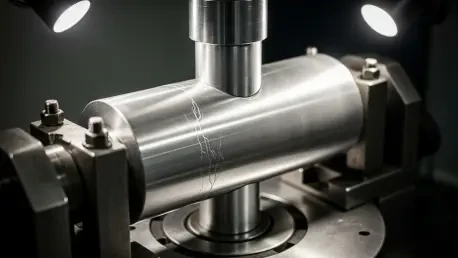
Measuring the structural limits of the treated alloy required the implementation of Rotating Bending Fatigue tests, a standard but vital protocol for determining when a material will eventually fail under cyclic loading. During these procedures, the researchers applied two distinct stress levels, specifically 10 ksi and 25 ksi, to represent moderate and heavy physical loads. By rotating the specimens while applying these loads, the team could calculate the exact number of cycles each piece could withstand before a fracture occurred. This specific testing methodology transformed abstract metallurgical observations into concrete data points that engineers can use to predict component lifespans. The results provided a quantitative look at how the internal changes caused by heat translated into a loss of physical strength. Such data is essential for designers who must ensure that 3D-printed parts do not suffer from sudden, catastrophic failure while an aircraft is in flight.
Thermal Thresholds and Microstructural Transformation
Identifying Factors Behind Fatigue Life Reduction
The collected data revealed that the durability of the 3D-printed alloy is exceptionally sensitive to both the specific temperature and the total duration of the heat exposure. Initial findings indicated that heat treatment at 200 degrees Celsius had almost no measurable impact on the material’s overall fatigue life, suggesting a safe operating window for many standard applications. However, once the temperature reached 260 or 300 degrees, the performance of the alloy began to decline sharply. This degradation was particularly evident under the higher stress load of 25 ksi, where the samples exposed to heat for longer periods failed significantly sooner than those that had received no thermal treatment. This trend highlighted a major safety consideration for engineers, as it demonstrated that components might appear structurally sound in their initial state but could lose their resilience over time when exposed to the high temperatures typical of propulsion systems.
Microstructural Degradation and Silicon Network Failure
To understand why the alloy lost its strength at higher temperatures, the team utilized Scanning Electron Microscopy to peer into the metal’s internal architecture. In its standard as-printed state, AlSi10Mg features a protective silicon network that acts as a reinforcing web, providing the necessary stiffness to resist physical deformation. However, the microscopic analysis showed that this silicon structure begins to dissolve and coarsen when the alloy is subjected to temperatures exceeding 200 degrees Celsius. As the network breaks down, it enables a phenomenon known as dislocation movement within the metallic grain structure. This movement essentially allows the metal to suffer permanent internal distortion much more easily than it would in its original state. Once these dislocations become widespread, the material becomes susceptible to the formation of micro-cracks. Under the pressure of cyclic mechanical stress, these cracks expand until the component fails.
Engineering Safety and Future Material Optimization
Enhancing Reliability in Advanced Manufacturing
The intersection of material science and mechanical engineering safety remains a cornerstone of aerospace innovation, and this research underscores the need for constant scrutiny of additive processes. The work performed by the LMU team provided a critical foundation for developing more resilient designs, ultimately receiving high honors from the American Society of Materials for its contribution to the field. By quantifying the exact limits of AlSi10Mg, the researchers enabled manufacturers to create more accurate safety margins and maintenance schedules for 3D-printed hardware. This study proved that while additive manufacturing offers unparalleled design freedom, it also introduces unique metallurgical challenges that traditional forging methods do not face. The collaboration between academia and industry leaders like Boeing ensured that these findings were directly applicable to the current generation of flight technology. Such partnerships are vital for translating discoveries into safer transport.
Establishing New Standards for Structural Integrity
The investigation successfully identified the precise thermal boundaries that engineers must respect to maintain the structural integrity of 3D-printed aluminum components. Professionals in the field concluded that optimizing the initial silicon distribution within the alloy could potentially mitigate the degradation effects observed at higher temperatures. The research team established that future manufacturing protocols should include stricter thermal monitoring to prevent the unintended softening of critical parts. These insights led to the proposal of new heat treatment standards that balanced the need for stress relief with the preservation of the material’s internal reinforcing network. By focusing on the microstructural stability of the alloy, engineers were able to refine their approach to part geometry and load distribution. These steps ensured that the next iteration of aerospace and automotive components would meet the rigorous safety demands of modern transportation while leveraging the benefits of 3D printing.