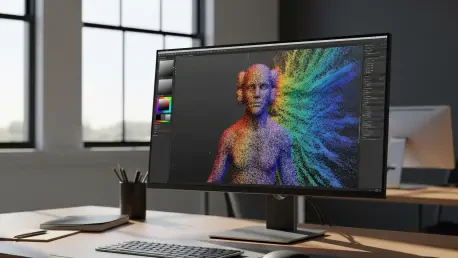

The creative workflow for digital artists has undergone a radical transformation as the demand for high-fidelity spatial assets continues to outpace traditional manual modeling techniques in various interactive media sectors. Historically, the transition from a flat, two-dimensional sketch to a fully realized three-dimensional model required a labor-intensive pipeline involving sculpting, retopology, and complex UV mapping. However, the emergence of Image Blaster has fundamentally altered this trajectory by utilizing advanced Gaussian Splatting algorithms to convert concept art into volumetric data almost instantaneously. This technology represents a significant departure from previous photogrammetry methods, which often required dozens of reference images from multiple angles to achieve acceptable results. By inferring depth and geometry from a single viewpoint or a limited set of concept drawings, Image Blaster allows studios to maintain the artistic intent of their initial designs while bypassing technical bottlenecks that have long plagued the pre-visualization phase of production.
The Evolution of Generative Spatial Modeling
Theoretical Foundations: Leveraging Gaussian Splatting for Dimensional Reconstruction
Gaussian Splatting has emerged as a superior alternative to traditional Neural Radiance Fields due to its ability to provide real-time rendering speeds without sacrificing the intricate details found in organic shapes. Unlike mesh-based geometry, which relies on a fixed network of vertices and faces, Gaussian Splatting represents objects as a collection of 3D ellipsoids that carry color, opacity, and scale information. Image Blaster takes this a step further by applying a generative layer to the splatting process, allowing the system to fill in missing blind spots that are not visible in the original 2D concept art. This reconstruction is achieved through a probabilistic framework that analyzes the lighting and perspective of the input image to determine the most likely volumetric structure of the object. This approach ensures that the resulting 3D asset is not merely a flat projection but a coherent entity capable of being viewed from various angles, which is critical for early-stage environmental design.
Technical Mechanics: Interpreting Monocular Depth and Surface Texture
The technical sophistication of Image Blaster lies in its dual-stage processing engine, which first performs a semantic analysis of the concept art to identify material properties and structural hierarchies. During the initial phase, the software utilizes a transformer-based architecture to estimate a dense depth map, providing a foundation for the subsequent spatial distribution of the Gaussian particles. The second phase involves a refinement loop where the system iteratively adjusts the position and transparency of each ellipsoid to match the aesthetic style of the input artwork. This allows for the preservation of stylized brushstrokes and unique textures that are often lost when using standard automated modeling tools. Furthermore, the software provides a set of localized control parameters, enabling artists to manually tweak the density of the splats in high-interest areas, such as a character’s face or complex mechanical components. This hybrid methodology combines machine learning with the nuanced oversight required for professional-grade creative outputs.
Industry Impact and Workflow Implementation
Production Efficiencies: Transforming Rapid Prototyping in Interactive Media
As production budgets and timelines become increasingly constrained, the ability to rapidly prototype complex characters and environments offers a competitive advantage to studios of all sizes. Image Blaster facilitates a more iterative design process where concept artists can see their visions translated into 3D space within minutes rather than weeks. This shift encourages more experimentation during the blue-sky phase of development, as the cost of failure is drastically reduced when assets can be discarded or refined at the push of a button. Moreover, the lightweight nature of Gaussian Splat datasets makes them ideal for collaborative reviews in virtual reality environments, where multiple stakeholders can inspect a design’s proportions and scale in a shared digital space. By integrating this tool into existing Digital Content Creation software, teams have successfully bridged the gap between the concept department and the technical art department, fostering a more cohesive and efficient production environment that prioritizes creative expression.
Strategic Outlook: Integrating Automation Without Compromising Artistic Direction
The transition toward automated 3D reconstruction necessitated a strategic re-evaluation of how artistic integrity was maintained amidst the rapid adoption of generative tools. While Image Blaster offered unprecedented speed, the most successful implementations occurred when studios treated the generated splats as a foundational layer rather than a finished product. Creative directors found that the best results were achieved by using these assets as volumetric prototypes that could be refined by senior modelers to ensure the final output met brand standards. To leverage this technology effectively, production houses should prioritize the development of custom shaders that can interpret Gaussian data within standard rendering engines. Furthermore, establishing a version control system for generative iterations proved essential for maintaining a clear creative trail during long-term projects. By adopting a balanced approach that combines automated efficiency with rigorous human oversight, the industry effectively secured a future where technology amplifies the unique intuition of the designer.