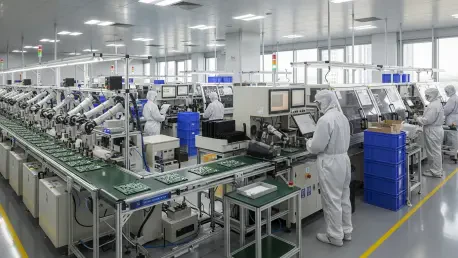

The continental landscape across Africa is currently undergoing a seismic shift as traditional agrarian and resource-based economies pivot toward sophisticated high-tech industrialization. This transition is a calculated response to the global restructuring of supply chains, where diversification has become the primary objective for multinational corporations. By leveraging a youthful demographic and expanding urban centers, several nations are positioning themselves as viable alternatives to established Asian manufacturing hubs. The projected trajectory suggests that the electronics manufacturing sector will reach a valuation of $3 billion by 2035, driven by a combination of surging domestic demand and export-oriented industrial strategies. This evolution represents a critical juncture for regional development, as it promises to integrate African markets more deeply into the global digital economy while fostering a new era of technological self-sufficiency and economic resilience across the continent.
Catalysts for Progress: Infrastructure and Capital
Specialized Economic Zones and Advanced Logistics
Significant capital inflows from international developmental agencies and private equity firms have accelerated the construction of specialized economic zones designed to support complex assembly lines. These zones, particularly in countries like Egypt, Morocco, and Rwanda, offer streamlined regulatory frameworks and robust utility services that are essential for the high-precision requirements of electronics fabrication. As of 2026, the focus has shifted toward ensuring consistent power supply through the integration of renewable energy sources, such as large-scale solar farms and wind projects, to mitigate the risks of operational downtime. Furthermore, the expansion of deep-sea ports and modern rail networks has reduced the logistical bottlenecks that previously hindered the movement of raw materials and finished goods. These systemic improvements are creating a predictable environment for global tech giants to establish long-term manufacturing footprints, thereby stabilizing the regional economy.
Workforce Optimization and Technical Education
A fundamental component of this manufacturing surge is the rapid evolution of the African workforce through targeted vocational training and specialized university programs that emphasize modern engineering. Educational institutions are increasingly aligning their curricula with the specific needs of the electronics sector, focusing on disciplines such as mechatronics, semiconductor physics, and hardware design. This alignment ensures that the labor force is not only numerous but also possesses the technical proficiency required to manage automated assembly lines and perform quality control for high-end electronic devices. From 2026 to 2032, the number of certified technical workers is projected to grow significantly, providing a competitive edge in terms of labor cost and skill diversity compared to traditional manufacturing centers. Governments are also incentivizing private companies to host apprenticeship programs, which bridge the gap between theory and practical application.
Strategic Integration: Trade and Policy Frameworks
Market Harmonization and Continental Free Trade
The operationalization of the African Continental Free Trade Area has been a primary driver in dismantling the tariff barriers that once fragmented the regional market into small, isolated pockets. By creating a unified market for goods and services, the agreement allows electronics manufacturers to scale their operations across borders with unprecedented ease and efficiency. This regulatory harmonization is particularly beneficial for the electronics sector, which relies on a complex web of sub-components that are often sourced from different countries within the same region. As of 2026, the implementation of standardized rules of origin and streamlined customs procedures has already started to lower the cost of intra-African trade, making it more profitable for companies to build regional value chains. This unified approach not only attracts more foreign direct investment but also encourages local firms to expand their footprint, turning local successes into regional industrial leaders.
Technological Sovereignty and Sustainable Development
The progress achieved in the electronics manufacturing sector demonstrated that strategic alignment between policy and investment could yield substantial economic dividends. It was through the rigorous implementation of trade reforms and the massive scaling of technical education that the foundation for a $3 billion industry was solidified. To maintain this momentum, stakeholders must now prioritize the digitalization of logistical corridors and the expansion of high-speed data connectivity to support smart factory operations. Future considerations should involve the establishment of a continental electronics certification board to ensure quality standards across all member states. By investing in regional research and development consortia, the industry can transition from assembly to original innovation, ensuring that the value remains within the continent. Leaders were encouraged to facilitate deeper public-private dialogues to address emerging bottlenecks.