
The evolution of cleanroom construction relies on breaking down professional silos to align all stakeholders around a single source of technical truth. In the high-stakes sectors of biotechnology, pharmaceutical manufacturing, and advanced semiconductor fabrication, the speed at which a facility moves from a conceptual drawing to a fully operational state has become the primary metric of corporate success. For modern facilities producing complex cell therapies or cutting-edge microprocessors, the margins for operational delay have completely evaporated, as every week a site remains offline represents a staggering loss in potential revenue and a significant setback in the delivery of critical technologies to the global market. These environments require environmental tolerances measured in fractions of a millimeter and air purity standards that must adhere to the most rigid protocols dictated by international regulatory bodies. To meet these uncompromising demands, project owners are increasingly abandoning fragmented, traditional delivery methods in favor of integrated strategies that prioritize precision and early-stage collaboration.
Overcoming the Limitations of Sequential Workflows
For decades, the construction of contamination-controlled environments relied on a sequential, siloed approach that frequently created a disconnect between theoretical design and physical reality. In this legacy model, architects and engineers often worked in total isolation to produce intricate plans that failed to account for the practical challenges of the job site or the limitations of the existing supply chain. Contractors and specialty trade partners were typically brought onto the project only after the design was finalized, often discovering that the proposed mechanical systems or structural elements were physically impossible to install as drawn within the allotted space. This lack of coordination inevitably led to a cascade of negative outcomes, including expensive late-stage redesigns and a continuous stream of requests for information that stalled construction momentum. Because every phase of the work was strictly dependent on the completion of the one before it, a single error in a theoretical drawing could trigger massive schedule slippage, turning a well-intentioned project into a logistical nightmare.
The traditional methodology also fostered an adversarial environment where various teams were forced to react to problems after they occurred rather than preventing them through proactive planning. In the context of 2026 manufacturing requirements, where the complexity of building systems has increased exponentially, the old way of working has become a significant liability. When architects and builders operate as separate entities, the nuances of specialized cleanroom components—such as integrated ceiling grids, custom HEPA filtration housings, and high-purity piping—are often overlooked until they become critical path issues. This results in a reactive culture of “firefighting” where the primary goal becomes damage control rather than the pursuit of excellence. By moving away from these outdated, fragmented structures, project teams are able to eliminate the friction that typically slows down the delivery of advanced technical facilities, ensuring that the final build aligns perfectly with the initial vision of the owner and the functional requirements of the science.
Strategic Integration of Trade Expertise
The design-assist framework serves as a transformative solution to these systemic inefficiencies by embedding specialty contractors directly into the pre-construction phase of the project lifecycle. Mechanical, electrical, and cleanroom envelope experts are no longer relegated to the role of passive installers; instead, they join the project during the initial schematic design stages to provide a force multiplier of practical, field-based intelligence. This transition does not diminish the role of the architect or the engineer of record but rather enhances their creative process by grounding it in the realities of fabrication and installation. By integrating trade partners early, the entire team can evaluate the project through the lens of constructability from day one, ensuring that every square foot of the facility is optimized for performance. These experts can determine whether massive air handling units can be physically maneuvered into place through the structural frame or if specialized modular wall panels can be staged and assembled without disrupting other critical trades.
Furthermore, this early involvement allows the project team to identify specific opportunities for off-site prefabrication, which significantly reduces the amount of labor required on the actual construction site. In the high-purity construction sector, the ability to build complex mechanical skids or utility racks in a controlled factory environment leads to higher quality control and a safer work site. Design-assist also empowers the team to consider the long-term maintenance ergonomics of the facility well before the first piece of steel is erected. By consulting with the individuals who understand the nuances of the equipment, designers can ensure that future routine operations—such as filter changes, sensor calibrations, and decontamination procedures—can be performed safely and efficiently without compromising the integrity of the cleanroom environment. This holistic approach ensures that the facility is not just buildable, but also highly functional and maintainable for its entire operational lifespan, providing long-term value to the asset owner.
Financial Predictability and Accelerated Timelines
From the perspective of a corporate developer or an institutional owner, the primary driver for adopting a design-assist model is the desperate need for certainty in both timing and capital expenditure. By involving specialty contractors during the early design phases, the project team can identify and order long-lead items, such as specialized HEPA filtration assemblies or custom stainless steel components, many months before they are needed on-site. This proactive procurement strategy allows for a “fast-tracking” of the project schedule, where site preparation and structural work can begin while the final mechanical and electrical details are still being refined. In many cases, this overlap of design and construction activities can shave three to six months off the total delivery schedule, allowing biotech and pharmaceutical companies to reach their clinical or commercial milestones much faster than would be possible under a traditional linear workflow.
Budget predictability is also significantly improved through the implementation of target value design, a collaborative process where trade partners provide real-time cost modeling based on current material availability and actual labor requirements. This level of transparency virtually eliminates the mid-project financial crises that typically occur when a theoretical design proves too expensive to execute or when market volatility causes material prices to spike unexpectedly. When owners have access to this empirical data early in the process, they can make informed decisions about project scope and material selection without the fear of budget-inflating change orders later in the timeline. The design-assist model effectively transfers the risk of technical errors and omissions away from the owner and places it in the hands of a collaborative team that is incentivized to find the most cost-effective and efficient path forward. This leads to a more stable investment environment where capital can be deployed with confidence.
Regulatory Compliance and Collaborative Excellence
Cleanrooms must perform exactly as specified to pass the rigorous validation requirements mandated by global health authorities, and the design-assist model ensures that compliance is integrated into the facility’s DNA from the very beginning. When validation specialists and commissioning agents are involved in the design phase alongside the builders, critical elements such as sensor placement, airflow cascades, and pressure differentials are vetted collaboratively to ensure they meet the specific needs of the manufacturing process. This proactive approach turns the final commissioning, qualification, and validation process into a smooth formality rather than a period of frantic and expensive remediation. By addressing potential compliance gaps during the virtual design stage, the team can guarantee that the physical facility will perform to the highest standards of safety and purity, protecting the integrity of the products being manufactured within its walls.
Beyond the technical and regulatory benefits, the move toward design-assist fosters a fundamental cultural transformation within the project team that elevates the quality of the final product. Architects and engineers gain access to a wealth of empirical data regarding material performance and supply chain constraints, which allows them to refine their designs with the confidence that they are viable in the real world. At the same time, specialty contractors are elevated to the role of active problem-solvers, leading to higher job satisfaction and a more precise approach to craftsmanship. This shift from an adversarial relationship to one of mutual respect and shared goals results in a safer and more synchronized construction environment. When every member of the team is aligned around the same technical objectives, the project naturally achieves a higher level of harmony, which is reflected in the superior quality and reliability of the finished cleanroom facility.
Advanced Technology and Modular Innovation
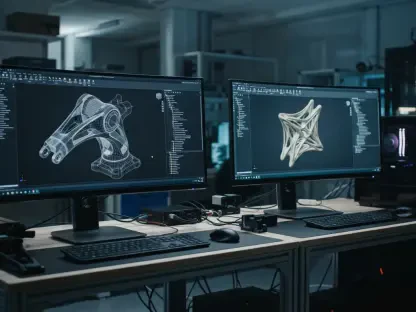
The continued evolution of the design-assist strategy is closely tied to the widespread adoption of advanced digital tools and modular construction techniques. Modern projects utilize building information modeling at a high level of development, allowing for the creation of digital twins that can simulate real-time HVAC parameters and airflow dynamics before any physical construction begins. By testing various environmental scenarios in a digital space, the team can optimize energy efficiency and containment behavior, ensuring that the facility will function perfectly once it is commissioned. This digital-first approach allows for the identification of spatial clashes and mechanical conflicts in the virtual world, where they can be resolved with a few clicks of a mouse rather than expensive field modifications. The use of these sophisticated tools provides a level of precision that was previously unattainable, allowing for the construction of facilities that are as technically advanced as the science they house.
Furthermore, the synergy between design-assist and modular innovation is producing unprecedented levels of efficiency in the 2026 construction landscape. Factory-fabricated cleanroom pods and integrated utility corridors are now engineered to drop into building envelopes with pre-configured mechanical and electrical connections, drastically shortening the time needed for on-site assembly. If a specific component faces a manufacturing bottleneck or a supply chain disruption, the integrated design-assist team can use real-time data to pivot to a pre-approved alternative without derailing the project’s critical path. This agility is essential in a global market where technical requirements and material availability can change rapidly. By leveraging these technological advancements, project teams are able to deliver high-performance environments that are not only built faster and more reliably but are also flexible enough to adapt to future technological shifts in manufacturing and research.
Implementation Strategies for Long Term Success
The shift toward the design-assist model proved to be a fundamental requirement for the industry to meet the demands of modern manufacturing. Project teams that successfully adopted this strategy focused on several actionable steps that ensured a smooth transition from traditional methods to an integrated framework. First, owners prioritized the selection of trade partners based on their technical expertise and collaborative track record rather than simply choosing the lowest bidder. This focus on value and experience created a foundation of trust that allowed the design-assist process to flourish. Additionally, the establishment of a single source of technical truth—typically a shared digital model—facilitated real-time communication and prevented the data loss that often occurred during the handoff between design and construction phases. These practical measures transformed the way high-purity facilities were conceptualized and executed, setting a new standard for excellence in the field of advanced construction.
In the final assessment, the industry realized that the complexity of high-purity environments left no room for the inefficiencies of the past. The adoption of design-assist was not merely a trend but a strategic evolution that addressed the core challenges of speed, cost, and compliance. Moving forward, organizations must continue to invest in the training of their personnel and the acquisition of digital tools that support this collaborative mindset. By fostering a culture of early integration and technical transparency, the construction industry provided the necessary infrastructure for scientific and technological breakthroughs to reach the market with unprecedented efficiency. The lessons learned from this transition highlighted the fact that when technical expertise and creative vision are aligned from the outset, the resulting facilities are capable of supporting the most demanding and innovative work in the world. This approach ensured that the construction process itself became a driver of innovation rather than a bottleneck for progress.