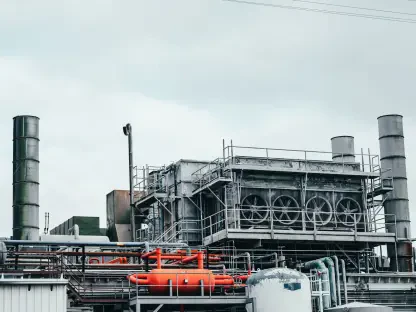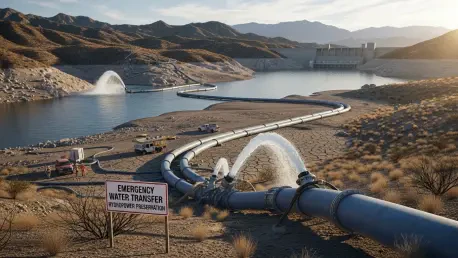

The intricate machinery of the American West’s energy grid now depends on a high-stakes liquid chess match played across hundreds of miles of parched canyons and concrete barriers. The Western United States is currently locked in a hydrological struggle of unprecedented proportions, as the Colorado River system—the lifeblood of the region—faces a critical tipping point. Decades of megadrought, fueled by shifting climate patterns, have forced federal water managers into a high-stakes engineering gamble: the emergency transfer of water from the Flaming Gorge Reservoir in the north to the depleted Lake Powell on the Arizona-Utah border. This analysis explores the intricate mechanics of these water transfers, the economic and environmental trade-offs involved, and the long-term implications for the 40 million people who depend on this watershed for both water and electricity. By examining the fragile balance between upstream stability and downstream necessity, a clearer picture emerges of a region transitioning from an era of abundance to one of permanent crisis management.
A Legacy of Engineering and the Aridification of a Region
The current crisis is rooted in a century of ambitious water management that once viewed the Colorado River as an inexhaustible resource. The construction of massive infrastructure projects, such as the Glen Canyon and Hoover Dams, allowed for the rapid expansion of Western cities and agriculture. However, these foundational systems were designed during an abnormally wet period in the early 20th century. This historical mismatch has created a structural deficit that is no longer sustainable under modern climatic conditions, where demand consistently outpaces the dwindling natural supply.
Today, the landscape has fundamentally shifted toward a new normal. A twenty-five-year drying trend, which experts increasingly describe as permanent aridification rather than a temporary drought, has exposed the systemic over-allocation of the river’s flow. Understanding this historical context is vital, as it reveals that today’s emergency measures are not just responses to a dry spell, but desperate attempts to patch a management framework that no longer aligns with the climatic reality of the 21st century. The focus has moved from capturing water for growth to defending the existing infrastructure from total operational failure.
The High Stakes of Maintaining Grid Stability
Defending the Minimum Power Pool at Glen Canyon Dam
At the heart of the emergency water transfers is a mechanical red line at Lake Powell: the 3,490-foot elevation mark known as the minimum power pool. If water levels drop below this threshold, the Glen Canyon Dam’s turbines can no longer safely generate electricity. Operating below this level risks drawing air into the intakes, causing cavitation—a phenomenon where air bubbles implode with enough force to melt steel components. To prevent this catastrophic mechanical failure and the loss of carbon-free electricity for over 350,000 homes, the Bureau of Reclamation has initiated massive releases from Flaming Gorge. While this surge provides a temporary buffer for the power grid, it is a zero-sum game that depletes upstream savings to prevent a downstream blackout.
The Socioeconomic Toll of Rising Energy Costs
The decline of hydropower is not merely a technical issue; it is a burgeoning economic crisis for rural and disadvantaged communities. When federal dams cannot produce their contracted amounts of inexpensive electricity, non-profit entities like the Western Area Power Administration must purchase supplemental power on the open market. This market-rate energy is significantly more expensive and often sourced from fossil fuels, undermining both financial stability and carbon-reduction goals. In regions like Utah, utility providers have been forced to implement consecutive annual rate hikes—some as high as 13%—to cover these costs. These financial burdens fall most heavily on tribal nations and municipal utility districts, transforming the hydrological crisis into a social justice concern as energy poverty becomes a looming threat for the region’s most vulnerable residents.
Environmental Fragility and the Battle Over Biodiversity
Beyond the turbines and bank accounts, the manipulation of reservoir levels introduces severe ecological risks that vary by region. As Lake Powell shrinks, the warmer surface water moves closer to the dam’s release gates. Discharging this warm water into the Grand Canyon creates a biological gateway for invasive smallmouth bass, which thrive in higher temperatures and prey upon the humpback chub, a threatened native species. This creates a complex management paradox: the very water transfers intended to save the power grid may simultaneously destroy the cold-water habitat required for native biodiversity. Conservationists are now pushing for innovative, yet costly, engineering solutions to mix deeper, cooler water into releases, highlighting the overlooked environmental price of maintaining the status quo in a shrinking river system.
Innovation and Adaptation in an Era of Water Scarcity
Looking ahead, the future of Western hydropower will likely be defined by a shift from expansion to radical adaptation. The emergence of new regulatory frameworks that prioritize flexibility over fixed historical allocations suggests a fundamental change in how water is valued. Technological innovations, such as enhanced turbine designs that can operate at lower heads and the integration of floating solar panels to reduce evaporation, are beginning to gain traction. These tools represent a move toward maximizing the efficiency of every drop, rather than relying on the sheer volume of water that characterized previous management eras.
However, the most significant shift may be economic; as the reliability of hydropower wavers, the region must accelerate its transition to a more diversified energy portfolio. The Colorado River basin is moving toward a period of managed decline, where success is measured not by growth, but by the ability to mitigate loss through smarter, data-driven resource sharing. This evolution includes the development of regional microgrids and expanded battery storage capacity to offset the volatility of hydroelectric output, ensuring that the grid remains resilient even when the reservoirs are low.
Strategic Imperatives for a Resilient Water Future
The analysis of current water transfers underscores several major takeaways for policymakers and residents alike. First, the interdependence of the reservoir system means that local water decisions have immediate, basin-wide consequences. Second, energy resilience must be decoupled from sole reliance on legacy hydropower to protect against the volatility of market-rate electricity. For businesses and municipal leaders, the recommendation was clear: invest in aggressive conservation and localized energy storage now. Applying these insights in the real world required a move away from emergency thinking and toward long-term systemic change, acknowledging that the savings account of upstream reservoirs could not be tapped indefinitely without reaching total exhaustion.
Reimagining the Colorado River for the Next Century
In summary, the emergency water transfers between Flaming Gorge and Lake Powell served as a stark reminder of the fragile state of Western infrastructure. The core themes of this crisis—mechanical limits, economic disparity, and ecological disruption—revealed that the old rules of water management were no longer sufficient for a changing world. This topic remained significant because it functioned as a global bellwether for how modern societies adapted to the permanent aridification of once-fertile regions. Technical fixes acted merely as bridges to a future that demanded a fundamental reassessment of how water was distributed. The strategy focused on ensuring that the lights stayed on without compromising the long-term habitability of the region. This period marked the end of the era of water abundance and the beginning of a new, disciplined approach to resource stewardship.