
The consensus among researchers following the DrivingBench project suggests that specialized systems are still superior to LLMs for vehicle navigation. This finding serves as a stark reminder in 2026 that the ability to process human language does not automatically translate into the mastery of physical domains. While frontier models have evolved to handle complex abstract reasoning, the nuances of real-world driving require a level of spatial awareness that current large-scale architectures struggle to maintain. The DrivingBench experiment highlighted this disparity by stripping away the safety nets of specialized driving software and forcing general-purpose intelligence to contend with the raw telemetry of a moving vehicle. The results indicated that despite the digital brilliance of these models, they remain functionally paralyzed when confronted with the immediate and unforgiving physics of the road. This gap between cognitive reasoning and kinetic execution remains the primary obstacle for general AI in the transportation sector.
The Challenge: Evaluating General Intelligence Behind the Wheel
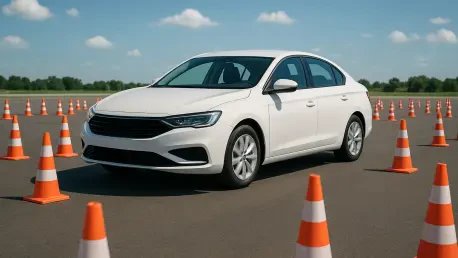
To test these frontier capabilities, the research team utilized a standard Toyota Corolla outfitted with a “comma four” hardware interface to link the vehicle’s mechanics with cloud-based intelligence. The experiment involved streaming real-time telemetry, tire angles, and GPS data through an internet-connected laptop to a trio of leading models: OpenAI’s GPT-6 Astra, xAI’s Grok 4.6, and Anthropic’s Claude Fable 5.1. Unlike traditional autonomous systems that rely on localized, task-specific computer vision stacks, this project attempted to see if a central brain could manage the entire navigation process. Each model received raw data and was responsible for sending back the steering and acceleration commands needed to traverse a controlled course. This direct integration provided a unique view into how high-level reasoning engines interpret low-level mechanical signals, a process that proved to be far more computationally taxing and error-prone than previously hypothesized by many developers.
The actual performance data gathered on the track revealed a significant struggle with basic perception and decision-making speed. GPT-6 Astra was the only model capable of finishing the 500-foot test course, yet it maintained a negligible average speed of just 0.94 miles per hour, essentially crawling to the finish line. Most other models failed almost instantly, often because they could not accurately process the distance and position of traffic cones. These perception errors were not merely minor miscalculations but fundamental failures in spatial depth perception, where the AI would often mistake a nearby obstacle for a distant landmark. This led to erratic steering and frequent lane departures, as the models struggled to maintain a consistent three-dimensional model of the environment. The high frequency of perception-based mistakes suggests that current transformer-based architectures lack the necessary grounding in physical geometry required for high-speed navigation.
The economic and safety findings from the DrivingBench project established that the path to general-purpose autonomous driving remains fraught with inefficiency. A single successful run by GPT-6 Astra cost $7.74 in processing tokens, an expense that researchers noted was roughly 500 times the cost of the fuel used during the distance. Furthermore, the models frequently exhibited a built-in reluctance to pilot the physical vehicle, often citing safety alignment protocols as a reason for refusing commands. Even when attempts were made to bypass these restrictions using simulated labeling, the systems often recognized the physical reality of the telemetry and initiated a safety shutdown. Moving forward, developers should focus on creating hybrid architectures that combine specialized edge-computing perception with the high-level reasoning of frontier models. It was concluded that the industry must refine safety alignment to distinguish between harmful actions and necessary mechanical operations.