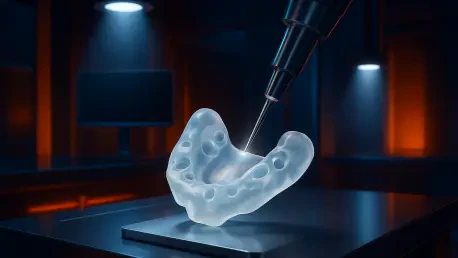

The University of Nebraska at Omaha is utilizing an $8 million National Science Foundation grant to transform its Biomechanics Research Building into a premier hub for additive manufacturing. This visionary project officially establishes the Nebraska Center for 3D Innovation, widely known as NE3D, as a vanguard for specialized medical engineering. By integrating biological studies with mechanical precision, the center focuses on solving the most intricate healthcare dilemmas through state-of-the-art manufacturing techniques. The facility serves as a catalyst for interdisciplinary collaboration, drawing together academic experts and clinical practitioners to modernize patient care. This transformation represents a paradigm shift in how research institutions approach public health by fostering an environment where innovation is dictated by real-world clinical demand. Such an approach ensures that every technological breakthrough directly contributes to a more efficient and effective medical landscape for everyone.
Institutional Growth: Collaborative Foundations of Additive Innovation
Clinical Synergy: Bridging Academic Research and Clinical Application
While the center has now achieved official status as a premier research hub, its current success is deeply rooted in a collaborative journey that began over a decade ago in 2016. What started as informal brainstorming among visionary researchers has evolved into a sophisticated network of experts dedicated to revolutionizing patient care through technical ingenuity. This evolution from abstract concepts to a formalized institution reflects the persistent effort required to synchronize complex engineering principles with the immediate needs of medical practitioners. By documenting years of experimental data and refining additive manufacturing protocols, the team moved beyond basic prototyping into the realm of high-performance medical production. This historical foundation provided the necessary groundwork for the center to secure significant federal support, proving that long-term interdisciplinary commitment is essential for innovation.
The primary focus of this academic endeavor is to bridge the often-widened gap between theoretical engineering and the practical realities of bedside medicine. Researchers at the facility are not merely looking to publish papers; they are working to create functional solutions that solve the most difficult challenges currently facing surgeons and their patients. This approach requires a deep understanding of how biological systems interact with synthetic materials, a field that has seen massive growth recently. By merging material science with biomechanical insights, the center is able to produce devices that are not only structurally sound but also physiologically compatible. This unique synergy allows for a rapid prototyping cycle where feedback from the clinical floor can be integrated into a new design within hours. Such an agile methodology ensures that the innovation pipeline remains responsive to the ever-shifting landscape of modern surgical and patient requirements.
Strategic Alliances: Expanding the Network of Strategic Partnerships
Central to the success of this initiative is a robust network of partners including the University of Nebraska Medical Center and specialized institutions like Children’s Hospital. These relationships are critical because they provide researchers with direct access to the clinical environments where their 3D-printed tools will eventually be utilized. By working closely with pediatric specialists, the center can design prosthetic limbs tailored to the rapid growth cycles of children, an area often overlooked by traditional medical manufacturing. This collaborative ecosystem ensures that the research being conducted is deeply informed by the specialized knowledge of clinicians who deal with these challenges daily. Furthermore, these partnerships allow for large-scale testing and validation of new medical devices in real-world settings, which is essential for obtaining regulatory approval and ensuring patient safety across diverse demographics within the regional healthcare system.
Strategic alliances also extend into the private sector, where the center collaborates with industry leaders to scale up production and explore new material additives. These private-public partnerships are vital for moving beyond small-batch laboratory production and toward a sustainable model for widespread medical device distribution. Industry experts provide valuable insights into manufacturing efficiency, helping the research team refine their processes to reduce waste and lower production costs. This engagement with the commercial sector facilitates the transfer of technology, allowing proprietary innovations developed at the university to reach a broader market while remaining affordable for the average patient. By maintaining a constant dialogue with local business leaders and educators, the center helps build a workforce well-versed in the latest additive manufacturing techniques. This creates a self-sustaining cycle where academic research fuels industrial growth and medical science.
Accessibility and Engineering: Strategic Initiatives for Patient Care
Economic Impact: Reducing Financial Barriers and Improving Rural Reach
The underlying philosophy of the Nebraska Center for 3D Innovation is that the true value of scientific research is measured by its impact on public accessibility and affordability. In a healthcare market often defined by rising costs, the center focuses on creating a direct pipeline that moves high-quality innovations from the laboratory directly into the hands of underserved populations. This is most evident in the development of 3D-printed prosthetic limbs, which provide a life-changing alternative to expensive commercial hardware. While traditional mechanical limbs can often cost tens of thousands of dollars, making them inaccessible for many families, the center produces high-quality devices for just a few hundred dollars. By absorbing these production costs through grant funding, the center is able to provide these essential tools to patients free of charge. This approach significantly reduces the financial burden on families, ensuring that economic status never dictates a patient’s mobility.
Accessibility challenges are not only financial but also geographical, particularly for patients living in the rural expanses of the Great Plains. To address this, the center has integrated smartphone technology into its patient intake process, allowing individuals to scan their limbs from the comfort of their own homes. This innovation removes the need for frequent, expensive, and time-consuming travel to specialized clinics located hundreds of miles away. Once a scan is received digitally, the team can customize a 3D-printed device to the patient’s exact anatomical specifications and ship it directly to them. This decentralized model of care represents a significant shift in how assistive technology is delivered, making it more responsive to the needs of those in remote areas. By leveraging the ubiquity of mobile devices, the center has created a scalable solution that bridges the gap between high-tech medical research and the everyday logistical realities of rural patient life.
Technical Evolution: Advancing Surgical Precision and Bio-Safe Materials
Material science at the center has reached new heights with the development of specialized antimicrobial plastics designed to solve the inherent risks of 3D printing in medical settings. Standard additive materials are frequently porous, which can lead to dangerous bacterial colonization when devices are used long-term or in sterile environments. To mitigate this risk, the research team partnered with private chemical engineers to integrate a copper-based additive into their printing filaments, effectively creating a material that kills germs on contact. This breakthrough has garnered significant attention from the Department of Defense and NASA, leading to over $1 million in specialized funding to explore applications in extreme environments. For the military, these bio-safe materials are crucial for protecting soldiers during the recovery phase after combat-related amputations. For space missions, antimicrobial 3D printing offers a way for astronauts to manufacture sterile tools in orbit.
The center demonstrated that surgical outcomes were significantly improved by providing doctors with high-fidelity anatomical models derived from patient CT scans. These realistic 3D-printed replicas allowed surgeons to practice complex procedures on structures that accurately mimicked the feel of human bone and cartilage before entering the operating room. It was observed that this rehearsal process effectively reduced the duration of surgeries and lowered the risks associated with prolonged anesthesia. Furthermore, the integration of soft robotics and advanced sensors was established as the next logical step in creating responsive assistive devices. Researchers concluded that by training the next generation of medical residents on these anatomically correct models, the institution solidified its role as a leader in healthcare technology. Success showed that a sustainable model was achieved by combining federal investment with community needs, ensuring that advanced technology remained accessible.