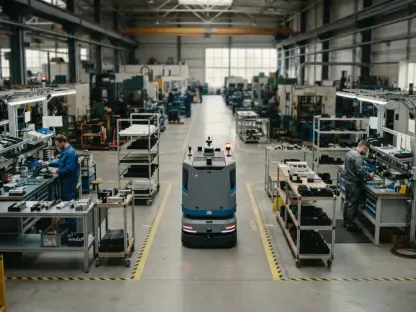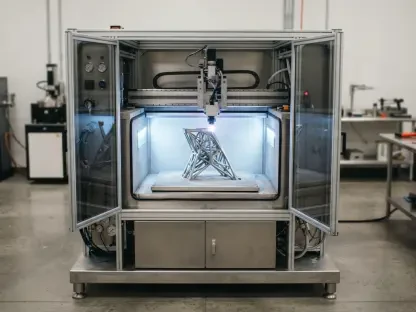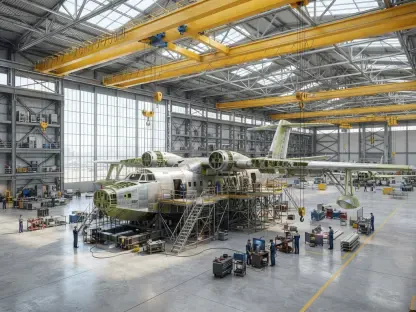

By establishing a mobility ecosystem in Gwangju, Kia aims to bridge the gap between traditional car manufacturing and integrated urban infrastructure planning. This multi-billion-dollar endeavor involves a total capital injection of $2.2 billion dedicated specifically to overhauling the existing AutoLand Gwangju complex into a state-of-the-art facility for next-generation transportation. This financial commitment is not an isolated project but rather a central pillar of the Hyundai Motor Group’s broader domestic strategy, which allocates approximately $92 billion toward electrification and technological advancement over the next five years. By the time this project reaches full operational capacity in 2029, the facility will have transitioned from a conventional assembly line into a “living laboratory” where digital intelligence and electric propulsion are tested under real-world conditions. The city is currently witnessing a massive industrial shift that could redefine how people move through urban centers globally.
Pioneering the Software-Defined Vehicle Era
Digital Architecture: From Hardware to Code
The core of Kia’s strategic shift lies in the fundamental transformation of the vehicle’s internal architecture, moving away from a hardware-centric model toward the software-defined vehicle era. In this new paradigm, the utility and value of a car are primarily dictated by its software capabilities rather than its traditional mechanical components like engines or gearboxes. By establishing AutoLand Gwangju as a production hub for these advanced machines, Kia is ensuring that every vehicle produced can undergo sophisticated remote performance tuning throughout its entire life cycle. This capability allows engineers to implement real-time enhancements to critical systems, such as battery management algorithms and electric motor output efficiency, without the customer ever needing to visit a physical service center. This transition represents a departure from the “set-and-forget” manufacturing philosophy of the past, turning each car into a dynamic platform that evolves continuously.
Lifecycle Management: Remote Evolution and Updates
Software integration at the Gwangju facility is designed to facilitate a seamless user experience that mirrors the intuitive nature of modern personal electronics. By prioritizing over-the-air updates, Kia allows owners to download and install new navigation tools, entertainment options, and safety features in a manner very similar to updating a smartphone operating system. This high level of connectivity ensures that the vehicle remains perfectly synchronized with the surrounding urban infrastructure, which is increasingly being outfitted with smart sensors and communication beacons. As cities become more digitally integrated, the ability of a vehicle to “talk” to traffic lights, parking structures, and other cars becomes a critical safety and efficiency requirement. This strategy moves beyond simple internet connectivity to create a functional relationship between the driver’s digital life and their physical mobility, ensuring that every journey is supported by the latest advancements in cloud computing.
Cultivating a Collaborative Mobility Ecosystem
Strategic Alliances: Industry and Academia Integration
A distinctive feature of the Gwangju initiative is its reliance on a deeply collaborative framework that brings together various sectors of society to solve complex transportation challenges. Kia has entered into strategic partnerships with local government authorities and world-class academic institutions, such as the Gwangju Institute of Science and Technology and Chonnam National University. This tripartite alliance of industry, government, and academia is designed to foster an environment where experimental mobility concepts can be researched, prototyped, and tested with unprecedented speed. By tapping into the intellectual capital of these institutions, Kia is able to explore high-level theories in robotics and artificial intelligence that have direct applications in next-generation transport. This collaborative ecosystem ensures that the technological advancements made at the hub are grounded in rigorous scientific research and supported by a legislative framework that encourages innovation.
Logistical Optimization: Modular Delivery and Inclusive Design
Beyond passenger transport, the Gwangju mobility sandbox is placing a significant emphasis on optimizing urban logistics through the use of specialized electric vans and intelligent demand-responsive transport systems. As e-commerce continues to grow, the demand for efficient, zero-emission delivery solutions in dense city centers has become a critical priority for urban planners. The hub is developing a range of delivery-focused vehicles that can navigate narrow streets and congested corridors more effectively than traditional trucks. These logistics solutions are powered by AI algorithms that optimize routes in real time based on traffic conditions and delivery priorities, reducing both delivery times and the environmental impact of urban freight. By prioritizing modularity, the Gwangju project is setting a new standard for socially responsible industrial development, where vehicles like the PV5 can be reconfigured from passenger shuttles to delivery vans to mobile office spaces.
Advancing Autonomy Through Real-World Data
Large-Scale Deployment: Urban Complexity as a Laboratory
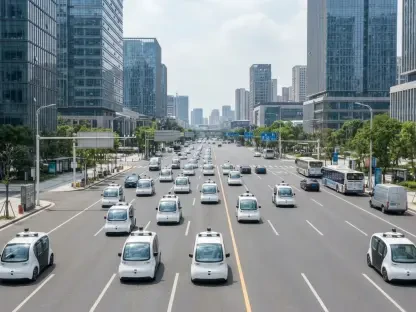
To accelerate the arrival of fully self-driving technology, Kia has initiated the deployment of a substantial fleet consisting of 200 autonomous Hyundai Ioniq 5 electric vehicles throughout the Gwangju metropolitan area. This deployment is a critical departure from traditional testing methods that rely heavily on private tracks or isolated simulation environments. While simulations provide a valuable baseline, they cannot fully replicate the sheer unpredictability of a functioning city. By placing these vehicles in actual residential neighborhoods and congested commercial districts, engineers are exposing the autonomous systems to a vast array of complex, real-world variables. This includes everything from erratic pedestrian behavior to unexpected road construction and the diverse driving styles of human motorists. This large-scale testing environment provides the high-fidelity data required to refine the sensors and algorithms that will eventually govern all autonomous operations in the new ecosystem.
Machine Learning: Navigating the Unpredictability of Human Traffic
The raw data gathered by the autonomous fleet serves as the foundational fuel for training highly advanced artificial intelligence models that handle urban navigation. These AI systems must learn to interpret a staggering variety of visual and sensor-based inputs, translating them into safe and efficient driving decisions in a fraction of a second. By analyzing how the vehicles interact with human traffic patterns and varying weather conditions in Gwangju, the AI can develop a more nuanced understanding of the environmental challenges. For instance, the system must learn to distinguish between a pedestrian who is waiting to cross and one who is merely standing near the curb, or how to navigate a road obscured by heavy rain or fog. This rigorous training process is what enables the vehicle to move from simple lane-keeping to sophisticated urban maneuvering, such as navigating complex intersections and merging into high-speed traffic without any human intervention.
National Economic Strategy and Future Trajectory
Industrial Moat: South Korea as a Global Innovation Brain
The massive investment in Gwangju serves to reinforce South Korea’s status as a premier global hub for high-tech automotive research and development. In a time when many global manufacturers are looking to diversify their manufacturing locations to lower-cost regions, Hyundai and Kia have made a strategic choice to double down on their home market. This decision positions South Korea as the “brain” of the group’s global operations, where the most advanced technologies are conceived, developed, and perfected. This move provides the Gwangju region with a significant and lasting economic advantage, transforming it from a traditional center of industrial labor into a vibrant hub for intellectual property and technological innovation. The presence of such a high-tech facility attracts top-tier talent from across the country, fostering a competitive industrial environment that benefits the national economy by setting high standards for technical excellence.
Standardizing Protocols: The Blueprint for 2029
As the project approached its final stages of integration toward the end of the decade, the Gwangju facility successfully functioned as a global blueprint for carbon-neutral, high-tech manufacturing. Stakeholders recognized that the next steps involved standardizing the communication protocols between vehicles and urban infrastructure to ensure global interoperability across different smart city platforms. The initiative demonstrated that legacy industrial sites could be successfully repurposed for the digital age through a combination of visionary investment and strategic cross-sector collaboration. By integrating renewable energy sources and advanced automation, the plant minimized its environmental footprint while maximizing production efficiency. Industry leaders suggested that the subsequent phase of development required focusing on data security and privacy to protect the massive influx of information generated by autonomous fleets. This transition proved that the path to sustainable mobility required a fundamental rethinking.