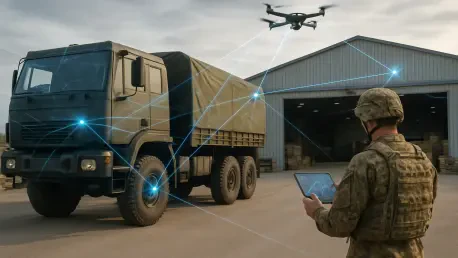

Logistics commanders are increasingly concerned that traditional sea and air supply routes would be the first targets for adversaries during a high-end conflict in the Pacific theater. To mitigate this risk, the United States military is aggressively pivoting toward a decentralized sustainment model that prioritizes the movement of data over physical objects. This shift is centered on the Digital Manufacturing Exchange, a sophisticated platform that enables the secure transfer of technical specifications directly to manufacturing nodes located near the front lines. By treating intellectual property as a deployable asset, the Department of Defense can effectively bypass the logistical bottlenecks associated with shipping heavy components across vast ocean expanses. This digits instead of parts strategy ensures that critical machinery remains operational even when global shipping lanes are contested or entirely severed by enemy action, marking a significant departure from the centralized warehouse model that has defined modern military logistics for decades.
Strategy: Overcoming Geographical Vulnerabilities in Global Operations
The strategic driver behind this digital transformation is the concept of contested logistics, where traditional air and sea corridors are no longer guaranteed to be safe or accessible. In a high-stakes confrontation, relying on a monolithic supply chain that stretches from the American heartland to the far reaches of the Pacific is viewed as a critical vulnerability that could be exploited by a sophisticated adversary. To counter this, the military is leveraging its network of regional allies and local industrial bases to create a resilient web of manufacturing hubs. These hubs, equipped with advanced fabrication capabilities like 3D printing and precision machining, serve as the destination for digital design files. This approach allows for the rapid production of essential components at the point of need, drastically reducing the time and risk associated with long-range transportation. Consequently, the ability to maintain combat power is no longer tethered to the physical security of shipping routes.
Beyond the immediate tactical advantages, this shift toward digital logistics fosters a more flexible and adaptive response to the unpredictable nature of modern warfare. When a critical component fails in a remote location, the standard procedure involves a lengthy requisition process followed by weeks or months of waiting for a replacement to arrive from a stateside depot. However, with the integration of digital intellectual property into the supply chain, a unit can simply download the necessary schematics and produce the part on-site or at a nearby allied facility. This capability not only preserves the momentum of military operations but also creates a psychological deterrent by demonstrating that the United States and its partners possess a self-sustaining industrial posture that cannot be easily disrupted by kinetic or cyberattacks on physical shipping. By distributing the means of production, the military is effectively hardening its logistical backbone, ensuring the force remains lethal and ready regardless of the obstacles.
Field Application: Proving Localized Production through Real-World Testing
The practical application of this technology has already been validated during large-scale military drills, most notably during the recent Valiant Shield exercise. In this scenario, U.S. Marines encountered persistent maintenance issues with the step ladders on their logistics trucks, a seemingly minor problem that could nevertheless hinder the safe and efficient movement of supplies. Instead of following the traditional procurement route, which would have required shipping replacements across the Pacific, the unit utilized the Digital Manufacturing Exchange to transmit technical schematics over hundreds of miles to a commercial manufacturer in Japan. This local partner was able to use the digital files to fabricate 19 distinct components from 11 unique part designs, delivering the finished products directly to the Marines in a fraction of the time a standard shipment would take. This successful test case demonstrated that the point of need manufacturing model is a functional reality, capable of sustaining operations in a complex environment.
The partnership with private defense contractors like Oshkosh Defense transformed the traditional relationship between the military and original equipment manufacturers. Historically, companies relied on the steady production and sale of physical spare parts to maintain profitability over the lifecycle of a vehicle or aircraft. However, in the current digital paradigm, the value proposition has shifted significantly toward the intellectual property itself. By providing the military with access to a secure digital library of schematics for everything from heavy tactical trucks to UH-60 Black Hawk helicopters, these companies are enabling a more agile maintenance ecosystem. This collaborative model ensures that the latest engineering updates can be pushed to the field instantly, allowing for real-time improvements to equipment based on the actual conditions encountered during training or active operations. This synergy between the public and private sectors is the foundation upon which the entire digital sustainment model is built.
Future Readiness: Navigating Intellectual Property and Technical Resilience
Transitioning to a data-centric supply chain introduced significant challenges regarding the valuation and protection of intellectual property. The military had to establish a fair compensation model that rewarded defense contractors for their innovation while avoiding the unsustainable costs of purchasing full IP rights for every component in its inventory. Currently, the Department of Defense is working to develop a nuanced licensing structure that allows it to pay for the digits on a per-use or subscription basis, similar to modern software models. This requires a precise balancing act to ensure that the industrial base remains profitable and motivated to innovate, while the military gains the operational flexibility it needs to manufacture parts locally. Finding a middle ground that satisfies both government auditors and corporate shareholders is essential for long-term viability. Without a clear and equitable framework for IP management, the shift toward localized production could be stymied by legal disputes.
The successful integration of the Digital Manufacturing Exchange into the broader defense framework established a clear path forward for achieving logistical independence in high-threat environments. By moving beyond the experimental phase, the program proved that the digits instead of parts philosophy was not only viable but essential for modern multi-domain operations. Looking toward the immediate future, the next critical steps involved the standardization of additive manufacturing materials and the deployment of edge-computing nodes to ensure that units could maintain production capabilities even when disconnected from the global grid. Military leaders prioritized the expansion of the digital library to include components from a wider array of industry partners, while also developing advanced training protocols for on-site technicians. This shift effectively transformed the logistics landscape from a reactive, warehouse-dependent system into a proactive, data-driven network. Ultimately, the transition to digital intellectual property provided the resilience necessary to sustain power.