
Collaborating with Defence Research Development Canada on the PolarLink mission will evaluate how low-Earth-orbit satellite constellations can serve as reliable communication relays for Arctic defense operations. This endeavor reflects the broader ambition of the University of Victoria Centre for Aerospace Research (UVic CfAR) to serve as a primary catalyst for Canadian technological sovereignty in the skies and beyond. By establishing a robust framework that integrates high-level computational modeling with physical prototype testing, the center has successfully positioned itself at the center of the modern aerospace revolution. As the industry grapples with the transition to electrified propulsion and more autonomous operations, CfAR provides the critical facilities and expertise needed to move these concepts from the drawing board to the runway. This institutional drive is not merely about academic achievement; it is about creating a resilient aerospace sector that can respond to the shifting geopolitical and environmental landscape of the current decade. The center operates as a vital link in the supply chain of innovation, ensuring that emerging technologies undergo the rigorous validation required for commercial and defense applications. Through this commitment to excellence and practical application, UVic CfAR continues to influence how the global community perceives the capabilities of mid-sized research institutions in the high-stakes world of aerospace engineering.
Integrating Vertical Development: The Design-Build-Fly Philosophy
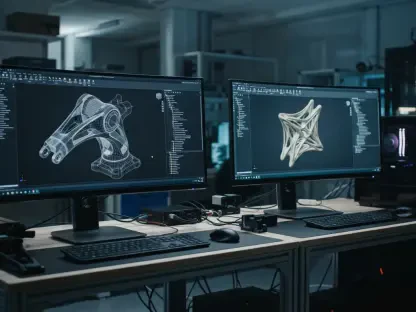
A fundamental component of the center’s operational success is the implementation of a comprehensive “design-build-fly” philosophy, which actively rejects the traditional isolation of theoretical research from physical manufacturing. In many academic settings, projects often conclude at the simulation stage, leaving the complex challenges of physical integration to industrial partners. However, the UVic CfAR model ensures that every conceptual advancement is subjected to the harsh realities of flight testing within a vertically integrated lifecycle. This approach requires researchers to manage every phase of a project, from the initial digital twin simulations to the precision machining of airframe components and the eventual execution of flight trials. By housing these disparate functions under a single management structure, the center significantly reduces the time required to iterate on new designs, allowing for a rapid evolution of technology that mirrors the fast-paced development cycles found in the private sector. This hands-on methodology ensures that students and professional engineers alike develop a profound understanding of how theoretical aerodynamic adjustments translate into actual performance gains in the air.
This vertically integrated structure serves as a powerful “de-risking” mechanism for both government agencies and private industry partners who seek to explore high-risk, high-reward technologies. In the current aerospace climate, the cost of failure for a full-scale prototype is often prohibitive, which can lead to a stagnation of radical innovation in favor of incremental improvements. UVic CfAR addresses this bottleneck by developing high-fidelity, sub-scale demonstrators that provide the empirical data necessary to validate a technology’s viability before it reaches the commercialization phase. By proving the efficacy of novel propulsion systems or autonomous flight control algorithms through rigorous real-world testing, the center provides its partners with the confidence needed to invest in large-scale implementation. This capability bridges the “valley of death” that often separates laboratory breakthroughs from market-ready products, ensuring that Canadian aerospace innovations are not lost to technical uncertainty or financial risk. The result is a more dynamic ecosystem where experimental ideas can be safely tested and refined into functional machines that meet the stringent safety and performance standards of the modern aviation industry.
Expanding the Space Frontier: From ORCASat to PolarLink
The center’s expertise is not confined to the atmosphere, as evidenced by its growing “orbital heritage” and its contributions to the burgeoning field of astronautics. The successful deployment and operation of ORCASat, which was British Columbia’s first CubeSat, marked a significant milestone in the province’s space capabilities and demonstrated the center’s ability to navigate the complexities of satellite engineering. This mission provided invaluable lessons in power management, thermal control, and communication protocols within the vacuum of space, establishing a baseline of excellence for all subsequent orbital projects. Building upon this success, the center is currently involved in the MARMOTSat mission, which aims to validate advanced spacecraft avionics and novel communication hardware in a low-Earth-orbit environment. These missions are not mere academic exercises; they represent a concerted effort to develop a sovereign satellite infrastructure that can support a wide range of scientific and commercial applications. By maintaining a continuous presence in the space domain, UVic CfAR ensures that its researchers remain at the leading edge of satellite miniaturization and orbital mechanics.
One of the most technically demanding projects currently underway at the center is PolarLink, an 8U CubeSat mission designed to solve the persistent connectivity challenges in Canada’s remote Arctic regions. In collaboration with Defense Research Development Canada, this project utilizes optical communication payloads to test the efficacy of satellite constellations as high-speed data relays for defense and civilian infrastructure. Traditional satellite communications in high latitudes are often hampered by atmospheric interference and limited orbital coverage, making the development of robust, high-bandwidth links a top priority for national security and regional development. PolarLink serves as a critical testbed for these technologies, proving that small, cost-effective satellites can provide the same level of reliability as larger, more expensive traditional platforms. The mission highlights the center’s unique ability to address large-scale logistical problems through the application of advanced space technology, reinforcing its role as a strategic asset for Canadian Arctic sovereignty. By focusing on practical solutions for harsh environments, the center is helping to define the next generation of satellite-based communication networks.
Advancing Sustainable Aviation: Blended-Wing-Body Research
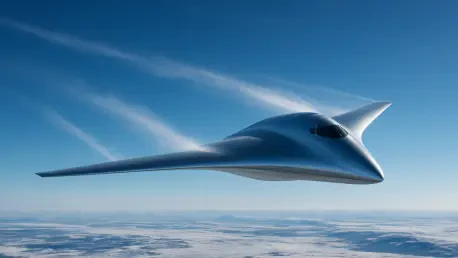
In the realm of aeronautical engineering, UVic CfAR has taken a leading role in the global effort to decarbonize the aviation industry through radical airframe redesigns. A primary focus of this initiative is the EcoJet Research Project, a collaborative effort with Bombardier that explores the potential of “blended-wing-body” (BWB) configurations. Unlike the traditional “tube-and-wing” architecture that has dominated commercial aviation for decades, the BWB design merges the fuselage and the wings into a single, aerodynamically efficient shape. This configuration significantly reduces drag and increases lift, which translates into a dramatic reduction in fuel consumption and carbon emissions. The center’s role involves the development and testing of jet-powered sub-scale demonstrators that mimic the flight characteristics of a full-sized commercial aircraft. These flight trials provide critical aerodynamic data that cannot be fully captured in wind tunnels or computer simulations, particularly regarding the stability and control of the aircraft during complex maneuvers. The insights gained from these tests are essential for refining the BWB design and proving its feasibility for future generations of sustainable commercial flight.
The technical rigor required to operate these jet-powered demonstrators is immense, necessitating the use of advanced telemetry systems and specialized flight control software. By testing these prototypes in real-world atmospheric conditions, the center can observe how the BWB design interacts with turbulence and varying air densities, providing a level of fidelity that is unmatched in purely digital environments. This research is particularly relevant as the global aerospace industry faces increasing pressure to meet ambitious net-zero emission targets by the mid-century mark. The data generated at UVic CfAR helps to define the parameters for next-generation aircraft that will be quieter, more efficient, and capable of carrying significant payloads with a smaller environmental footprint. Furthermore, the expertise developed through the EcoJet project is being applied to other sustainable aviation initiatives, including the integration of electric and hybrid propulsion systems. By focusing on the structural and aerodynamic foundations of flight, the center ensures that the transition to green energy is supported by airframes that are optimized for maximum efficiency, ultimately reshaping the future of global transportation.
Mastering Autonomous Flight: Defense and Emergency Applications
The development of uncrewed aerial systems (UAS) and autonomous flight technologies represents another core pillar of the research conducted at UVic CfAR. Working alongside major international partners such as Boeing and Embraer, the center is developing advanced autonomous systems designed for operation in extreme and GPS-denied environments. These systems are increasingly vital for defense operations in the Arctic and for emergency response scenarios where human intervention is either too dangerous or logistically impossible. The research focuses on creating “intelligent” aircraft that can navigate complex terrain, avoid obstacles in real-time, and make autonomous decisions based on sensor data. This requires the integration of sophisticated AI algorithms with high-performance hardware, ensuring that the aircraft can maintain stable flight even when communication with ground control is lost. By pushing the boundaries of what autonomous systems can achieve, the center is providing the tools necessary for more effective search and rescue missions, environmental monitoring, and northern border security, ensuring that Canada can manage its vast and rugged territories.
A significant aspect of this autonomous research involves the study of multi-agent coordination, where swarms of smaller drones work together to achieve a common objective. This collaborative autonomy allows for more efficient large-scale infrastructure inspections and environmental surveys, as multiple aircraft can cover vast areas simultaneously while sharing data in real-time. For example, a swarm of drones could be deployed to inspect thousands of kilometers of pipelines or power lines in the remote north, identifying potential failures much faster than a single human-piloted aircraft. The center’s work in this area includes developing the communication protocols and collision-avoidance systems necessary for safe and efficient swarm operations. These technologies are also highly relevant for defense applications, where autonomous swarms can be used for persistent surveillance and reconnaissance in contested environments. By mastering the complexities of multi-agent systems, UVic CfAR is preparing the aerospace industry for a future where autonomous machines play a central role in both civilian and military operations, enhancing safety and operational efficiency across the board.
Bridging Atmospheric and Orbital Domains: The VLEO Advantage
As the boundaries between traditional aviation and space operations continue to blur, UVic CfAR is positioning itself at the forefront of “cross-domain” technology development. A primary area of interest is Very Low Earth Orbit (VLEO), a region of space that exists between the upper atmosphere and traditional satellite orbits. Operating in VLEO offers numerous advantages, including higher resolution imaging and lower latency communications, but it also presents significant challenges such as increased atmospheric drag. The center is leveraging its dual expertise in aeronautics and astronautics to develop novel propulsion systems and aerodynamic control surfaces specifically designed for this challenging environment. By applying the principles of high-altitude flight to spacecraft design, researchers are creating platforms that can maintain stable orbits for longer periods while operating much closer to the Earth’s surface. This cross-pollination of ideas is a direct result of the center’s multidisciplinary structure, which encourages aerospace engineers and space scientists to collaborate on shared technological hurdles, leading to breakthroughs that would be impossible in a more siloed environment.
The integration of AI-driven navigation and advanced sensing technologies originally developed for autonomous drones is also finding significant applications in the space domain. Spacecraft operating in cluttered orbits or performing complex proximity operations require the same level of situational awareness and autonomous decision-making as high-performance UAS. UVic CfAR is facilitating the transfer of these technologies, ensuring that the next generation of satellites is equipped with the intelligence needed to navigate the increasingly crowded orbital environment safely. This synergy between air and space research extends to the development of new materials and manufacturing techniques that can withstand the extreme temperature fluctuations of space while remaining lightweight enough for atmospheric flight. By housing both disciplines under one roof, the center creates a unique talent pool where engineers are trained to think across domains, preparing them for a future where the distinction between an aircraft and a spacecraft becomes increasingly academic. This holistic approach ensures that the center remains a vital contributor to the development of integrated aerospace systems that can operate seamlessly from the runway to the stars.
Cultivating Expert Talent: The Master of Engineering Program
Education and professional development are central to the mission of UVic CfAR, particularly through its specialized Master of Engineering (MEng) in Aerospace Systems Engineering. This program, the first of its kind in Western Canada, is designed to provide students with a rigorous, professional environment that mirrors the standards of the global aerospace industry. Rather than focusing solely on theoretical coursework, the program emphasizes systems integration, iterative testing, and project management, ensuring that graduates are prepared to lead complex engineering teams. Students are given the opportunity to work directly on high-stakes projects, such as the EcoJet or PolarLink missions, alongside experienced faculty and industry veterans. This exposure to real-world challenges provides a level of practical experience that is rarely found in traditional graduate programs, making CfAR alumni highly sought after by top-tier aerospace firms and government agencies. By training the next generation of engineers in a “design-build-fly” environment, the center is addressing the critical skills gap in the Canadian aerospace workforce and ensuring a steady supply of talent for years to come.
The success of this educational model is reflected in the impressive career trajectories of the center’s alumni, many of whom have secured prominent positions at organizations such as NASA, Rocket Lab, and major aerospace manufacturers. These professionals carry with them the “systems-thinking” mindset cultivated at UVic CfAR, allowing them to tackle the multidisciplinary challenges of modern spacecraft and aircraft design. The program’s focus on professional standards also includes training in regulatory compliance, safety protocols, and ethical engineering practices, which are essential for navigating the highly regulated aerospace sector. By fostering a culture of excellence and accountability, the center is not only producing skilled technicians but also future leaders who will shape the direction of the global industry. This commitment to human capital ensures that the innovations developed within the center’s laboratories are supported by a workforce capable of bringing them to scale. The MEng program remains a vital engine for economic growth, providing the intellectual foundation for a thriving aerospace hub in Western Canada and strengthening the country’s overall competitiveness on the world stage.
Global Collaboration: Building the Future of Aerospace Infrastructure
The physical infrastructure at UVic CfAR, including its 5,000-square-foot hangar and specialized satellite clean rooms, serves as a vital regional hub for aerospace innovation. These facilities provide small and medium-sized enterprises (SMEs) with access to high-end testing equipment and laboratory space that would otherwise be financially out of reach. From thermal vacuum chambers that simulate the harsh conditions of space to high-speed propulsion labs for jet engine testing, the center offers the tools necessary to validate new technologies at an industrial scale. This collaborative environment encourages a vibrant ecosystem where startups can work alongside academic researchers and established industry players, fostering a spirit of open innovation. By providing the physical and technical resources needed for prototyping and validation, the center ensures that the regional aerospace sector remains a hotbed of activity. This infrastructure is not just a collection of machines; it is a collaborative platform that enables the rapid translation of research into commercial reality, supporting the growth of a robust and diverse aerospace supply chain in the region.
The center concluded its strategic expansion by establishing a “transatlantic gateway” designed to foster deeper collaborations with European aerospace communities and international research institutions. These efforts prioritized the development of standardized communication protocols and shared research frameworks, which simplified the exchange of data and talent across borders. Industry leaders utilized the center’s findings to refine their long-term strategies for sustainable flight and deep-space navigation, acknowledging that the progress achieved in Western Canada held global significance. The results indicated that by maintaining a focus on high-fidelity prototyping and multidisciplinary education, the institution successfully influenced the trajectory of next-generation aerospace systems. Stakeholders recognized the need for continued investment in these collaborative hubs to meet the evolving demands of an electrified and autonomous future. Ultimately, the center’s historical commitment to bridging the gap between theory and practice established a foundation that allowed for the successful commercialization of radical airframe designs and resilient satellite networks. These collective accomplishments ensured that the aerospace community remained equipped to address the complex challenges of the late 2020s and beyond.