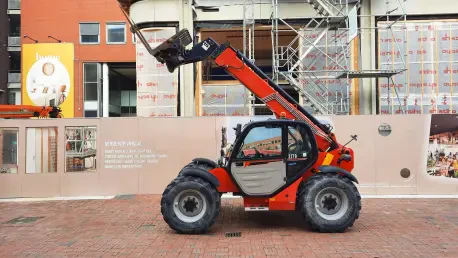

Contractors can now access five distinct telehandler models ranging from the versatile TH-842 workhorse to the heavy-duty TH-1256 flagship. This significant expansion of the AXCS Equipment portfolio marks a definitive shift from the company’s traditional focus on lightweight, low-level scissor lifts. Following the acquisition by the Turkish industrial giant ASKO Holding in September 2023, the organization formerly known as Custom Equipment has undergone a total transformation. By early 2025, the brand was officially renamed to reflect a broader mission that transcends the legacy of the Hy-Brid Lifts lineup. This corporate evolution is deeply rooted in the technical expertise of MST Construction Machinery, a prominent subsidiary within the ASKO umbrella. By integrating these robust engineering foundations, the brand has successfully positioned itself as a full-service equipment partner. The move allows the manufacturer to compete directly with established market leaders by offering a sophisticated range of material handling solutions tailored specifically for North American rental fleets and commercial contractors.
Engineering the TH-Series: Mid-Range Versatility
The initial product offering focuses heavily on the most frequently utilized specifications in the rental industry, ensuring that fleet managers have access to versatile machines for daily tasks. The TH-842 serves as the entry point, providing an 8,000-pound maximum capacity and a 42-foot lift height with an operating weight of 23,920 pounds. For projects requiring slightly more reach and power, the TH-944 increases the capacity to 9,000 pounds and extends the lift height to 44 feet. These units are specifically designed with a maximum forward reach of approximately 30 feet, making them ideal for standard residential and light commercial construction sites. Furthermore, the TH-1044 provides a balanced solution with a 10,000-pound capacity and a 44.8-foot lift height. By focusing on these core models, the brand addresses the vast majority of lifting needs while maintaining a relatively compact footprint that is easy to transport between various jobsite locations across the country.
Engineering the TH-Series: Heavy-Duty Performance
At the upper end of the spectrum, the series introduces high-capacity flagship models designed for demanding infrastructure and industrial projects. The TH-1056 provides a 10,000-pound capacity with a significant 56-foot lift height, allowing operators to reach the upper stories of commercial buildings with ease. This model weighs in at 33,576 pounds and offers a maximum forward reach of 42.25 feet, providing the stability needed for complex material placement. Even more impressive is the TH-1256, which represents the pinnacle of the current lineup. While it maintains the 56-foot maximum lift height, it increases the lifting capacity to 12,000 pounds. With an operating weight of 34,657 pounds, this machine is built to handle the heaviest loads in the fleet. Both high-reach models incorporate reinforced boom sections and chassis designs that are intended to withstand the high-stress cycles typical of large-scale construction environments, ensuring longevity and safety.
Maintenance Philosophy: Streamlined Engine Design
A primary driver of disruption in this market is the company’s commitment to reducing mechanical complexity and minimizing aftertreatment requirements. For the TH-842, TH-944, and TH-1044 models, the engineering team selected a 74-horsepower Deutz TCD 3.6 L4 diesel engine. The standout feature of this power plant is its ability to meet emissions standards without the use of Diesel Exhaust Fluid or a Diesel Particulate Filter. By eliminating these components, the manufacturer has effectively removed common failure points and reduced the likelihood of sensor-related downtime that often plagues modern construction equipment. This design philosophy is particularly attractive to rental fleet owners who want to simplify their daily maintenance routines and avoid the logistical challenges of managing DEF levels across multiple machines. Reducing the complexity of the engine system not only improves reliability but also lowers the total cost of ownership over the lifecycle of the equipment.
Technical Standards: Global Component Integration
To ensure that their machines remain serviceable and reliable regardless of location, the brand has adopted a strategy of utilizing globally recognized Tier 1 suppliers for critical internal components. Beyond the Deutz engines, the TH-Series telehandlers feature axles and transmissions from Dana, a leader in drivetrain technology. This standardized approach means that service technicians are likely already familiar with the core mechanical systems, reducing the learning curve for maintenance teams. It also ensures that replacement parts are readily available through established global supply chains, which is a critical factor for contractors who cannot afford lengthy delays for specialized components. While the frames and boom structures are unique designs engineered for specific load capacities, the consistency of the internal hydraulics and drive systems across the lineup allows for greater parts commonality. This allows fleet operators to stock fewer unique SKUs while still supporting a diverse range of lifting machines in the field.
Strategic Evolution: Legacy and Support Infrastructure
The transition to this new equipment line required fleet managers to evaluate long-term support networks and safety integrations. Those who adopted the TH-Series benefited from the comprehensive ‘2 & 5’ warranty, which protected investments for two years on the full machine and five years on structural elements. The introduction of the digital Parts Portal allowed owners to search for components by serial number, which significantly accelerated the repair process and decreased machine idling. Safety officers noted that the inclusion of advanced Load Management Systems and optional backup cameras with proximity sensors provided operators with better situational awareness in crowded urban environments. Contractors utilized the climate-controlled cab options to maintain productivity during extreme weather events, ensuring that schedules remained on track. Ultimately, the decision to integrate these telehandlers into broader fleets proved to be a practical solution for those seeking durability without excessive technical bloat. Moving forward, the focus remained on refining these digital tools.