
The tectonic shift from traditional subtractive machining to high-tech additive resilience is no longer a distant vision but a present reality for the American military industrial complex as it seeks to fortify its supply chains. This transformation centers on DMG MORI Federal Services (DMFS), an organization selected for the Department of Defense’s Joint Additive Manufacturing Accelerator (JAMA) IV Pilot Parts Program. This selection represents more than just a contract award; it is a watershed moment for the U.S. defense industrial base, signaling a new strategy for military logistics and hardware procurement.
The Dawn of a New Era in Defense Production
The Department of Defense (DoD) is actively moving away from antiquated procurement models to embrace a more agile and tech-heavy approach. By integrating DMFS into the JAMA IV initiative, the military is betting on the ability of the company to turn digital files into mission-critical hardware rapidly. This partnership aims to bridge the gap between cutting-edge engineering and the rugged demands of front-line operations, ensuring that the next generation of defense hardware is as flexible as it is durable.
Building the Foundation: DMG MORI and the JAMA IV Initiative
The Defense Logistics Agency (DLA) is tasked with a monumental challenge: modernizing a domestic manufacturing landscape that has long been vulnerable to global supply disruptions. Through specialized vendor qualification, the DLA is building a secure network of providers capable of meeting rigid federal standards. DMG MORI has successfully transitioned from its identity as a global machine tool powerhouse to a strategic, trusted partner in federal additive manufacturing, proving it can pivot industrial expertise toward the specific, secure needs of the government.
Key Milestones: Driving Innovation in Metal 3D Printing
The technological assets DMFS brings to the table represent a significant leap in metal fabrication. These achievements are rooted in a combination of high-end hardware and institutional knowledge refined over years of industrial leadership.
The LASERTEC 30 SLM US: Domestic Innovation
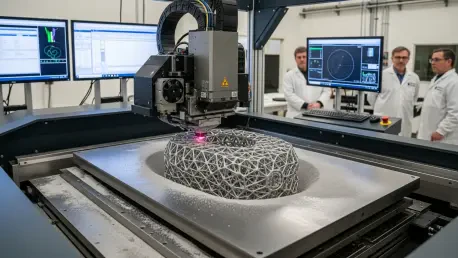
At the heart of this technological push is the LASERTEC 30 SLM US, a Laser Beam Powder Bed Fusion (PBF-LB) system designed and manufactured in Davis, California. This focus on domestic production ensures that every component of the machine complies with stringent federal security mandates. By keeping the manufacturing of the printer itself within U.S. borders, DMG MORI mitigates the risk of foreign interference in the defense supply chain.
The Advanced Manufacturing and Innovation Center in Chicago
Complementing the hardware is the $40.5 million Advanced Manufacturing and Innovation Center located in Chicago. This facility serves as the command center for the JAMA IV contract, acting as a collaborative hub where engineering talent and industrial capacity converge. It provides the necessary infrastructure to scale production while fostering an environment where next-generation manufacturing techniques can be refined for military use.
Strategic Leadership in Research and Development
Guiding these efforts is Fred Carter and a dedicated R&D team that manages the first federal contract specifically tailored to additive parts production. Their leadership is essential for navigating the complex regulatory and technical hurdles inherent in military-grade manufacturing. This team focuses on creating a repeatable process that ensures every printed part meets the same rigorous standards as traditionally forged components.
What Sets DMG MORI Apart in the Defense Sector
DMG MORI stands out as a unique player because it is one of the few domestic manufacturers capable of producing high-scale PBF-LB machines on American soil. This “Made in the USA” status is a powerful differentiator, as it aligns perfectly with federal mandates for secure and resilient supply chains. Unlike competitors who may rely on international components, DMFS provides a closed-loop system that keeps sensitive data and production techniques within a domestic firewall.
Current Operations and the JAMA IV Roadmap
The operation is currently centered on a competitive bidding process that officially launched in 2024. DMFS is actively preparing to bid on specific statements of work, aiming to produce critical and complex metal components that would otherwise take months to acquire through traditional channels. This roadmap focuses on proving that additive manufacturing can handle the high-stress requirements of modern military hardware under tight deadlines.
Reflection and Broader Impacts
The integration of advanced additive manufacturing into the DoD offers immense strengths but also presents logistical challenges regarding the qualification of parts. Ensuring that a 3D-printed metal component is combat-capable requires a level of scrutiny that matches the speed of the technology itself.
Reflection
Integrating these systems requires a fundamental shift in how the military views spare parts and maintenance. Instead of warehousing thousands of physical items, the focus is shifting toward digital inventories that can be printed on demand. However, the rigor required for military qualification remains a hurdle that DMFS is uniquely equipped to clear through its integrated quality control systems.
Broader Impact
The broader influence of this partnership extends to the decentralization of manufacturing. By moving production closer to the point of need, the military can effectively eliminate the long lead times that have historically plagued global supply chains. This shift could redefine how various industries approach logistics, emphasizing resilience over the perceived efficiency of offshore production.
Conclusion: The Future of Resilient Defense Manufacturing
DMG MORI’s role in securing a technological edge for the United States became clear as the JAMA IV program moved into its operational phase. The shift toward additive solutions provided a blueprint for how future manufacturing infrastructures might operate with greater autonomy. By focusing on domestic hardware and specialized R&D, the initiative established a new standard for military readiness. Moving forward, the focus turned to expanding these capabilities to include even more complex alloys and larger-scale components. The successful integration of these systems proved that localized, high-tech production was the most effective way to safeguard national interests against an unpredictable global landscape.