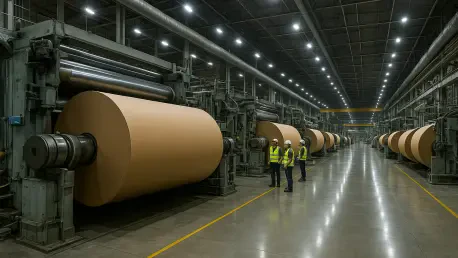

The specialization of the Arnsberg mill in producing liners for corrugated boxes addresses the industry’s need for eco-friendly substrates that do not sacrifice structural durability. By acquiring this facility from the Reno De Medici Group, the Mayr-Melnhof Group has effectively solidified its presence in the competitive German industrial landscape. This transition represents more than a simple change in ownership; it signifies a massive consolidation within the European packaging sector, where scale is increasingly tied to the ability to process recycled materials. Located in the heart of North Rhine-Westphalia, the mill serves as a cornerstone for regional manufacturing, providing a direct pipeline of essential components to the consumer goods market. As global supply chains face mounting pressure to reduce environmental impacts, the integration of such high-output assets becomes a vital move for maintaining relevance and operational continuity in a rapidly evolving economic climate across the continent.
Strategic Advantage: Capacity and Regional Supply Chain Dynamics
The Arnsberg mill functions as a critical industrial engine, with an annual production capacity reaching approximately 230,000 tonnes of recycled fiber-based materials. This volume is particularly significant because it focuses on high-quality liners, which are the essential outer layers of corrugated boxes used for everything from electronics to fresh produce. These liners must provide a superior printable surface while maintaining the rigidity necessary for heavy-duty shipping applications. By controlling this specific production point, the group gains a massive advantage in the Central European corridor, where proximity to major logistics hubs helps to minimize transportation costs. Furthermore, the ability to produce these materials locally reduces the carbon footprint associated with long-distance logistics, aligning the company’s output with the strict environmental mandates currently governing the European Union’s industrial framework and trade agreements.
Beyond raw output, the acquisition allows for deep operational synergies across the existing network of European production sites. By incorporating the specialized technology and local expertise found at Arnsberg, the management team can now redistribute specific manufacturing tasks to the most efficient locations, optimizing energy consumption and machine downtime. This strategic realignment creates a more resilient organizational structure that can withstand fluctuations in raw material pricing or energy costs. Moreover, the addition of these specific liner products expands the portfolio available to folding carton and corrugated packaging customers, offering a one-stop-shop solution for brands looking for sustainable alternatives. This level of vertical integration is necessary for maintaining a competitive edge against non-fiber based packaging alternatives. The move ultimately ensures that the facility remains at the cutting edge of industrial efficiency for the next several years.
Sustainable Operations: Circular Economy and Technological Infrastructure
Central to the operations at the Arnsberg facility is a profound commitment to the circular economy, utilizing hundreds of thousands of tonnes of recovered paper as the primary feedstock for new products. This reliance on waste-to-resource pathways is no longer an optional strategy but a fundamental requirement for industrial viability in the current decade. By diverting vast quantities of post-consumer and industrial paper from landfills, the mill functions as a vital link in the global recycling loop, transforming discarded items into high-value packaging components. This process is supported by advanced sorting and cleaning technologies that ensure the final board product meets the rigorous hygiene and strength standards of the food and beverage industry. As consumer preferences continue to shift away from single-use plastics, the demand for these recycled fiber solutions has skyrocketed, placing facilities like Arnsberg at the forefront of a major transition toward regenerative industrial practices.
Maintaining such a high level of operational excellence requires a sophisticated ecosystem of technology providers and chemical engineering partners. The mill relies on complex digital process control systems to monitor fiber quality and energy usage in real-time, allowing for immediate adjustments that maintain product consistency. Collaboration with specialized chemical suppliers is equally important, as they provide the necessary additives that enhance the moisture resistance and structural durability of recycled boards. These partnerships ensure that the finished product can compete with virgin fiber materials in terms of performance while maintaining a much lower environmental impact. The ongoing investment in machinery upgrades and maintenance protocols further demonstrates a long-term commitment to technological leadership. By fostering these industrial relationships, the facility remains capable of evolving alongside market demands, ensuring that the shift toward sustainable packaging is backed by reliable and scalable technology.
Industry Transformation: Strategic Recommendations and Future Outcomes
The successful integration of the Arnsberg mill established a new benchmark for how large-scale industrial groups managed the transition toward a fully circular economy. Analysts observed that the emphasis on localizing production and focusing on recycled liners provided a template for other manufacturers seeking to stabilize their supply chains against global volatility. It became clear that the most effective strategy involved not only acquiring physical assets but also investing in the specialized knowledge and digital infrastructure required to optimize them. Moving forward, companies in the packaging sector were encouraged to prioritize the development of high-performance recycled substrates that could replace traditional materials in existing logistics systems. This shift required a proactive approach to procurement and a deeper integration with municipal recycling programs to secure a steady flow of high-quality recovered fibers. Ultimately, the industry moved toward a model where ecological responsibility and profitability were inextricably linked.
To capitalize on these developments, organizations recognized the need to focus on enhancing their internal technical capabilities to handle varying grades of recycled inputs. Implementation of AI-driven sorting technologies and predictive maintenance for heavy machinery was identified as a critical factor in maintaining the competitive margins seen at the Arnsberg site. Strategic leaders also pursued collaborative ventures with waste management firms to standardize the quality of recovered paper, ensuring that manufacturing processes remained efficient and cost-effective. Furthermore, the adoption of transparent reporting on carbon reductions became a standard practice for maintaining trust with environmentally conscious brand owners and regulatory bodies. By treating sustainability as a core operational metric rather than a separate marketing goal, firms ensured their longevity in a market that no longer tolerated wasteful production methods. These insights provided a clear path for future growth and served as a foundation for innovation.