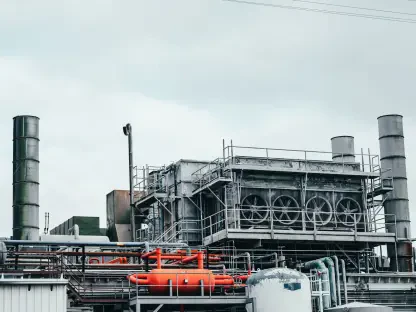

A modern perspective on safety asserts that humans are the apex consumers of every toxin released into the environment, making environmental health a direct component of human safety. For the non-road equipment manufacturing industry, this realization marks a transformative era where the distinction between operational hazards and ecological impact is rapidly dissolving. Historically, these two fields operated in isolation, with safety focused on the immediate physical protection of the operator and sustainability relegated to corporate social responsibility reports. However, current market dynamics from 2026 to 2028 indicate that manufacturers who treat environmental stewardship as an extension of their safety protocols are seeing superior operational longevity. This shift is not merely a philosophical exercise; it is a response to a global marketplace where green credentials have become mandatory for securing high-value contracts and maintaining a license to operate in increasingly regulated regions. Achieving this balance requires a holistic view of the product lifecycle.
The Evolution of Corporate Responsibility
Redefining Safety through a Long-Term Lens: The Human Element
The evolution of safety in equipment manufacturing has traditionally prioritized the mitigation of immediate physical risks, such as mechanical failure, electrical hazards, or ergonomic strain on the operator. These protocols are vital, yet they often overlook the delayed consequences of manufacturing processes on human health. A shift is currently underway where safety professionals are widening their focus to include the long-term biological effects of industrial effluents and hazardous materials used in heavy machinery. This broader lens recognizes that a worker is not truly safe if the product they help build or operate introduces carcinogens or endocrine disruptors into the surrounding ecosystem. By redefining safety to include environmental health, manufacturers are moving toward a proactive stance that addresses risks before they manifest in clinical settings. This approach requires a sophisticated understanding of how industrial outputs interact with the water tables and air quality.
Redefining Safety through a Long-Term Lens: Sustainability as Protection
Under this modern framework, safety is viewed as a short-term concern, while sustainability represents long-term safety intended to prevent harm that might manifest years later. This temporal expansion of the safety mandate forces a change in how materials are selected and processed. When a manufacturer chooses a biodegradable lubricant or a lead-free coating, they are not just making an environmental choice; they are making a safety decision that protects the entire community from chronic exposure. This integrated perspective ensures that the concept of a safe workplace extends beyond the factory walls and into the global environment. Consequently, the safety department and the sustainability team are finding common ground in the shared goal of harm prevention. By treating sustainability as safety on a longer timeline, organizations can streamline their risk management strategies and present a unified front to stakeholders who are increasingly concerned with the total footprint of industrial activity.
Learning from Historical Industry Failures: The Case of Bethlehem Steel
The collapse of Bethlehem Steel serves as a foundational case study for modern executives navigating the intersection of resource management and corporate longevity. During its peak, the company was an industrial titan, yet it failed because it remained tethered to outdated production methods while the global market shifted toward recycled materials and electric arc furnaces. This failure was not merely an economic oversight; it was a refusal to adapt to a reality where efficiency and environmental responsibility became synonymous with survival. In the current landscape of 2026, manufacturers observe that sustainability is fundamentally a risk-reduction strategy that ensures the continued availability of essential resources. By ignoring the transition to safer production methods, Bethlehem Steel insured its own obsolescence. Modern firms must recognize that natural resource management is a core function that prevents the terminal risks of resource depletion and regulatory exclusion.
Learning from Historical Industry Failures: Resource Management as Survival
Building on the lessons of the past, today’s manufacturers are discovering that sustainability is about the efficient use of resources to ensure a company’s future existence. For a business to remain viable, it must evolve its management of natural resources or face the same obsolescence as those that ignored the transition to safer, more efficient production methods. The modern industrial landscape rewards those who can do more with less, turning waste streams into value streams and reducing the toxicity of their inputs. This shift is driven by the realization that resources are finite and that the right to operate is contingent upon responsible stewardship. Risk reduction no longer ends with preventing workplace accidents; it now includes the mitigation of supply chain disruptions and the avoidance of environmental liabilities. Companies that internalize these lessons are better positioned to navigate the complexities of the 21st-century economy, where resource efficiency is a key indicator of financial health.
Navigating Regulatory and Market Demands
Accessing Global Markets through Compliance: Regulatory Gatekeeping
Regulatory bodies, particularly in Europe, are increasingly using environmental benchmarks as gatekeeping mechanisms for market entry. New procurement policies often restrict purchases to companies that strictly adhere to circular economy rules and safety standards. For equipment manufacturers, this means that the ability to sell products in major global markets is now directly tied to their ability to prove that their machines are both safe for the user and sustainable for the environment. These regulations are not merely suggestions; they are rigid requirements that can lock an unprepared company out of lucrative regions overnight. Compliance has therefore become a strategic priority rather than a clerical task. Manufacturers are forced to adopt rigorous testing and documentation processes to verify that every component of their machinery meets international toxicity and recyclability standards. This trend is accelerating as more nations adopt similar frameworks to protect their citizens.
Accessing Global Markets through Compliance: The Procurement Shift
The shift in procurement policies is creating a new competitive landscape where the greenest products often win the largest contracts. Government agencies and large-scale private enterprises are incorporating sustainability scores into their bidding processes, making environmental performance a primary differentiator. Manufacturers that fail to meet these evolving standards find themselves at a disadvantage, regardless of the mechanical superiority of their equipment. This market pressure is driving a race to the top, where companies compete to demonstrate the highest levels of safety and environmental compatibility. The resulting innovation is leading to the development of machines that are not only more efficient but also easier to disassemble and recycle. By aligning their business strategies with these regulatory and market demands, manufacturers are securing their place in the global economy and demonstrating a commitment to the safety and health of the worldwide community they serve.
Overcoming Data Challenges in the Supply Chain: Chemical Transparency
A major hurdle for Original Equipment Manufacturers is the lack of detailed data regarding the chemical composition of components provided by various suppliers. To maintain market access, manufacturers must have intimate knowledge of their supply chains to track and report global chemicals of concern. Transparency has become a vital currency; without clear documentation of what is inside a product, manufacturers risk being excluded from highly regulated and lucrative international regions. This requirement for granular data is forcing a transformation in supplier relationships, moving away from simple transactions toward deep partnerships based on information sharing. OEMs are now demanding full material disclosures, which allows them to identify and eliminate hazardous substances before they enter the manufacturing stream. This level of transparency is essential for ensuring that the final product is safe for both the operator and the environment throughout its entire operational life.
Overcoming Data Challenges in the Supply Chain: Digital Tracking Solutions
To manage the massive amount of data required for chemical tracking, manufacturers are turning to advanced digital solutions and blockchain technology. These tools provide a secure and immutable record of material provenance, ensuring that every bolt and circuit board can be traced back to its source. This digital thread is crucial for verifying compliance with international safety standards and for facilitating the eventual recycling of the equipment. Without such systems, the complexity of modern supply chains makes it nearly impossible to guarantee the absence of restricted substances. The ability to provide accurate and timely data is becoming a prerequisite for doing business with tier-one contractors and government entities. As a result, data management is being elevated to a core manufacturing competency. By investing in these technologies, companies are mitigating the risk of regulatory fines and ensuring that their products remain compliant as new chemical restrictions are introduced.
Future Trends in Integrated Manufacturing
Moving Sustainability Upstream into Design: Engineering for the Future
The integration of safety and sustainability is moving earlier into the product lifecycle, becoming a core element of the design and development phase rather than a feature added at the end. By addressing these concerns during the initial engineering process, companies can more effectively mitigate risks and reduce environmental impact. This design-led approach ensures that every piece of equipment is built from the ground up to meet the rigorous demands of the modern regulatory landscape. Engineers are now tasked with selecting materials that are both durable and recyclable, while also ensuring that the manufacturing process itself minimizes waste and energy consumption. This holistic design philosophy results in machines that are safer to build, safer to operate, and safer to retire. By embedding these values into the very blueprints of their products, manufacturers are creating a new generation of equipment that is inherently compatible with the principles of the global circular economy.
Strategic Resource Implementation: Lessons from the Industry Leaders
Forward-thinking manufacturers successfully transitioned from linear to circular models by internalizing environmental risks as core safety concerns. They abandoned the traditional take-make-waste philosophy in favor of closed-loop systems that recovered nearly all raw materials at the end of a machine’s lifecycle. By doing so, these organizations minimized their exposure to volatile commodity markets and avoided the catastrophic reputational damage faced by less adaptive competitors. These leaders also invested heavily in digital product passports, allowing them to track chemical compositions with unprecedented precision across the entire supply chain. As a result, they not only met the stringent requirements of global regulators but also established a new standard for operational excellence that prioritized long-term human and ecological health. The integration of these disciplines proved that profitability and safety were not mutually exclusive but were, in fact, two sides of the same strategic coin for sustainable growth.