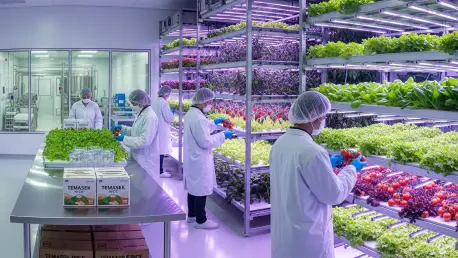

A small island nation with limited arable land faces a constant struggle to ensure a stable food supply, yet Singapore is redefining these constraints through high-tech collaboration. The partnership between SATS and Temasek Life Sciences Laboratory (TLL) represents a significant leap toward nutritional self-reliance, blending biotechnology with industrial-scale food solutions. By merging the scientific expertise of TLL with the extensive logistical network of SATS, the initiative addresses the vulnerability of supply chains in an unpredictable global economy. This two-year commitment focuses on domestic resilience but also establishes a blueprint for urban agricultural innovation. The effort involves integrating climate-resistant crops and advanced aquaculture into daily diets, reaching millions through airlines, hospitals, and military catering services. It is not merely a research project but a full-scale industrial transformation designed to reduce the reliance on international imports while maintaining high nutritional standards for the entire population.
Scaling Agricultural Innovation: Solutions for Urban Environments
At the core of this scientific endeavor lies a collection of specifically engineered superfoods designed to thrive within the unique constraints of an urbanized landscape. Temasek Rice serves as a flagship example, having been developed to withstand extreme weather conditions and common diseases that often decimate traditional crops in the region. Alongside this grain, the partnership has prioritized the production of Jade Perch, a species of fish exceptionally high in Omega-3 fatty acids, which is being cultivated in modular urban farming systems. Furthermore, TLL has successfully engineered high-nutrition tomatoes that boast significantly elevated antioxidant levels compared to standard varieties. These products are more than just laboratory experiments; they represent a strategic use of Singaporean intellectual property to create a localized food system. By focusing on crops that require minimal land and water, the initiative ensures that agricultural productivity can continue despite the increasing scarcity of natural resources and land.
Building on the development of these crops, SATS acts as the industrial engine that translates these innovations into accessible meals for the broader public. The transition from a controlled laboratory setting to a high-volume manufacturing plant requires sophisticated prototyping to ensure that the delicate properties of these superfoods remain intact during processing. SATS utilizes its state-of-the-art kitchen facilities to test these ingredients under rigorous real-world conditions, focusing on maintaining nutritional integrity and flavor profile across thousands of servings. This industrialization process is critical for achieving the economies of scale necessary to make locally produced food a viable alternative to cheaper imports. Through advanced food technology and streamlined logistics, the organization aims to lower the barrier to entry for sustainable produce in institutional catering. The integration of these components allows for a seamless flow from the research bench to the commercial dinner plate, ensuring that food security becomes a tangible reality.
Cultivating Consumer Adoption: Strategic Regional Leadership
Ensuring the long-term success of this partnership requires more than just logistical efficiency; it demands a deep understanding of consumer behavior and cultural culinary expectations. Initial testing phases have focused heavily on integrating bio-engineered ingredients into traditional staples such as chicken rice and seafood stews to determine if they meet the palate of the local population. These trials indicated that the new varieties of rice and protein can be introduced without disrupting the familiar tastes that consumers have come to expect from their favorite dishes. However, the wider rollout depends on the consistent availability of these products and the willingness of large-scale institutional buyers to prioritize local sustainability over short-term cost savings. By proving that high-tech food can be both delicious and affordable, the initiative builds trust within the community and encourages a shift in dietary habits. The goal is to create a self-sustaining ecosystem where demand for local produce drives further innovation in the agricultural sector.
The collaboration successfully demonstrated how scientific rigor and industrial scale could unite to fortify a nation’s food security against external shocks. Moving forward, the focus shifted toward exporting this integrated model to other import-dependent regions, positioning Singapore as a specialized hub for urban agricultural technology. Stakeholders realized that the true value of these innovations lay in their adaptability to diverse climates and urban settings worldwide. To maintain this momentum, investment in genomic research and automated farming systems became a top priority for future development cycles. Organizations were encouraged to adopt these high-nutrition ingredients as standard components in corporate sustainability reports, further cementing their role in the global food economy. This transition from domestic security to international influence marked a new chapter in how technology addresses human needs. The partnership ultimately established a permanent framework for resilient food systems, ensuring that nutritional excellence remained accessible.