
Chromium and manganese act as essential alloying agents, with 51 million and 20 million tonnes produced respectively to enhance the strength and corrosion resistance of steel. This foundational extraction of materials highlights the symbiotic relationship between raw earth and human ingenuity, where even the most specialized alloys depend on a massive industrial operation. As current global production data reflects, the mining sector is not merely a supplier of materials but the engine of modern development, moving from the heavy industrialization of the past toward a high-tech future. With 2025 serving as a pivotal year for output expansion, the industry has witnessed a sharpening contrast between traditional bulk mining and the rising demand for specialty elements. These trends represent more than just numbers on a ledger; they indicate how civilizations prioritize resources to meet the challenges of urbanization and the urgent need for a more sustainable energy grid through 2028.
The Foundation of Global Infrastructure
Massive Footprint: Iron and Steel Production
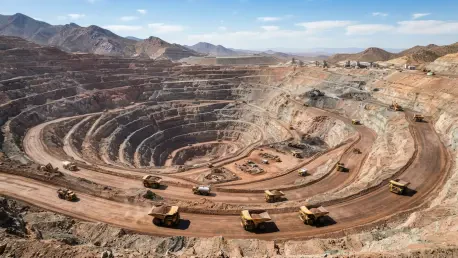
The most striking takeaway from recent production estimates is the sheer scale of iron ore extraction compared to all other metals combined. Of the approximately 2.80 billion tonnes of total metallic commodities produced annually, iron ore accounts for a staggering 2.6 billion tonnes, representing roughly 93% of the total physical volume of the primary metals analyzed. This massive footprint is a direct reflection of the global reliance on steel for everything from high-rise construction to automotive manufacturing. Iron ore serves as the primary feedstock for the global steelmaking industry, providing the essential skeletal structures for modern cities, including massive bridges, complex railway networks, and the reinforcing bars used in concrete. The magnitude of iron ore production is more than 35 times that of primary aluminum, which underscores the reality that the physical environment is built upon a foundation of iron, necessitating a high-volume logistics network.
Essential Industrial Metals: Manufacturing Backbone
While iron provides the bulk, a secondary tier of industrial metals forms the structural backbone of high-performance manufacturing and power distribution. Primary aluminum production, estimated at 74 million tonnes, is indispensable for the aerospace and automotive sectors due to its lightweight and corrosion-resistant properties. Manufacturers increasingly rely on it to improve fuel efficiency and meet environmental standards. Simultaneously, copper remains the metal of electrification, with 23 million tonnes produced annually to sustain the wiring and motors critical for global power grids and telecommunications. These metals, alongside manganese, zinc, and lead, provide the necessary durability and functionality required for advanced industrial applications. The constant demand for these materials reflects a global economy that, despite its digital focus, still requires immense physical resources to maintain its core operations and expand its energy infrastructure into the next decade.
The Technological and Economic Shift
Rapid Ascent: Battery and Tech Metals
A significant shift is occurring as a smaller group of tech metals experiences explosive growth, driven largely by the transition to renewable energy and the electrification of transportation. The most notable trend in this sector is the meteoric rise of lithium, which has seen its production more than triple in just five years. By 2025, estimates place lithium output at approximately 290,000 tonnes, a massive jump from the 82,500 tonnes recorded back in 2020. This surge is directly linked to the expansion of the lithium-ion battery market, which powers everything from smartphones to electric vehicles and massive grid-scale energy storage units. This rapid scaling of production presents unique challenges for the mining industry, as it requires the development of new extraction technologies to keep pace with demand. The global supply chain for lithium has become a focal point of geopolitical strategy, as nations seek to secure access to the materials defining the next generation of power.
Paradox of Scarcity: Strategic Material Value
The analysis of global mining also highlights a critical paradox where physical weight does not equate to economic value or functional necessity. Precious metals and platinum-group metals, such as gold and palladium, are mined in minuscule quantities—measured in tonnes rather than billions—yet they are indispensable for specialized electronics, investment, and automotive catalysts. For instance, the annual production of palladium is a mere fraction of industrial metals, yet its role in reducing vehicle emissions is irreplaceable. These materials represent a high-precision material system where even a minor disruption in supply could bring entire global high-tech supply chains to a standstill. This demonstrates that the most vital components of modern life are often the ones extracted in the smallest volumes. As technology becomes more sophisticated, the strategic importance of these rare elements will only increase, necessitating new recycling methods to recover resources from discarded electronics.
Strategic Directions: Future Industry Considerations
The landscape of metal production in 2025 demonstrated that the global economy operated on two distinct but interconnected systems. The traditional high-volume mining of iron and copper provided the physical infrastructure, while the high-precision extraction of battery and tech metals enabled the transition to a digital and electrified world. This balance required a fundamental shift in how governments and corporations approached resource security. Moving forward, the industry must prioritize the development of advanced recycling facilities to mitigate the environmental impact of new mining while securing steady supplies of rare elements. Stakeholders should focus on diversifying supply chains and investing in alternative materials that reduce reliance on geographically concentrated minerals. By 2027, the success of these efforts will likely determine the pace of global decarbonization. Ultimately, navigating the complexities of mineral extraction through 2028 will require a coordinated effort to improve efficiency across the entire materials lifecycle.