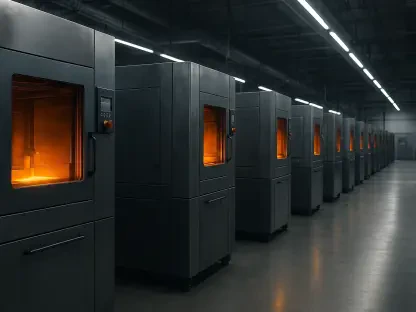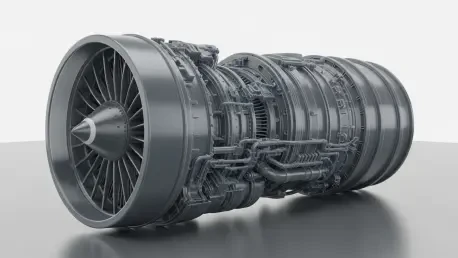

The frantic hum of high-precision lasers fusing metal powder has replaced the slow, rhythmic clanging of traditional foundries as aerospace manufacturing undergoes its most radical transformation in a century. This shift represents a departure from the days of artisanal engine assembly toward a model of on-demand, digital production that favors speed and adaptability. By treating jet engines as printable assets rather than precious heirlooms, the industry is finally unlocking the ability to scale flight hardware at the speed of software.
The Strategic Shift: From Prototypes to Logistics
This evolution is no longer confined to experimental laboratories; it has become a cornerstone of modern defense strategy. The pivot toward additive manufacturing allows engineers to consolidate hundreds of separate parts into a single, complex geometry that would be impossible to cast or machine. This consolidation does not just save weight; it fundamentally alters the logistics of the supply chain by removing the need for massive inventories of sub-components and specialized tooling.
As global tensions rise, the demand for “affordable mass” has pushed additive techniques to the forefront of aerospace procurement. The roadmap for this analysis explores how surging market investments and new programs like the Family of Affordable Mass Munitions are driving this change. By focusing on expendable propulsion systems, the industry is creating a new class of engines that are both highly capable and economically disposable, ensuring that quantity itself becomes a strategic quality.
The Growth and Scale of Additive Manufacturing in Propulsion
Market Acceleration: The Rise of Affordable Mass
The financial landscape for aerospace has shifted dramatically, evidenced by significant capital injections like the $29.7 million contract awarded to Beehive Industries by the Air Force. This funding specifically targets the maturation of additively manufactured propulsion to meet the requirements of the Small Expendable Turbine program. Such investments signal a broader move away from legacy systems that are often too expensive to lose in high-intensity conflicts, favoring instead a high-volume approach to hardware production.
Data suggests that by utilizing these digital workflows, manufacturers can reduce part counts by nearly ninety percent while slashing lead times from years to months. These efficiencies are critical for the Family of Affordable Mass Munitions initiative, which seeks to saturate the battlefield with cost-effective systems. This shift toward mass-producible engines ensures that the industrial base can respond to sudden spikes in demand without the traditional bottlenecks associated with specialized casting and labor-intensive assembly.
Real-World Applications: Testing and Prototyping Milestones
The practical validation of this technology is found in the development of the Frenzy 8 and Frenzy 6 engines, which serve as benchmarks for the industry. The Frenzy 8, producing 200 lbf of thrust, has already undergone rigorous ground and high-altitude testing to prove that 3D-printed components can withstand the extreme thermal and mechanical stresses of flight. Meanwhile, the smaller Frenzy 6 is entering the phase of initial engine testing, further diversifying the catalog of available propulsion options.
Bypassing traditional manufacturing hurdles allows firms to iterate on designs in real time, incorporating feedback from test flights into the next print cycle almost immediately. This agility was previously unheard of in jet propulsion, where a single design change could take months to implement through traditional tooling. By successfully integrating these engines into flight vehicles, companies are proving that additive manufacturing is a reliable, flight-ready solution for the next generation of autonomous systems.
Industry Perspectives: The Path to Mass Production
Defense leaders and industry experts increasingly view “Pathfinder” programs as the essential link between a clever prototype and a scalable product. These initiatives are designed to stress-test the manufacturing process itself, ensuring that a factory can produce hundreds of units with consistent quality. The consensus among professionals is that additive manufacturing is the only way to achieve the scale required for modern drone swarms, as traditional methods simply cannot move fast enough to match the pace of uncrewed system development.
Furthermore, the professional community highlights that this technology enables a more resilient defense posture. By digitizing the “blueprints” of a jet engine, the manufacturing process becomes decoupled from specific geographic locations or specialized machinery. This perspective suggests that the future of deterrence relies on the ability to produce high-performance hardware at a lower price point, effectively out-pacing the cost-to-kill ratio of traditional defensive measures.
Future Implications: The Evolution of Defense Logistics
Looking forward, the widespread adoption of 3D-printed engines will likely lead to the “localization” of manufacturing. If an engine can be printed from a digital file, production facilities can be moved closer to operational zones, drastically reducing the time and risk associated with global shipping. This shift would allow military forces to maintain a “digital inventory,” where parts are created on an as-needed basis, essentially erasing the traditional concept of long-term storage and depreciation for expendable assets.
However, this transition requires overcoming significant hurdles in qualification and safety certification. Establishing rigorous, automated inspection protocols for 3D-printed parts remains a priority to ensure that every engine meets the necessary performance standards. As aerospace firms move away from proprietary, slow-moving processes toward these agile digital workflows, the entire economic model of flight is being rewritten, favoring companies that can innovate through code and powder rather than iron and hammers.
Redefining the Future: The New Landscape of Flight
The transition toward additive jet propulsion successfully moved from a niche experiment to a fundamental requirement for the current Family of Affordable Mass Munitions initiative. By prioritizing scalability and cost-efficiency, the industry demonstrated that jet engines could be produced with the same speed and flexibility as modern electronics. This shift effectively broke the cycle of rising costs and shrinking inventories that had characterized aerospace production for decades.
As these 3D-printed systems become the standard for uncrewed aviation, the focus must now turn toward standardizing these digital processes across the broader commercial sector. The lessons learned from high-speed defense manufacturing will eventually inform civilian cargo drones and regional transport, making flight more accessible and economically sustainable. Ultimately, the ability to manufacture thrust on demand has fundamentally reset the expectations for how quickly humanity can innovate and deploy new technologies into the sky.