
The global industrial engine is currently recalibrating its core mechanics as manufacturers pivot from fragile “just-in-time” models toward a more robust “just-in-case” framework designed to withstand geopolitical volatility. This transition marks a fundamental departure from the era of hyper-globalized supply chains, where the proximity of raw materials was often sacrificed for the promise of lower initial overhead. Today, the strategic focus has shifted toward the domestic resilience of material sourcing, specifically in the realm of high-performance metal powders. These specialized materials represent the lifeblood of advanced additive manufacturing, a sector that demands uncompromising purity and immediate availability to sustain its rapid growth. As aerospace, medical, and automotive leaders seek to insulate themselves from international logistics disruptions, the move to localize production is rapidly becoming the defining characteristic of modern industrial strategy. Localizing the production of high-performance metal powders is not merely a matter of convenience; it is an essential evolution that ensures the structural integrity and supply security of the most critical engineering sectors.
The Shift Toward Domestic Material Sourcing
Data and Growth Patterns in Metal Powder Localization
Industry reports spanning from 2026 to 2028 indicate a surging demand for North American-based production to mitigate the multifaceted risks of global shipping instability and localized regional conflicts. Statistics show that localized production can reduce delivery timelines from several weeks to just a few days, a change that significantly improves operational agility and reduces the capital tied up in transit. This speed is vital in a competitive landscape where the growth of the metal additive manufacturing market is directly tied to the availability of high-purity, traceable materials. Furthermore, the ability to source materials within the same regulatory region as the end-user ensures that stringent quality standards are met without the complexities of cross-border certification.
Reliability in the supply chain is no longer viewed as a passive requirement but as a competitive advantage that enables more aggressive production schedules. Market patterns reveal that companies prioritizing domestic feedstock have seen a marked reduction in production downtime caused by material shortages. Moreover, the move toward localization facilitates a tighter feedback loop between the powder producer and the manufacturer, allowing for the rapid refinement of material properties to suit specific printing applications. This localized synergy is particularly crucial for the development of high-performance parts where the slightest variance in powder chemistry can lead to catastrophic failure in the final component.
Case Study: CNPC Powder’s Strategic California Expansion
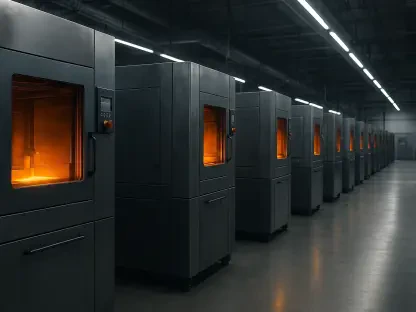
A significant milestone in this localized movement is CNPC Powder’s establishment of a 5,500-square-meter facility in California, which is designed to feature six fully automated atomization production lines. This facility represents a major investment in the U.S. market, focusing on the production of critical materials like titanium alloys (Ti-6Al-4V), nickel-based superalloys, and specialized aluminum alloys like Scalmalloy. By utilizing advanced technologies such as Vacuum Induction Gas Atomization (VIGA) and Plasma Rotating Electrode Process (PREP), the site ensures the creation of high-grade spherical powders that meet the rigorous requirements of flight-critical components. The facility’s strategic location allows for direct collaboration with the burgeoning aerospace and medical hubs on the West Coast, bridging the gap between raw material processing and end-stage manufacturing.
The California site also integrates the company’s proprietary Advanced Metallurgy Powder (AMP) platform, which provides real-time monitoring and closed-loop process controls. This level of technological oversight is essential for maintaining consistency across large production batches, ensuring that every kilogram of powder adheres to the specified particle size distribution and morphology. By focusing on materials that are vital for high-tech applications, such as orthopedic implants and turbine blades, the facility provides a secure domestic source for alloys that were previously subject to the whims of global trade. This expansion underscores the industry’s shift toward localized hubs that offer both manufacturing capacity and high-level engineering support.
Perspectives from Industry Leaders on Supply Chain Resilience
Experts across the additive manufacturing landscape emphasize that domestic production is fundamentally about ensuring process traceability and meeting rigorous qualification standards rather than just simplifying logistics. Materials specialists highlight that having on-site engineering support and dedicated R&D centers allows for a significantly faster certification of materials for flight or medical use. The ability to conduct local validation and characterization helps manufacturers navigate the complex regulatory environment more efficiently. This proximity also allows for more frequent facility audits and quality checks, fostering a culture of transparency that is difficult to maintain with offshore suppliers located thousands of miles away.
Thought leaders argue that the transition to localized hubs represents a strategic shift from a global commodity model to a high-tech service model that prioritizes consistency and technical partnership. In this new paradigm, the material supplier acts as a collaborator who understands the nuances of the manufacturer’s specific printing processes. This relationship is critical for overcoming the learning curves associated with new, high-strength alloys and complex geometries. Furthermore, localized technical assistance ensures that any material-related challenges can be addressed in real-time, preventing the costly delays that occur when waiting for support across multiple time zones.
Future Implications and the Rise of Green Metallurgy
The future of metal powder production is increasingly tied to the principles of the circular economy, with a growing focus on closed-loop recycling systems that turn production scrap into high-quality powder. Sustainable practices are no longer peripheral concerns; achieving SCS carbon certification is projected to reduce the carbon footprint of metal production by over 60% compared to traditional extraction methods. This shift toward green metallurgy allows manufacturers to meet their environmental targets while maintaining the high performance required for demanding engineering applications. As recycling technology matures, the ability to reclaim and re-atomize waste material will become a standard feature of domestic production hubs.
Potential developments also include the rise of custom alloy development, which allows manufacturers to order specific formulations tailored to niche engineering challenges. This bespoke approach to material science enables the creation of parts with properties like enhanced thermal management or superior corrosion resistance in extreme environments. While challenges such as high domestic energy costs and labor requirements remain, the long-term benefits of a resilient, low-carbon supply chain likely outweigh these initial economic hurdles. These localized facilities are expected to serve as the foundation for a new generation of industrial leadership that values responsiveness, sustainability, and technical innovation.
Conclusion: Strengthening the Foundation of Modern Manufacturing
Strengthening the foundational elements of modern manufacturing required a decisive move toward regional self-reliance and the integration of advanced technological infrastructure. The industry identified that a stable supply of high-grade metal powders served as the essential linchpin for the additive revolution and acted by establishing local production capacity. These efforts ensured that critical sectors, from aerospace to medical technology, remained insulated from external shocks while simultaneously fostering a new era of sustainable production. The integration of advanced atomization technology and local R&D hubs created a responsive industrial ecosystem that successfully redefined the standards for material quality and environmental responsibility. Manufacturers that prioritized these localized strategies gained a significant competitive advantage by valuing long-term resilience over the pursuit of short-term cost savings. Moving forward, the adoption of AI-driven material databases and local energy-optimization programs emerged as the next logical steps for these regional facilities. This evolution solidified a model where material consistency and engineering responsiveness became the primary drivers of industrial growth.