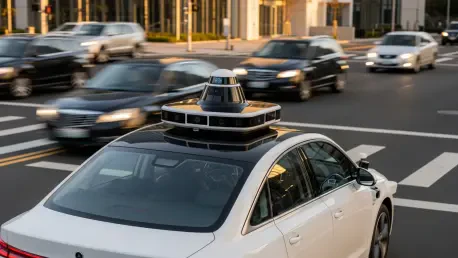

The recent evaluation of autonomous vehicle performance across major American metropolitan areas reveals a striking disparity between machine precision and human error. Every day, thousands of commuters step into vehicles that navigate complex urban environments without a single human hand on the wheel, representing a shift in transportation that was once considered science fiction. Recent data from the Insurance Institute for Highway Safety highlights a significant disparity between these autonomous systems and traditional human operation. While human drivers are prone to lapses in judgment, fatigue, and distraction, the software powering today’s driverless fleets remains vigilant across every mile. This study serves as a critical benchmark for the industry, comparing the precision of software against the common errors that lead to millions of accidents annually. By examining the performance of Waymo’s fleet in various major hubs, researchers have uncovered evidence suggesting that the transition to fully autonomous transport is a highly effective strategy for reducing road fatalities.
Geographic Performance: Technical Standards and Regional Success
Regional Success and the Impact of Operating Scale
The safety data gathered from diverse urban landscapes reflects the unique challenges presented by each city’s specific traffic patterns and infrastructure. In major hubs like Phoenix and Los Angeles, the driverless fleet achieved crash reductions exceeding seventy percent, demonstrating the system’s ability to navigate wide boulevards and predictable weather conditions with extreme reliability. However, the dense and often unpredictable streets of San Francisco presented a more complex environment, resulting in a more modest but still significant thirty-five percent improvement over human drivers. In contrast, data coming from newer markets such as Austin showed a slight increase in crash rates during the initial phases of deployment. Experts noted that the limited number of miles driven in these expansion areas makes the specific results susceptible to statistical noise rather than indicating a lack of inherent safety. As the operating scale increases in these regions, the expectation is that the safety performance will align with the benchmarks established in more mature markets.
Distinguishing Level 4 Autonomy from Driver Assistance
It is essential to distinguish the Level 4 technology used in these robotaxis from the various driver-assistance systems found in many private passenger cars. Unlike Level 2 systems such as Super Cruise or BlueCruise, which require constant human supervision and the ability to take control at a moment’s notice, Level 4 vehicles operate entirely independently within their designated zones. This distinction is vital for public understanding because the most significant safety gains come from fully removing the human element from the driving task. When a human is required to monitor a system, they are still susceptible to the same distractions and delayed reaction times that cause traditional accidents. By transitioning to a model where the software is the sole operator, the risks associated with human fatigue and inattention are effectively eliminated. The data proves that these fully autonomous systems are particularly adept at avoiding the types of catastrophic mistakes that lead to serious roadside emergencies, marking a departure from the incremental safety improvements offered by assisted driving.
Data Management: Reporting Biases and Industry Norms
Identifying Reporting Flaws and Documentation Bias
Despite the positive statistics, the study highlights several hurdles in how autonomous vehicle safety is currently tracked and compared to human-driven cars. Companies operating driverless fleets are often forced to document every minor incident, such as low-speed bumper scrapes or curb touches, that a human driver would typically ignore or resolve without a police report. Because autonomous vehicles are packed with expensive sensors and sophisticated hardware, even minor contact often meets the financial damage threshold for mandatory reporting, creating a skewed perception of their safety. This documentation bias makes it appear that robotaxis are involved in many more incidents than they actually are when compared to the vast number of unreported minor human collisions. Furthermore, the rigorous internal logging systems of tech companies ensure that no anomaly goes unrecorded, whereas human reporting remains highly subjective and inconsistent. This discrepancy in data collection suggests that the actual safety gap between humans and autonomous drivers might be even wider than the current figures indicate.
The Necessity: Standardized Federal Oversight
To bridge the gap in public trust, the Insurance Institute for Highway Safety advocated for a modernized national reporting framework that applied to all autonomous vehicle operators. Current federal mandates did not require companies to disclose their total mileage, which made it difficult for analysts to calculate accurate crash rates unless an operator chose to share that data voluntarily. Industry leaders determined that the most effective path forward involved the creation of a unified database with consistent criteria for what counted as a reportable crash. By prioritizing the standardization of reporting requirements, stakeholders ensured that transparent and fair comparisons remained possible as driverless technology continued to expand. This approach naturally led to a more granular understanding of how autonomous systems interacted with various road users. Ultimately, the research established that while the technology surpassed human performance in most safety metrics, the long-term integration of these fleets required a more rigorous and uniform approach to documentation that maintained high levels of accountability.