
The skeletal remains of gargantuan steel behemoths dotting the landscapes of the American Midwest serve as a haunting reminder of a time when industrial progress was measured by the sheer magnitude of a single machine. During the mid-20th century, the global appetite for electricity surged, driving a frantic competition among mining firms to extract shallow coal seams at unprecedented rates. To meet this demand, engineers pushed the boundaries of physics, creating electric stripping shovels that could dwarf skyscrapers and rearrange the Earth’s surface in mere hours. These machines were not merely tools but symbols of a post-war optimism that believed any geological challenge could be overcome with enough steel and power. However, the trajectory of this “size race” eventually collided with the harsh realities of economic efficiency and structural physics. What followed was a fundamental reorganization of the mining industry, shifting from single, massive assets to flexible, distributed systems that prioritize longevity over record-breaking volume.
Evolutionary Milestones: The Path to Industrial Autonomy
Breaking Constraints: The Transition From Rails to Crawlers
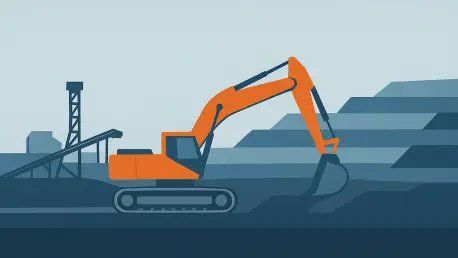
Before the 1920s, the physical dimensions of mining equipment were strictly dictated by the infrastructure required to transport them, primarily heavy-duty rail systems. These tracks acted as a leash, confining the reach of machinery and forcing operations to follow a linear, inflexible path that often proved inefficient in complex geological formations. Laying and maintaining tracks across soft, uneven mine floors required significant labor and slowed the pace of extraction considerably. This bottleneck was finally shattered in 1922 with the introduction of the first crawler-mounted stripping shovel, a landmark engineering achievement that granted these machines the freedom to traverse rugged terrain. By integrating tank-like treads directly into the undercarriage, engineers eliminated the logistical nightmare of rail management. This newfound autonomy allowed for a dramatic increase in weight and dipper capacity, setting the stage for the massive scaling efforts that would define the following decades.
Scaling Up: How Mobility Fueled the Quest for Size
The transition to crawler technology did more than just improve mobility; it fundamentally altered the design philosophy of the entire mining sector. With the structural constraints of rail tracks removed, engineers were free to experiment with larger booms and more powerful electric motors, leading to a rapid escalation in machine size. This independence allowed mining operators to rethink the geometry of their sites, enabling more aggressive excavation patterns and deeper cuts into the earth. As machines grew, the pressure on the ground surface increased exponentially, necessitating the development of massive, multi-unit crawler sets to distribute thousands of tons of weight. This era of innovation proved that a machine could be both colossal and mobile, a concept that fueled the ambition of designers for years to come. The ability to pivot and crawl across the pit floor without a dedicated rail crew transformed the shovel from a static tool into a dynamic factory on tracks, ready to tackle thicker layers of overburden.
The Physical and Economic Limits: Why the Giants Faced Extinction
Reaching the Zenith: The Decade of the Record Breakers
The most aggressive phase of the industrial size race occurred between 1956 and 1965, a period when the commissioning of “super strippers” reached a fever pitch. Mining companies were locked in a constant battle to field the largest machine on the planet, believing that larger dipper capacities were the only way to drive down the cost per cubic yard of material moved. This era birthed legendary machines like the Mountaineer and eventually culminated in the construction of the Marion 6360, famously known as “The Captain,” which remains the heaviest land vehicle ever built. These machines were designed under the engineering consensus that larger dipper capacities directly translated to better mine economics, resulting in individual units that could move 270 tons of rock in a single pass with a crew of only four people. The sheer audacity of these projects reflected a confidence that mechanical scale would solve the world’s energy needs, placing the United States at the forefront of heavy industrial innovation.
The Modern Plateau: Reliability Over Record Dimensions
As mines became deeper after 1965, these massive shovels became less efficient than walking draglines that could sit on the surface and cast buckets over longer distances. The giant shovel’s inability to handle deep overburden, combined with its total lack of mobility, turned these former assets into massive logistical liabilities. In the modern landscape of 2026, the industry has settled on a modern plateau that prioritizes uptime and operational flexibility. Instead of one record-breaking behemoth, mines now utilize fleets of agile, mid-sized shovels that are far easier to maintain and move between sites. This strategic pivot has proven that a group of smaller, continuously operating machines is more economically viable than a single massive unit that requires complex repairs. The transition from brute force to refined reliability was a necessary evolution in an era where cost-effectiveness and adaptability define success, leaving the era of the super stripper as a historical curiosity.
Industrial Resilience: The Legacy of Strategic Flexibility
The transition away from the era of giant mining shovels taught the industry that brute force is rarely a substitute for strategic flexibility. Mining companies realized that while massive machines offered impressive theoretical output, the associated risks of catastrophic downtime and logistical immobility were too great to ignore. This realization prompted a shift toward standardized fleets that could be easily maintained and redeployed as market conditions changed. Looking forward, the focus remained on the integration of autonomous systems and electrified drivetrains to further enhance efficiency without the need for excessive physical scale. Operators established rigorous maintenance protocols and invested in workforce training to manage the sophisticated digital platforms that now govern modern excavation. By choosing agility over size, the sector ensured that operations remained resilient in the face of shifting geological and economic landscapes. These lessons paved the way for a more sustainable approach to resource extraction for decades to come.