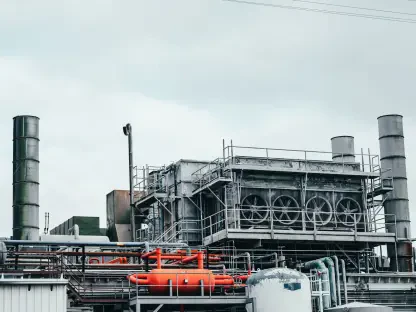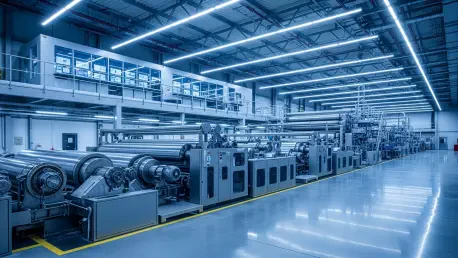

The global push toward sustainable packaging has reached a pivotal moment as the demand for durable alternatives to plastic bag materials accelerates across major industrial sectors in Asia. To meet this massive requirement, the collaboration between ABB and Guangxi Jianhui Paper Co., Ltd. has culminated in the development of the PM8 production line, a centerpiece of an ambitious forestry-pulp-paper project. This facility is on track for commissioning late this year, effectively establishing itself as Asia’s largest production line for high-performance extensible bag paper. By centering its operations on high-end packaging solutions, the project serves as a critical response to the evolving market landscape where durability and environmental stewardship are no longer optional. This initiative represents a massive investment in the future of the paper industry, leveraging cutting-edge automation to achieve unprecedented scales of production while maintaining the rigorous quality standards demanded by global logistics and retail giants.
Technical Precision: Drive System Innovation
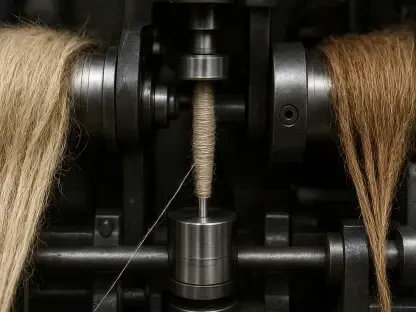
The technical integrity of the PM8 production line is anchored by a sophisticated suite of automation hardware, primarily the PMC800 drive control system and the ACS880 multidrive series. These systems are specifically selected for their ability to manage the high-torque requirements of large-scale paper manufacturing while providing the nuanced control needed for thin-substrate materials. Central to this performance is the implementation of Direct Torque Control technology, which offers real-time adjustments to motor speed and torque without the need for traditional feedback devices in many scenarios. This precision is absolutely vital for ensuring that the paper sheet remains consistent throughout the drying and winding phases, as even minor fluctuations in tension can lead to catastrophic tears or quality degradation. By maintaining such a high degree of control accuracy, the facility can operate at much higher speeds than traditional lines, significantly boosting the total annual output.
Building upon the foundational hardware, the engineering team has focused heavily on long-term operational reliability and the reduction of electromagnetic interference across the massive facility. Given the sheer size of the PM8 installation, signal integrity is maintained through a robust fiber-optic communication network that links various control nodes and drive cabinets. To protect the core electrical components, the design incorporates specialized filters that prevent harmonic distortion and safeguard motor insulation from the premature wear often seen in heavy industrial environments. These high-tech components are housed within a simplified cabinet architecture designed to streamline routine maintenance and inspections for local technicians. By reducing the complexity of the physical layout, the facility minimizes the risk of unexpected downtime, which is critical for a high-volume plant where every hour of lost production impacts the bottom line. This holistic approach ensures the machinery remains durable.
Safety Architecture: Intelligent Process Management
Modern industrial facilities must prioritize the well-being of their workforce alongside production quotas, and the PM8 line addresses this through a rigorous safety architecture. The control systems adhere to the Performance Level e standards, which represent the highest tier of safety verification currently available for industrial machinery. This includes redundant emergency stop protocols and advanced monitoring sensors that can detect mechanical anomalies before they pose a risk to operators. Complementing this safety framework is an industry-specific control software that features a highly intuitive user interface designed for modern workforces. By utilizing preconfigured process libraries, the system allows operators to manage extremely complex production tasks with much greater ease and consistency. This software-driven approach helps bridge the gap between experienced engineers and newer staff, ensuring that the manufacturing process remains stable while reducing the training time for specialized tasks.
This project stands as a definitive example of the forestry-pulp-paper integration model, a strategic industrial concept designed to create a self-sustaining and highly efficient supply chain. By localizing the entire process from raw timber cultivation to finished paper products, Guangxi Jianhui can better manage resource consumption and carbon emissions. The facility is designed to support a staggering annual capacity of over 3.6 million metric tons, a figure that highlights the move toward large-scale, intelligent manufacturing in the Asian market. Centralizing these operations allows for tighter quality control over the pulp supply, which directly influences the strength and flexibility of the extensible bag paper produced on the PM8 line. As global regulations regarding single-use plastics tighten, having a reliable source of high-strength paper packaging becomes a competitive advantage. This integration strategy not only optimizes raw material usage but also aligns the company with modern low-carbon requirements.
Industrial Evolution: Future Operational Standards
The strategic partnership between global automation leaders and regional manufacturing giants is reshaping how industrial hubs are conceived and executed in the current landscape. For Guangxi Jianhui, the deployment of the PM8 line represents just the first phase of a broader expansion strategy that aims to introduce several more high-standard production lines in the coming years. This collaboration demonstrates how digital expertise and advanced automation can be scaled to meet the needs of massive industrial complexes without sacrificing environmental or economic goals. The use of cloud-connected monitoring and predictive analytics enables the facility to optimize energy consumption in real-time, further enhancing the cost-efficiency of the production cycle. By setting a new benchmark for technical sophistication, the project encourages other players in the pulp and paper industry to adopt similar smart manufacturing technologies. This shift is necessary to remain competitive in a shifting global market.
The successful implementation of the PM8 line provided a clear roadmap for the future of large-scale paper manufacturing by proving that high-speed production and environmental responsibility were compatible. Leaders in the sector recognized that investing in high-precision drive systems and integrated safety protocols offered tangible returns through reduced waste and improved worker safety. To maintain this momentum, organizations prioritized the upgrading of legacy systems to incorporate similar levels of intelligence and connectivity. This project established a new standard for extensible bag paper, pushing manufacturers to explore alternative fiber sources and more efficient pulp processing techniques. Moving forward, the industry adopted a more proactive stance on supply chain integration, focusing on the development of closed-loop systems that minimized environmental impact. The lessons learned from this massive facility highlighted the importance of choosing flexible automation platforms. Ultimately, the industry moved toward a resilient future.