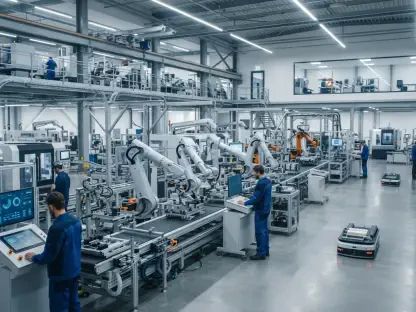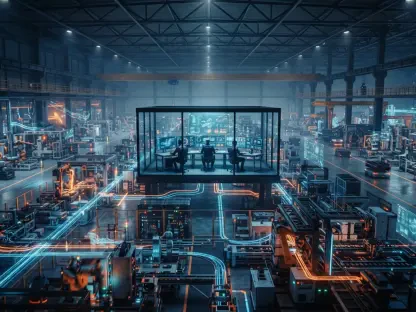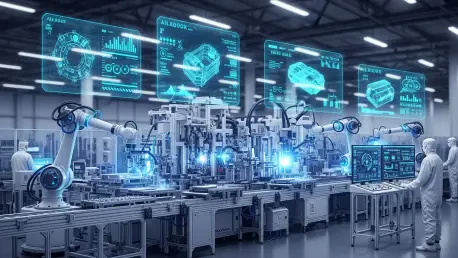

The rapid convergence of high-performance computing and cognitive robotics has finally reached a threshold where the factory floor operates more like a living organism than a static assembly line. This evolution represents a departure from the rigid automation of the past few decades, replacing fixed hardware cycles with a fluid, software-defined architecture. The current state of industrial technology is no longer defined by the speed of a conveyor belt but by the latency of the neural networks governing it. As manufacturers integrate accelerated computing and agentic AI, the industrial landscape is witnessing a fundamental reorganization of how value is created, moving from manual oversight toward autonomous, self-correcting systems. This review examines the current state of these technologies, assessing their performance and the structural shifts they have initiated across global markets.
The Paradigm Shift to Software-Defined Production
The transition to software-defined production signifies a move away from specialized, single-purpose machinery in favor of versatile platforms that can be updated or repurposed through code. In this new context, the physical assets of a factory—robots, sensors, and workstations—act as the peripheral hardware for a centralized “industrial brain.” This shift is primarily driven by the need for extreme agility in a market where product life cycles are shrinking and customization demands are rising. By decoupling the logic of production from the physical hardware, companies can now simulate entire manufacturing processes in a virtual environment before a single bolt is turned.
This software-centric approach is not merely about efficiency; it is about resilience. The ability to reconfigure a production line via a cloud-based interface allows manufacturers to respond to supply chain disruptions or sudden shifts in consumer preference with unprecedented speed. This flexibility is supported by robust edge computing clusters that process data locally, ensuring that the “brain” of the factory can make split-second decisions without relying on distant data centers. As these systems evolve, the distinction between a software developer and a manufacturing engineer is becoming increasingly blurred, creating a new professional class capable of managing complex, interconnected ecosystems.
Core Architectural Pillars of Industrial AI
Agentic AI and Autonomous Reasoning
Agentic AI represents the next step beyond simple generative models, moving from systems that merely predict text or images to agents that can reason and act within a physical environment. Unlike traditional automation, which follows a linear “if-this-then-that” logic, agentic systems use large-scale neural models to evaluate complex scenarios and determine the best course of action. In a manufacturing setting, this means an AI agent can identify a mechanical bottleneck, assess the potential risks of various solutions, and execute a repair or a workflow adjustment without human intervention. The performance of these agents is measured by their ability to maintain operational uptime while navigating unpredictable variables that would typically stall a standard robotic system.
The significance of this technology lies in its capacity for real-world reasoning. By grounding AI in the specific constraints of the factory floor, these agents can optimize energy consumption, reduce material waste, and even predict equipment failure before it occurs. This level of autonomy shifts the human role from direct operation to high-level orchestration. However, the complexity of these systems requires significant computational power, often necessitating specialized AI infrastructure that can handle the massive datasets required for real-time inference. The success of agentic AI is therefore deeply tied to the underlying hardware that supports it, making the integration of advanced processing units a non-negotiable requirement for modern industrial facilities.
High-Fidelity Physics-Based Simulation
Modern manufacturing now relies heavily on simulations that are not just visual representations but are grounded in the actual laws of physics. These high-fidelity digital twins incorporate gravity, friction, thermal dynamics, and material stress into their virtual environments. By using physics-based solvers, engineers can test how a new robot arm will interact with a delicate component or how a cooling system will perform under extreme heat. This approach eliminates the costly trial-and-error phase of traditional engineering, allowing for a “simulation-first” development cycle where the digital model serves as the ultimate source of truth.
The real-world usage of these simulations extends to the entire lifecycle of a factory. Beyond the design phase, these digital twins remain synchronized with their physical counterparts through a constant stream of sensor data. This synchronization allows for real-time monitoring and “what-if” scenario testing. For instance, if a manufacturer wants to increase production speed by ten percent, they can first run the change in the virtual twin to see if it causes excessive wear on specific joints or if it creates a safety hazard for human workers. This capability provides a safety net that encourages innovation, as the risks of failure are virtually eliminated in the digital space before they can manifest in reality.
Emerging Trends in Sovereign Infrastructure and Generative Design
A notable shift is occurring in how industrial data is managed, with a growing emphasis on sovereign AI infrastructure. As manufacturing becomes increasingly data-driven, companies and nations are seeking to maintain control over their intellectual property and operational metrics. This has led to the rise of localized “AI factories”—data centers specifically designed for industrial workloads that operate within regional legal and security frameworks. This trend ensures that sensitive design data and trade secrets remain protected while still benefiting from the immense power of cloud-based AI. This move toward sovereignty is particularly visible in regions with strict data protection laws, where manufacturers are partnering with local telecommunications and tech firms to build secure, high-performance computing clusters.
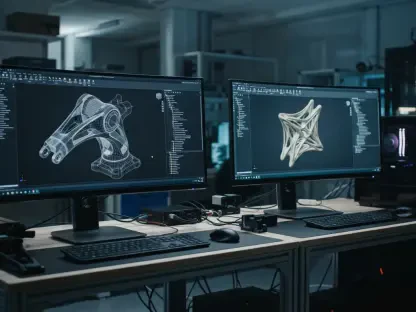
Simultaneously, generative design is revolutionizing the engineering process by allowing AI to suggest optimal shapes and structures based on specific performance criteria. Instead of an engineer drawing a part, they input the required weight, strength, and material constraints, and the AI generates hundreds of potential designs. Many of these designs feature complex, organic shapes that are more efficient than anything a human could conceive but were previously impossible to manufacture. With the advent of advanced 3D printing and multi-axis machining, these generative designs are now moving from the screen to the factory floor. This synergy between AI-led design and advanced production techniques is leading to a new generation of products that are lighter, stronger, and more sustainable.
Real-World Applications Across Global Industries
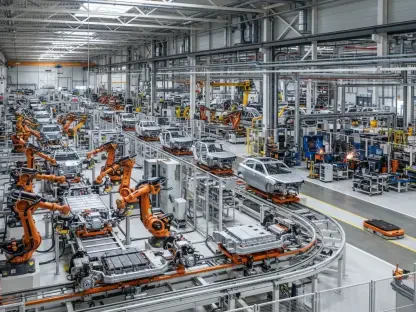
The deployment of these technologies is already visible in the automotive and energy sectors, where the stakes for efficiency and safety are exceptionally high. Leading car manufacturers have begun integrating vision AI agents that monitor assembly lines in real-time. These systems use high-resolution cameras to analyze every movement of a robotic arm or a human worker, ensuring that every bolt is tightened to the exact specification. In one instance, a major automotive brand reported a significant reduction in rework costs and a measurable increase in yield after deploying an autonomous vision system that identifies defects invisible to the naked eye. This application demonstrates that AI is not just a tool for the future but a current driver of profitability.
In the energy sector, the use of synchronized digital twins is transforming the management of complex infrastructure like offshore wind farms and power plants. Operators use these virtual models to simulate environmental impacts and optimize maintenance schedules, reducing the need for dangerous and expensive physical inspections. Furthermore, the introduction of humanoid robots in logistics and assembly roles is beginning to bridge the gap between human capabilities and mechanical precision. These robots, trained in simulated environments, can navigate cluttered factory floors and perform tasks that were previously too complex for standard industrial robots. This move toward “physical AI” is a clear indicator that the boundaries between digital intelligence and physical labor are rapidly dissolving.
Challenges and Barriers to Widespread Adoption
Despite the clear benefits, several hurdles remain that could slow the widespread adoption of AI-driven manufacturing. One of the primary technical challenges is the requirement for massive amounts of high-quality, labeled data to train reliable AI models. Many legacy factories operate with older equipment that lacks the necessary sensors to provide this data, necessitating expensive retrofitting projects. Moreover, the integration of diverse systems from different vendors often leads to compatibility issues, highlighting the need for industry-wide standards like OpenUSD to ensure that different software and hardware components can communicate effectively.
Regulatory and safety concerns also present significant obstacles. As robots become more autonomous and start working in closer proximity to humans, the legal frameworks governing industrial safety must evolve. Ensuring that an AI agent can fail gracefully without causing injury or damage is a complex engineering task that requires rigorous testing and validation. Additionally, there is the market challenge of the “skills gap.” The current workforce often lacks the specialized training required to manage and maintain AI-driven systems. Addressing this requires a concerted effort from both the private sector and educational institutions to create new training programs that focus on the intersection of data science and mechanical engineering.
Future Outlook: The Rise of General-Purpose Physical AI
The trajectory of this technology suggests a move toward general-purpose physical AI, where robots are no longer programmed for a single task but are trained to understand the physical world in a broader sense. This would allow a single robotic platform to switch between welding, sorting, and assembly with minimal reconfiguration. The development of foundation models for robotics—similar to how large language models work for text—will likely be the catalyst for this change. These models will enable machines to learn from vast amounts of video and simulation data, allowing them to adapt to new tasks and environments with the same fluidity as a human worker.
In the long term, the impact on society will be profound. The ability to produce highly customized goods at the cost and speed of mass production will redefine consumer behavior and global trade. We may see a shift toward more localized production, as AI-driven micro-factories become capable of meeting regional needs without relying on long, complex global supply chains. This “democratization of manufacturing” could empower smaller companies to compete with industrial giants, fostering a more diverse and innovative economic landscape. As the intelligence of these systems continues to grow, the factory of the future will likely be a quiet, highly efficient space where digital and physical realities are one and the same.
Summary of Findings and Strategic Assessment
The review of AI-driven manufacturing reveals a sector in the midst of a radical structural transformation. The core findings indicate that the integration of agentic AI and high-fidelity simulation has successfully moved beyond the experimental phase and is now delivering tangible ROI for early adopters in the automotive and energy industries. The shift toward software-defined production has provided the agility necessary to navigate modern market volatility, while the rise of sovereign AI infrastructure has addressed critical concerns regarding data security and intellectual property. These advancements have collectively proven that the path to industrial competitiveness lies in the successful fusion of cognitive software and robust physical hardware.
The assessment of the technology’s current state suggests that while the technical foundation is solid, the primary limitations are now organizational and regulatory. The transition from legacy systems to AI-native environments requires a strategic commitment to data modernization and workforce retraining. However, the potential for future breakthroughs in general-purpose physical AI outweighs these temporary hurdles. The verdict on AI-driven manufacturing is clear: it is no longer an optional upgrade but the fundamental requirement for survival in a global economy. Industry leaders who prioritized the development of “AI factories” and simulation-first workflows effectively secured a dominant position, while those who hesitated faced increasing difficulty in matching the efficiency and innovation cycles of their more autonomous competitors.