
Kwame Zaire is a veteran of the manufacturing sector whose career has tracked the evolution of industrial technology from simple automation to the complex, data-driven ecosystems we navigate today. With a deep focus on electronics, equipment maintenance, and production management, he has become a leading voice on how predictive maintenance and quality control can be revolutionized through artificial intelligence. His perspective is grounded in the practical realities of the factory floor, where the theoretical potential of technology must meet the rigorous demands of safety and operational efficiency. Currently, his work centers on bridging the gap between digital intelligence and physical execution, helping enterprises transform siloed data into actionable insights that drive real-world productivity.
The following discussion explores the emergence of specialized AI tools designed specifically for industrial workflows and the impact of integrating these systems with existing enterprise resource planning (ERP) platforms. We delve into the shift from diagnostic AI to “physical AI” research, the challenges of overcoming data silos that have historically hampered digital transformation, and how strategic partnerships are scaling these technologies across thousands of large-scale enterprises.
With the rollout of specialized AI tools now offering 17 distinct skills for industrial workflows, how are you seeing the daily operations of maintenance and quality teams transform on the factory floor?
The shift we are seeing today is fundamentally about moving from reactive troubleshooting to a highly informed, proactive posture. In the past, a maintenance technician faced with a complex equipment fault would have to manually leaf through thick technical manuals or scroll through endless historical records, a process that was both time-consuming and prone to human error. Now, with AI models specifically trained on 17 distinct industrial skills, that technician can feed real-time sensor data and historical logs into a system that ranks potential causes and drafts a precise corrective action plan in seconds. It’s a sensory shift for the worker; instead of feeling the frustration of a stalled production line, they feel empowered by a digital partner that understands the nuance of their specific machinery. This depth of analysis doesn’t just save time—it enhances safety by ensuring that every repair is grounded in the most accurate data available, reducing the risk of a “guesswork” fix that might lead to a secondary failure.
Recent surveys indicate that while 88% of companies are currently piloting or deploying AI, only 54% feel they are achieving significant results due to siloed data. Why is the ability to integrate AI directly into platforms like Autodesk and Oracle NetSuite the missing link for these organizations?
The “impact gap” that so many manufacturers face is almost always a result of data being trapped in separate digital “islands” where it cannot be leveraged effectively. When 88% of your peers are experimenting with AI but only about half are seeing a return, the bottleneck is clearly not the technology itself but the infrastructure connecting it. By utilizing connectors for platforms like Autodesk Fusion, Infor, and Oracle NetSuite, companies are finally able to break down those silos and allow information to flow where it is needed most. For a production manager, this means that design data from Autodesk is no longer a separate entity from the procurement data in NetSuite; the AI acts as a bridge that retrieves and analyzes records across the entire business. This integration turns a “pilot project” into a core business function, ensuring that the answers provided by the AI are grounded in the actual, messy reality of how that specific business runs day-to-day.
We are beginning to see AI plugins that go beyond mere suggestions and actually execute approved actions within ERP systems. How does this capability change the game for procurement and production planning, especially when dealing with sudden supply chain disruptions?
The ability for an AI to not just suggest a solution but to carry it out within an ERP system is a massive leap forward for operational agility. Consider a scenario where a delivery is suddenly disrupted; instead of a customer service team spending hours moving information between various systems to find a workaround, the AI can calculate a solution, such as an emergency purchase order or a stock reallocation. Once a human provides the necessary approval, the system executes the transaction directly, adhering to existing role-based permissions and ensuring every move is recorded for transparency. This removes the friction of manual data entry and allows buyers and planners to focus their judgment on high-level strategy rather than administrative busywork. As many executives have noted, being able to ask a question naturally within the interface where you already work and getting a trusted, relevant response is an immediate and tangible productivity gain that changes the pulse of the office.
While current AI tools primarily focus on digital data, there is significant research underway regarding a “Model Hardware Standard” for physical AI. What are the implications of standardizing how AI understands and operates factory equipment like robot arms?
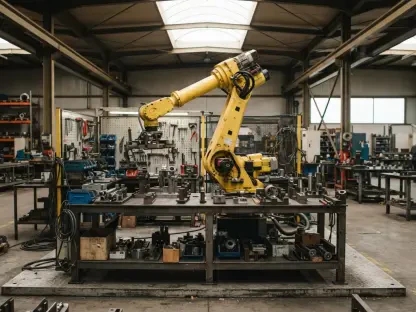
We are currently at a fascinating crossroads where the digital intelligence we’ve mastered is beginning to reach out into the physical world of labs and factories. The research into a standardized framework for physical AI is intended to solve one of the most persistent headaches in automation: the lack of a common language between different brands of hardware and software. By standardizing how AI agents perceive and interact with something like a robot arm, we can streamline the integration process, making it much faster to deploy sophisticated automation across a diverse fleet of equipment. This isn’t just about making robots “smarter”; it’s about creating a plug-and-play ecosystem where hardware can be updated or replaced without having to rewrite the entire underlying logic of the AI. For a manufacturer, this means a future with less downtime and more flexibility, allowing them to adapt their physical production lines as quickly as they update their software.
With over 11,900 large enterprises—including more than half of the Fortune 500—now adopting these advanced models, what role do strategic partnerships with firms like Google, NVIDIA, and Accenture play in making this technology accessible?
The scale of adoption we are seeing, with nearly 12,000 major enterprises onboard, is only possible because of a robust ecosystem of specialized partners that handle the heavy lifting of infrastructure and implementation. Companies like NVIDIA provide the massive computing power and GPUs required to train these complex models, while Google Cloud ensures they are distributed through accessible platforms like Vertex AI. On the ground, consulting giants like Accenture and Deloitte act as the “engineers” who integrate these models into a company’s existing business processes, ensuring the technology actually fits the culture and the workflow. This collaborative approach means that even a company like Walmart or Eli Lilly can deploy AI at a global scale without having to build every component of the system from scratch. It creates a standardized foundation that allows even the largest and most complex organizations to move with the speed of a startup.
What is your forecast for the evolution of the autonomous factory over the next few years?
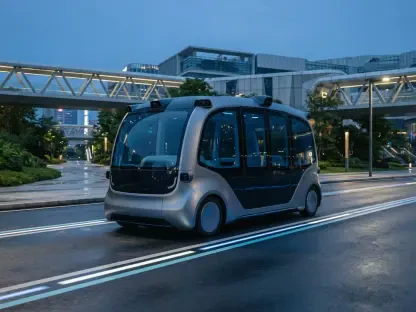
I believe we are moving toward a “human-in-the-loop” autonomy where the AI handles the vast majority of data orchestration and routine physical adjustments, but human judgment remains the ultimate safeguard. We will see the “Model Hardware Standard” move from the research phase into active factory deployments, allowing robot arms and autonomous guided vehicles to operate with a level of situational awareness we haven’t seen before. By the end of this decade, the distinction between “software” and “machinery” will have largely evaporated, replaced by a single, integrated industrial nervous system. Manufacturers who have already embraced the integration of their ERPs with intelligent plugins will be the ones best positioned to lead this charge, as they will already have the clean, connected data layer required to power the physical machines of the future. The goal is a factory that doesn’t just run more efficiently, but one that can essentially “think” through its own maintenance and supply chain challenges in real-time.