
Mixed-reality work instructions are bridging the growing gap between increasing task complexity and the declining average experience levels of the aerospace workforce. The aerospace and defense sectors are currently navigating a pivotal era of growth that demands a radical shift in manufacturing scalability. Traditional assembly methods, heavily reliant on mechanical fastening and manual drilling, have become significant bottlenecks as aircraft platforms grow in complexity. Click Bond, a pioneer in the industry since 1987, is addressing these efficiency gaps by moving away from traditional rivets toward a sophisticated ecosystem of integrated systems. Their “Stronger Together” initiative represents a strategic leap forward, combining high-performance hardware with automation and digital guidance to streamline production rates while maintaining the most rigorous safety standards. This holistic approach ensures that modern production lines can keep pace with the surging demand for next-generation aviation technology without sacrificing the precision that defines the industry’s legacy of excellence.
Structural Integrity: Eliminating Vulnerabilities Through Bonding
Click Bond operates under a disruptive engineering philosophy that suggests holes are a fundamental weakness in aircraft design. In this view, every drilled hole serves as a potential site for structural fatigue, galvanic corrosion, and atmospheric degradation, which can compromise the long-term viability of an airframe. To mitigate these risks, the company specialized in adhesive-bonded fasteners, such as rivetless nutplates, designed to withstand extreme environmental stressors including shock and vibration. These solutions do more than just protect the airframe’s integrity; they offer a sixty-eight percent increase in installation speed compared to traditional methods. By removing the need for physical piercings through the composite or metal substrate, engineers can design lighter structures that maintain their strength over longer operational lifecycles. This method fundamentally changes the way engineers approach the assembly of critical components, ensuring that every attachment point is a source of strength rather than a point of failure.
Building on this structural logic, the shift toward adhesive systems offers significant weight reduction and a drastic decrease in foreign object debris, ultimately extending the operational lifespan of the aircraft while lowering production costs. Within the “Stronger Together” framework, the first pillar is a foundation of over five thousand flight-critical, adhesive-bonded fasteners that are already field-tested on global defense platforms. These components provide the structural reliability necessary for the next generation of aerospace design, moving from commercial transport to advanced defense applications. By utilizing these proven products, manufacturers can eliminate the need for traditional mechanical fasteners, setting the stage for more advanced, automated installation processes that reduce human error and rework. This vast catalog of hardware ensures that every specific application has a tailored solution that meets strict weight and performance requirements. The widespread adoption of these fasteners underscores a transition toward more resilient and aerodynamically efficient airframes across the entire industry.
Automated Precision: Standardizing High-Rate Manufacturing Systems
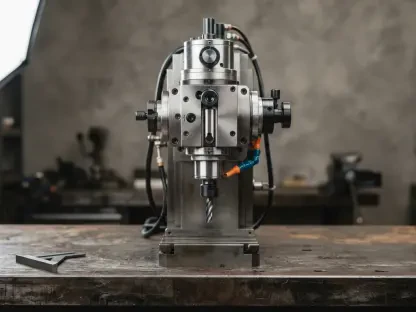
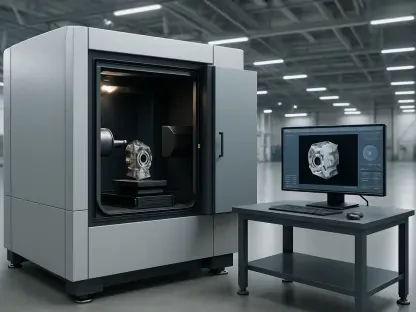
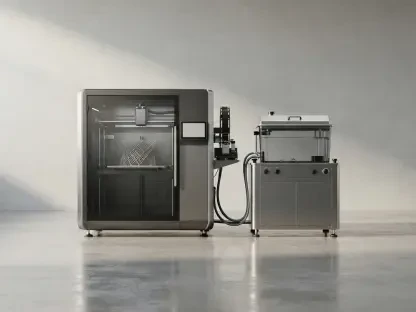
The second pillar of this integrated approach focuses on automated bonding technology to solve the persistent problem of variability in surface preparation. Manual cleaning and preparation are often inconsistent, leading to potential bond failures that require costly repairs and rework. However, Click Bond’s automated suite—including the CBA-100, the desktop CBA-200, and the newly premiered handheld CBA-300—standardizes this critical step. These units utilize laser surface preparation and high-precision adhesive dispensing to complete the process in as little as thirty seconds, ensuring that every bond meets a uniform standard of excellence. By removing the human factor from the chemical preparation of the surface, manufacturers achieve a level of reliability that was previously unattainable on a high-speed production line. This automation not only speeds up the cycle time but also provides the high degree of repeatability required for the sophisticated composite materials used in modern aerospace platforms, where precision is paramount to safety.
Implementing these automated units allows for a process that is seven times faster than traditional manual methods while providing comprehensive quality data for every bond. Each system tracks specific metrics during the installation, ensuring that every fastener is applied with surgical precision and full digital traceability for the life of the aircraft. This level of data collection is vital for modern manufacturing environments that require detailed records for regulatory compliance and safety auditing. The integration of high-precision sensors ensures that the adhesive is dispensed at the correct volume and temperature, while the laser preparation creates the ideal surface texture for the bond to take hold. As production rates continue to climb from 2026 to 2028 and beyond, these automated solutions will be essential for manufacturers looking to scale their operations without increasing their physical footprint or compromising on quality. The move toward automation is a necessary evolution for an industry that can no longer afford the variability of manual assembly.
Digital Workflows: Integrating Mixed Reality Solutions
Complementing the hardware and automation suites is the move toward digital labor enhancement, which addresses the growing skills gap in the aerospace workforce through advanced digital solutions. By using mixed-reality work instructions, Click Bond projects placement guides directly onto the assembly surface, allowing technicians to achieve perfect alignment without the need for manual measurements or physical templates. This system validates installations in real-time and creates a permanent digital record of the work performed, ensuring that every technician, regardless of experience level, can perform at an expert standard. The impact of this technology was famously demonstrated at Vertical Aerospace, where the installation time for nine thousand five hundred fasteners on the VX4 aircraft was slashed from an estimated three months down to just five days. This dramatic reduction in labor hours illustrates the potential for digital tools to revolutionize the assembly floor, turning complex tasks into manageable, guided workflows that minimize errors and maximize output.
Beyond the visual guidance provided by mixed reality, Click Bond ventured into the realm of surface intelligence through its acquisition of Brighton Science, providing deeper analytical insights. By incorporating the BConnect platform into the workflow, the company enabled manufacturers to analyze the chemical readiness of a surface in real-time before a bond was ever made. This technology ensured that every fastener met the highest performance standards and eliminated the guesswork from the bonding process by providing immediate feedback on surface contamination. Moving forward, industry leaders should aim to integrate these holistic platforms to maintain competitiveness and ensure structural integrity in an increasingly automated environment. Manufacturers who adopted these integrated systems realized that controlling every link in the assembly chain—from the chemical state of the material to the digital instruction followed by the technician—established a new benchmark for structural integrity. The future of aerospace assembly lies in this intersection of hardware, automation, and data, providing a scalable solution for the complex manufacturing challenges ahead.