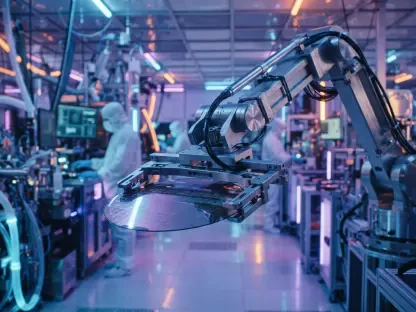

The rapid integration of high-fidelity simulation and physical manufacturing marks a pivotal shift in how industrial leaders approach the complexities of global supply chain management. This transformation is not merely about incremental improvements but involves a fundamental rethinking of the factory floor through the lens of artificial intelligence and digital synchronization. At the forefront of this movement, recent developments demonstrated how the convergence of digital twins and real-world execution can eliminate traditional bottlenecks. By bridging the gap between virtual planning and actual deployment, the industry is witnessing a decline in the error rates that once plagued large-scale assembly lines. This progression emphasizes a broader commitment to optimizing resources, where every watt of energy and every second of machine uptime is accounted for within a unified ecosystem. The synergy of these technologies creates a resilient framework capable of adapting to market shifts while maintaining rigorous environmental standards and operational excellence.
Bridging Physical Reality and Digital Intelligence
Implementing the DIATwin Framework: High-Fidelity Co-Simulation
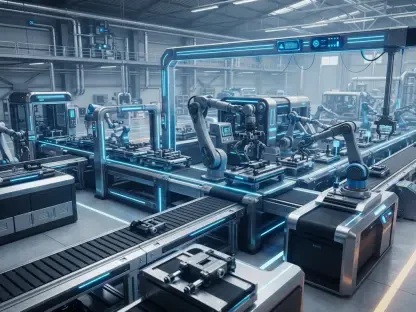
Advanced industrial platforms now leverage the DIATwin system, an environment built on the NVIDIA Omniverse, to facilitate a level of simulation accuracy that was previously unattainable. This platform utilizes extensive physics-based libraries to create digital representations of factory components that behave exactly like their physical counterparts. Engineers can now model complex interactions between robotic arms, sensors, and materials within a risk-free virtual space. By simulating gravity, friction, and fluid dynamics, the system provides a comprehensive preview of how a production line will perform under various stresses. This capability is essential for modern high-tech manufacturing, where the precision required for assembling intricate components leaves no room for trial and error on the actual floor. The integration of such high-fidelity tools ensures that every mechanical movement is accounted for before a single piece of hardware is even powered on, leading to a much smoother transition from design to operation.
The transition from a purely digital model to a physical setup is streamlined through a “Sim-to-Real” workflow, which has become a cornerstone of modern automation. This specific methodology was recently highlighted in the context of printed circuit board (PCB) insertion, a task notorious for its difficulty due to the fragility of the components and the tight tolerances involved. By virtually validating the entire insertion process, engineers can identify potential points of failure or mechanical interference early in the development cycle. This proactive approach allows for the optimization of robotic toolpaths, ensuring that components are placed with sub-millimeter accuracy. Because the simulation reflects the physical reality so closely, the configurations tested in the DIATwin environment can be uploaded directly to the factory controllers. This synchronization eliminates the need for manual adjustments on the shop floor, thereby reducing the risk of component damage and significantly lowering the costs associated with prototyping and physical testing.
Optimizing Factory Workflows: Precision and Collision Detection
Beyond basic assembly, the implementation of sophisticated simulation tools allows for iterative toolpath refinement and advanced collision detection. In a typical manufacturing environment, a single collision between a robotic manipulator and a fixed structure can result in days of downtime and thousands of dollars in repairs. By utilizing AI-driven simulation, companies can run thousands of permutations of a specific movement to find the most efficient and safest path. This iterative process happens in the background, allowing the virtual robot to “learn” the optimal route without any physical wear and tear. Once the most efficient path is identified, it is locked in and deployed to the production environment. This level of optimization ensures that machines operate at their peak performance levels while minimizing the vibration and mechanical stress that often lead to premature equipment failure. Consequently, the lifespan of expensive industrial assets is extended, providing a better return on investment.
These virtual validation techniques directly translate into significantly accelerated commissioning times and enhanced overall production throughput. In traditional setups, setting up a new production line could take months of calibration and troubleshooting; however, the shift toward digital twin technology has condensed this timeline into a matter of weeks. The ability to troubleshoot the entire logic of a factory in a virtual environment means that when the physical equipment arrives, the staff already knows exactly how it will behave. This foresight allows for higher throughput from the very first day of operation, as the learning curve for both machines and human operators is drastically reduced. Looking ahead from 2026 to 2028, the industry expects a broader adoption of these closed-loop systems, which will continue to drive efficiency gains across various sectors, from automotive assembly to semiconductor fabrication. The focus remains on achieving a state of continuous improvement where data from the real world feeds back into the simulation.
Orchestrating Sustainable Energy and Logistics Infrastructure
Engineering Efficient Electrification: Resilience in AI Data Centers
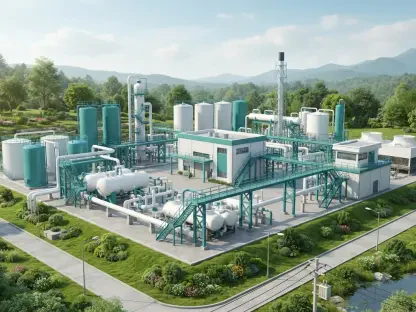
As the demand for artificial intelligence grows, the infrastructure supporting these workloads must evolve to handle unprecedented power requirements. The development of resilient electrification systems is now a primary focus, particularly for AI data centers that consume vast amounts of electricity. Providing holistic energy ecosystems involves more than just power delivery; it requires intelligent management of cooling, distribution, and storage to maintain uptime and efficiency. These data centers are being designed as integrated units where every component is optimized to reduce energy waste. For instance, advanced power conversion technologies are utilized to minimize the loss of energy as it moves from the grid to the server rack. By implementing these high-efficiency solutions, global partners can better navigate the energy challenges posed by the rapid expansion of digital services. This strategy ensures that the growth of AI does not come at the expense of energy stability or environmental sustainability.
The commitment to energy efficiency is deeply tied to meeting stringent Environmental, Social, and Governance (ESG) targets that have become mandatory for modern enterprises. Companies are no longer evaluated solely on their financial performance but also on their carbon footprint and resource management. To address this, new energy solutions include the integration of renewable sources and smart grid technologies that can balance load and demand in real time. For example, data centers can now function as flexible loads, adjusting their power consumption based on the availability of green energy from the grid. This level of responsiveness is made possible by AI-driven management software that predicts energy trends and optimizes the cooling systems accordingly. As a result, organizations can significantly lower their operational costs while demonstrating a clear path toward carbon neutrality. The convergence of digitalized manufacturing and sustainable energy management is thus becoming a defining characteristic of the industrial landscape.
Transforming Intralogistics: Intelligent Data and Vehicle Charging
Automated material handling has undergone a significant evolution with the introduction of the MOOV portfolio, which specializes in automated intralogistics. This system has already supported the charging of over one million industrial vehicles worldwide, ranging from automated guided vehicles (AGVs) to autonomous mobile robots (AMRs). By providing a standardized and intelligent charging infrastructure, the MOOV portfolio ensures that logistics fleets remain operational 24/7 without the need for manual intervention. These charging stations are equipped with communication modules that exchange data with the vehicles to monitor battery health and optimize charging cycles. This prevents battery degradation and ensures that vehicles are always ready for their next mission. The reliability of this infrastructure is a critical component for warehouses and distribution centers that operate on thin margins and require constant motion to remain competitive in a fast-paced global market.
The ultimate goal of these advancements is to create a seamless, sustainable operational model by linking automated material handling with intelligent production data. When the logistics system is aware of the real-time needs of the production line, it can prioritize the delivery of parts to prevent idle time. This integration creates a feedback loop where the movement of goods is dictated by actual demand rather than static schedules. This demand-driven approach reduces the need for large inventories and minimizes the energy consumed by unnecessary vehicle movements. By combining electrification with sophisticated data analytics, the modern industrial environment achieves a synergy that enhances both productivity and environmental responsibility. The focus on intralogistics demonstrates that efficiency is not just about how fast a product is made, but how effectively it moves through the entire supply chain. This holistic view is essential for maintaining long-term competitiveness in an increasingly resource-constrained world.
Implementing Strategic Industrial Upgrades
The transition toward AI-enhanced manufacturing and sustainable energy systems required a fundamental shift in capital investment strategies and workforce training. Organizations that successfully adopted these technologies moved beyond experimental pilots and integrated digital twins into their core operational workflows. It became evident that the primary barrier to efficiency was not the lack of data, but the inability to process it in a meaningful, actionable way. To address this, leaders prioritized the deployment of unified software environments that could bridge the gap between engineering departments and the factory floor. This connectivity ensured that design changes were immediately reflected in production simulations, reducing the risk of costly errors. Furthermore, the focus on electrification necessitated a robust update to power management protocols, ensuring that facilities could handle the increased electrical loads of high-compute AI clusters without compromising the stability of local grids.
Moving forward, the focus must shift toward the standardization of communication protocols between disparate robotic systems and energy management platforms. To maximize the benefits of these technological advancements, industrial operators should conduct a comprehensive audit of their current power infrastructure to identify potential bottlenecks before scaling up AI-driven production lines. It is also recommended that companies invest in cross-disciplinary training for technical staff, merging traditional mechanical engineering with data science and energy management. By creating a culture of data-driven decision-making, firms can ensure that their digital twin investments yield measurable improvements in throughput and energy savings. The path toward a more resilient and efficient industrial future was paved by the integration of real-world operational data with sophisticated simulation, providing a clear blueprint for sustainable growth. These actions provided the necessary foundation for maintaining a competitive edge in a rapidly changing global economy.