
The vulnerability of the modern military supply chain becomes painfully apparent when critical components like high-performance textiles remain dependent on international trade routes that can be severed during geopolitical friction. To mitigate this risk, the Department of Defense recently established FutureTEX at Gaston College in North Carolina, marking its ninth Manufacturing Innovation Institute. This facility represents a calculated effort to revitalize the domestic production of military-grade fabrics, addressing a decades-long decline in American textile manufacturing capacity. By situating this hub in a region with a deep historical connection to the textile industry, the Pentagon is not merely looking to recreate the past but is instead focused on modernizing the materials that protect service members. The initiative seeks to integrate advanced technological processes into the production of fibers, ensuring that the United States maintains a decisive edge in personal protection equipment while reinforcing the broader national defense supply chain.
Strengthening National Security Through Advanced Fiber Research
The modern global security environment necessitates a paradigm shift toward domestic self-sufficiency to counteract the rapid military expansion of pacing threats across the globe. FutureTEX is designed to serve as a cornerstone for this transition, utilizing high-level automation and robotics to ensure that essential defense materials are produced entirely within American borders. This strategic focus is particularly relevant in the context of what military planners call contested logistics, a scenario where international shipping lanes are compromised during an active conflict. By establishing a robust internal manufacturing pipeline, the Department of Defense aims to ensure that the military remains fully operational and supplied regardless of external pressures or trade blockages. The move signals a broader move toward domestic resilience, prioritizing the reliability of the supply chain over the immediate cost savings associated with overseas production. This shift is vital for maintaining long-term readiness and national sovereignty in an increasingly volatile world.
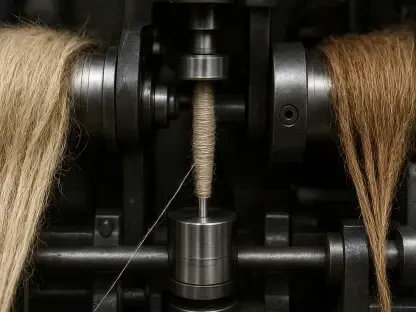
At its technical core, the new institute focuses on innovation at the molecular level to create advanced fibers that provide superior protection and durability in the most extreme combat conditions imaginable. Researchers are working to develop textiles that go far beyond standard clothing, including specialized materials for parachutes, high-durability uniforms, and next-generation camouflage systems that can adapt to various environments. By manipulating the properties of polymers and other raw materials, the institute intends to produce fabrics that are lighter, more breathable, and more resistant to fire, chemicals, and environmental degradation. These advancements are not just incremental improvements but represent a total re-envisioning of what military gear can achieve. The ultimate goal is to reestablish American leadership in a sector that has largely migrated to foreign markets over the past several decades, utilizing public-private partnerships to bridge the gap between theoretical science and practical application for the benefit of the warfighter.
The Evolution of Military Manufacturing Technology
The launch of this new institute coincides with the 70th anniversary of the Manufacturing Technology Program, which has served as a critical link between experimental research and full-scale industrial production. Since its inception in the mid-1950s, the program has focused on maturing the advanced processes required to build modern weaponry and defensive systems with maximum efficiency. While the core mission of maturing technology has remained consistent over the decades, the current geopolitical landscape has injected a newfound sense of urgency into these domestic manufacturing efforts. Officials involved in the program emphasize that the ability to scale new inventions into mass-produced assets is just as important as the initial discovery itself. FutureTEX stands as a modern evolution of this legacy, applying the lessons learned over seven decades to the specific challenges of the textile industry. This historical perspective provides a roadmap for how the Department of Defense can navigate current industrial hurdles by focusing on process innovation.
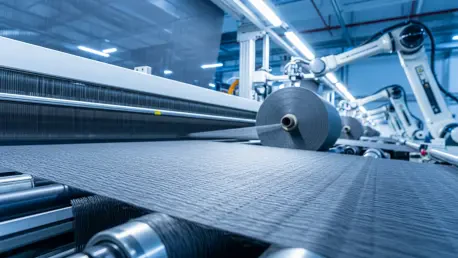
The operational success of this manufacturing hub relies on a collaborative framework that brings together the Army, Navy, Air Force, and various defense agencies to maintain a technological edge. This unified approach ensures that research and development efforts are shared across different branches to maximize impact, leading to advancements like robotic drilling for aircraft components. By replacing dangerous and repetitive manual labor with high-precision automation, the program has significantly reduced production defects and shortened manufacturing timelines for complex aerospace platforms. Such data-driven advancements serve as a blueprint for the textile industry, where high-speed automated looms and robotic cutting systems can operate with a level of precision that manual processes cannot match. This integration of traditional craftsmanship with cutting-edge technology allows for the rapid prototyping of new materials and the swift scaling of production to meet the urgent operational requirements of modern service members.
Leveraging Regional Expertise and Industrial Strategy
The decision to place the ninth Manufacturing Innovation Institute in North Carolina was a strategic choice designed to capitalize on the region’s specialized workforce and academic infrastructure. By partnering with Gaston College, the Department of Defense is ensuring a steady pipeline of skilled technicians trained in the latest manufacturing technologies. This regional focus does more than just revitalize a local industry; it creates a center of excellence that attracts talent and investment from across the nation. The training programs developed in conjunction with FutureTEX will serve as a model for other regions looking to modernize their industrial bases in support of national security. Furthermore, the institute acts as a bridge between the academic world and the private sector, allowing researchers to work on real-world defense problems. This hands-on experience is vital for developing the next generation of industrial leaders. The synergy between regional history and technology creates an ecosystem where domestic production can once again become the standard.
The formal launch of FutureTEX signaled a decisive shift in how the nation approached the security of tactical supply chains and industrial sovereignty. Defense leaders recognized that the long-term viability of the military required an immediate and sustained investment in domestic manufacturing capabilities to eliminate dependence on foreign actors. The project successfully established a framework for public-private cooperation that prioritized the rapid maturation of textile technologies, ensuring that advanced protection reached the frontline faster than ever before. Stakeholders took actionable steps to integrate these new fibers into procurement cycles, while also investing in the workforce required to operate sophisticated automated systems. This initiative moved beyond theoretical planning and into concrete industrial output, proving that traditional sectors could be modernized through targeted federal support. The groundwork laid during this rollout ensured that the defense industrial base remained robust and self-reliant for years to come.