
To prevent motion sickness in augmented reality headsets, edge nodes must handle video decoding locally to achieve the sub-twenty-millisecond latency required for precise manual assembly guidance. This shift toward localized processing marks a fundamental departure from the cloud-centric models that dominated the previous decade. Today, the industrial landscape is defined by the necessity of immediate data processing, where the sheer volume of information generated by high-resolution sensors and robotic actuators makes traditional cloud round-trips prohibitively slow and expensive. As worldwide edge-computing spend climbs toward a projected $350 billion by 2027, manufacturing stands at the forefront of this investment. The transition is driven by the realization that while the cloud offers infinite scale, the factory floor requires absolute reliability and speed. Enterprise leaders are no longer viewing the edge as a mere extension of their IT infrastructure but as the core of their operational technology, enabling machines to react to environmental changes in real time without the risk of network-induced delays or total system outages.
The acceleration of edge adoption in 2026 is largely a response to the massive data bottlenecks created by sophisticated AI workloads and the integration of diverse industrial protocols. Modern manufacturing facilities utilize high-fidelity cameras and ultrasonic sensors that generate gigabytes of raw data every minute. Attempting to ship all this information to a remote data center for analysis is not only a logistical nightmare but also a significant financial burden due to egress costs and bandwidth limitations. By implementing edge-computing systems that filter, aggregate, and analyze data at the source, enterprises can ensure that only relevant, high-value insights are transmitted upstream. This tiered approach preserves network resources while providing the shop floor with the autonomy it needs to maintain 24/7 production cycles. Furthermore, the convergence of IT and OT strategies is finally moving beyond the pilot phase, with the vast majority of executives citing smart operations as the primary driver of their global competitiveness over the next several years.
1. The Industrial Edge Infrastructure
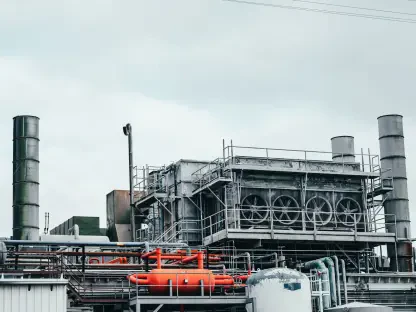
The foundation of modern industrial edge computing rests on a multi-layered hardware architecture designed to handle everything from microsecond safety responses to complex visual inspections. At the most fundamental level lies the embedded control layer, which interacts directly with programmable logic controllers (PLCs), robotic drives, and safety systems. This layer is responsible for the immediate physical actions of the factory, such as stopping a conveyor belt if a sensor detects an obstruction or adjusting the torque of a robotic arm in real time. Because these functions are critical to both safety and production quality, they cannot tolerate the variability of internet-based communication. Consequently, these systems are built with ruggedized hardware capable of operating in harsh environments where dust, heat, and electromagnetic interference are common, ensuring that the primary logic of the machine remains functional even if the broader network experiences a total failure.
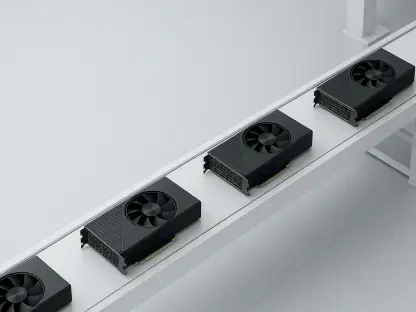
Building upon the control layer, the infrastructure extends into data normalization and localized management. Hardware such as industrial protocol gateways and ruggedized routers serves as the connectivity layer, translating the diverse “languages” of different machine brands into a unified data pipeline. Above this, on-premises edge servers host supervisory control and data acquisition (SCADA) systems and localized historians that record performance metrics without relying on an external connection. The most advanced component of this infrastructure is the rugged AI edge layer, consisting of specialized industrial PCs equipped with high-performance GPUs. these nodes are dedicated to processing heavy computational tasks, such as real-time neural network inference for defect detection. By distributing the workload across these four distinct layers, manufacturers create a resilient ecosystem where data is processed at the most logical point, maximizing efficiency and minimizing the risk of a single point of failure.
2. Task Allocation in Hybrid Environments
In the current manufacturing environment, the most successful operations utilize a hybrid computing model that balances the instantaneous response of the edge with the massive analytical power of the cloud. This distribution of labor is determined by the specific requirements of each task, particularly regarding latency and data volume. Real-time machine regulation and safety protocols are kept strictly at the edge to ensure sub-millisecond response times, preventing mechanical failures or industrial accidents that could occur during even a brief network lag. Similarly, data pre-processing and noise filtering happen locally; by stripping away redundant information at the source, the system reduces the financial and technical strain of sending large datasets across the globe. This local autonomy ensures that the factory remains operational during internet outages, as the critical logic required for production resides within the facility’s own hardware.
In contrast, tasks that require a broader perspective or massive historical datasets are delegated to the cloud. For instance, global fleet analytics, which compare the performance and efficiency of different factory sites across continents, rely on the cloud’s ability to aggregate and synthesize information from thousands of disparate sources. The training of complex AI models also takes place in centralized data centers where the necessary computational power is readily available and more cost-effective to maintain. Once these models are trained, they are pushed back down to the edge for inference. This allows the local systems to use the “learned” intelligence to spot defects on the assembly line instantly, without needing to consult the cloud for every single frame of video. This symbiotic relationship ensures that the enterprise benefits from both the macro-level insights of the cloud and the micro-level execution speed of the edge.
3. Real-Time Condition Monitoring and Predictive Cycles
Real-time condition monitoring has evolved into a sophisticated discipline where edge nodes constantly analyze the “health” of machinery through vibration, heat, and acoustic signatures. Instead of waiting for a machine to break down, these systems identify subtle anomalies that precede a failure, such as a slight increase in a motor’s operating temperature or a change in the frequency of a bearing’s rotation. When an edge node detects such a deviation, it can trigger an immediate alert on a localized dashboard or even automatically slow down the production rate to prevent further damage. This localized analysis is essential because raw sensor data is often too voluminous to stream continuously to a remote server; by identifying the fault locally, the system ensures that high-priority alerts are delivered instantly, while the background data is aggregated for later review without clogging the factory’s internal network.
The predictive maintenance cycle represents a more advanced application of this technology, moving through a structured four-step process to maximize equipment uptime. It begins with signal gathering, where sensors capture raw operational data and the specific context of the work being performed. This is followed by data optimization at the edge, where the most relevant features are extracted to minimize bandwidth usage. The third step involves local fault prediction, where the edge node runs a specialized model to estimate the remaining useful life of a component. Finally, the results are sent to the cloud for global model improvement. This last step is crucial because it allows the AI to learn from failures across the entire organization, refining the maintenance algorithms for every machine in the fleet. This closed-loop system ensures that the maintenance schedule is always based on actual machine condition rather than arbitrary calendar dates, significantly reducing both downtime and unnecessary parts replacement.
4. Manufacturing-as-a-Service and Dynamic Workloads
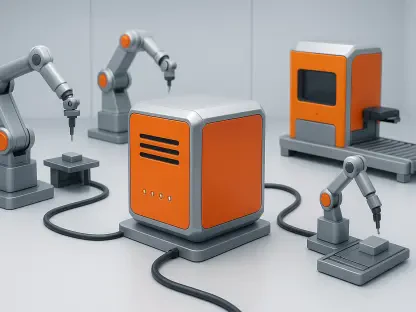
Manufacturing-as-a-Service (MaaS) has emerged as a revolutionary business model enabled by the high-speed data exchange of edge computing. In this framework, production capacity is treated as a fluid resource that can be rerouted based on real-time machine health and precision metrics. If an edge node at one facility detects that a specific CNC machine is losing the ability to maintain the tight tolerances required for a high-precision aerospace part, the system can automatically flag that unit for maintenance and shift the workload to a healthier machine at a different location. This level of dynamic routing requires a constant, low-latency stream of status updates that only edge-integrated systems can provide. By linking machine performance directly to the production schedule, companies can maximize their yield and ensure that every unit meets the required quality standards regardless of which specific machine produced it.
Beyond workload routing, edge computing facilitates high-precision regulation of complex industrial processes by acting as an AI “co-pilot” for existing controllers. In chemical processing or advanced electronics manufacturing, tiny fluctuations in electrical voltage or chemical flow rates can ruin an entire batch of product. Edge-based AI models monitor these variables at the microsecond level, making instantaneous adjustments to the process parameters to compensate for environmental changes. This goes beyond the capabilities of traditional PLCs, which typically follow static logic; the AI can account for a wider range of variables and learn the subtle interactions between them. As a result, the system can maximize the quality and consistency of every unit produced, reducing scrap rates and improving the overall efficiency of the manufacturing process. This integration of intelligence directly into the control loop represents the pinnacle of the smart factory’s capabilities in the current industrial era.
5. Immersive Training and Inspection Protocols
The deployment of augmented and virtual reality (AR/VR) on the factory floor has transitioned from an experimental novelty to a standard operational tool for training and inspection. To make these systems effective, manufacturers follow a rigorous implementation checklist that prioritizes user comfort and data accuracy. The process starts with selecting the appropriate hardware—high-resolution headsets for hands-free assembly guidance or tablets for quick diagnostic checks—based on the specific duration and physical requirements of the task. Once the hardware is chosen, lightweight AI models are deployed to the edge nodes to handle object recognition and spatial tracking. These models allow the digital overlays to “understand” the physical environment, identifying specific components of a machine and highlighting them for the technician in real time, which drastically reduces the cognitive load on the worker and speeds up the repair process.
Achieving spatial anchoring and signal consistency is perhaps the most technical challenge of these immersive systems, requiring the low-latency capabilities that only edge nodes can deliver. The digital image must appear to “stick” to the physical machine with absolute precision; any jitter or lag in the digital overlay can lead to errors in assembly or, more commonly, cause the user to experience motion sickness. By processing the spatial data locally, the system ensures that the digital and physical worlds remain perfectly synchronized. Furthermore, leading organizations are now standardizing their software ecosystems, using a single framework across all factory locations to ensure that training modules and inspection protocols are consistent throughout the global enterprise. This standardization allows a technician in one part of the world to use the same immersive guidance as a colleague on another continent, ensuring a uniform level of quality and safety across the entire production network.
6. Determining the Optimal Computing Strategy
Choosing the right location for data processing involves a careful evaluation of the task’s specific demands for latency, reliability, and scale. Local processing must be prioritized for any function that requires a response in less than a second or for any system that is essential for safety and continuous operation. For example, if a quality control camera must identify and eject a defective item moving at high speed on a conveyor, the decision must be made at the edge; any delay in communication would result in the defective item passing through the system. Similarly, emergency shut-off systems and automated guided vehicle (AGV) navigation must remain functional even if the facility’s external internet connection is severed. By keeping these critical logic functions local, manufacturers ensure that their plants possess a high degree of operational autonomy and are shielded from the volatility of external network performance.
Centralized cloud computing remains the ideal choice for tasks that involve massive datasets from multiple sources or require long-term strategic forecasting. While the edge is perfect for immediate action, the cloud is superior for cross-site benchmarking and global resource planning. Analyzing the energy consumption patterns of ten different factories over a five-year period to identify sustainability improvements is a task perfectly suited for the cloud’s storage and processing capabilities. Additionally, the cloud serves as the central repository for the digital twins of the entire enterprise, allowing engineers to run complex simulations and “what-if” scenarios that would overwhelm local edge hardware. The most effective strategies in 2026 are those that recognize these distinct strengths, creating a seamless flow of information where the edge handles the “now” and the cloud manages the “next,” ensuring both immediate operational excellence and long-term strategic growth.
The Strategic Evolution of Localized Intelligence
In the recent development of industrial infrastructure, manufacturers successfully integrated edge computing as a fundamental layer of their operational technology. Organizations recognized that the promise of the smart factory could only be fulfilled when the intelligence was moved closer to the actual point of production. Technical leaders prioritized the reduction of latency and the enhancement of local autonomy, which allowed them to overcome the bottlenecks that had previously stalled cloud-only initiatives. By deploying ruggedized hardware and specialized AI nodes, these companies managed to stabilize their production cycles and improve safety standards across their global sites. The shift toward a hybrid model proved to be the most resilient approach, combining the immediate responsiveness of the floor with the broad analytical capabilities of centralized systems. This evolution not only reduced operational costs associated with data transmission but also provided a more secure environment for sensitive industrial information.
Moving forward, the focus should shift toward the continuous optimization of these distributed networks and the refinement of the AI models that power them. Enterprises would benefit from auditing their current hardware layers to ensure that their connectivity and control layers are fully normalized across all brand platforms. Implementing a standardized software framework for AR and VR tools is another critical step, as it will ensure that workforce training remains consistent as the technology matures. Furthermore, stakeholders must continue to evaluate the balance between edge and cloud workloads, ensuring that as new sensors and higher-resolution data streams are added, the local infrastructure scales accordingly. The successful manufacturers of the coming years will be those who view their edge computing strategy not as a static installation, but as a dynamic, evolving ecosystem that responds to both technological advancements and shifting market demands. By maintaining this focus on localized intelligence, the industry moved toward a future of unprecedented precision and efficiency.