
Lead: A Shop Floor at a Crossroads
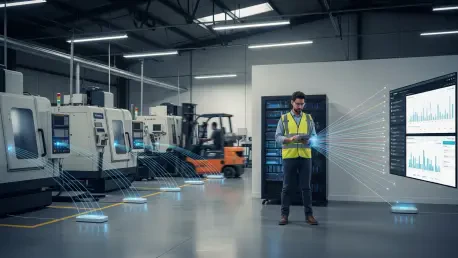
Forklifts thread past aging CNCs while screens spit siloed alarms and planners gamble on stale data as another “simple” integration drags into weeks of brittle patches and creeping downtime. The tension is familiar: scale consistency without risking throughput, or fight fires with bespoke fixes that age poorly. Meanwhile, most of the signals that could steer decisions sit stranded in legacy layers, out of reach of the systems that schedule work, plan inventory, or flag failures before they cascade.
Across plants, leaders increasingly ask a sharper question: can modernization protect uptime while compressing lead time and standardizing operations across sites? The emerging answer relies less on ripping and replacing and more on treating data as an operational asset—standardized, time-aligned, and shared through a unified, event-driven data layer that decouples old from new.
Nut Graph: Why This Story Matters Now
The competitive edge in manufacturing increasingly hinges on lead-time compression, higher inventory turns, and repeatable outcomes across multiple facilities. Yet the constraints are real: mixed-vintage equipment, limited engineering capacity, and high downtime costs that punish risky change. A unified data layer—often called a Unified Namespace (UNS)—offers a way through by exposing states and events without rewriting proven control logic.
Instead of one-off, point-to-point projects, plants are adopting event-driven architectures that publish standardized events and let containerized services subscribe to them. This shift makes AI practical: anomaly detection, predictive maintenance, and vision-based quality can plug in without entangling core systems. The result is faster delivery cycles, cleaner governance, and cross-site repeatability.
Body: Inside the Shift From Patchwork to Platform
Digitization succeeds when treated as an operational discipline, not a detached IT program. That discipline starts with objective setting—standardize across sites, or target specific economic wins—and with baselines on lead time, inventory, and availability. Planned, shielded rollouts limit risk, with exit criteria that prioritize reliability over novelty. Each step ties back to throughput, stability, and visibility.
Respect for the installed base is non-negotiable. Valuable logic lives in ERP, MES, SCADA, and PLCs that still run lines safely. Modernization works best when it samples signals and events non-intrusively—through OPC UA, historians, or middleware—so control logic remains intact. One plant manager put it plainly: “The rule was simple—touch no ladder logic. Expose states and timestamps, then build around them.”
Raw signals do not create value until they gain context. Standard models define assets, states, and topics; timestamps align across sources; lots, serials, and batches bind data to traceability. Much of this work now happens at the edge, reducing latency, handling intermittent networks, and lowering cloud costs. An engineer described the payoff: “A handful of sensors with anomaly detection saved a spindle and a week of production.”
The UNS sits at the center. Using lightweight publish/subscribe protocols like MQTT, it becomes the operational source of truth, broadcasting real-time events from assets and systems. Instead of integrating MES-to-ERP or SCADA-to-BI directly, each publishes to the namespace. Services subscribe, transform, and act independently. Delivery cycles fall from weeks to days because new logic no longer requires upstream changes.
Decoupling accelerates change while improving governance. Enforced naming standards, versioned schemas, and topic discipline prevent drift and technical debt. This rigor supports AI that behaves like a reliable component rather than a research experiment. In one brownfield snapshot, a team mapped PLC tags through OPC UA into a standardized state model within weeks, enabling computer-vision quality checks without touching MES—a model later replicated across three sites.
Industry consensus has moved decisively in this direction. Event-driven UNS patterns are displacing brittle, bespoke integrations and future-proofing AI adoption. Edge processing combined with MQTT suits real plants with intermittent connectivity and cost pressures. The architecture also clarifies roles: sensors capture signals; edge software cleans and contextualizes them; the UNS distributes events; AI and apps handle exceptions and predictions.
For practitioners, the difference is tangible. “We didn’t rewrite control logic; we exposed states and events—and cut release cycles in half,” said an operations leader who rolled out the approach across machining, assembly, and packaging. Repeatability mattered as much as speed. Reusable data models, validated topics, and reference services traveled from pilot to plant two with predictable results, avoiding the reinvention that used to stall multi-site programs.
A practical roadmap emerges. Phase one aligns objectives and baselines. Phase two unlocks legacy systems non-intrusively. Phase three bridges IT/OT and captures the few signals that matter most. Phase four builds the unified data layer, standardizing and binding at the edge while publishing asset states. Phase five adopts an event-driven, decoupled architecture with governance. Phase six applies AI where it handles exceptions—anomalies, predictive maintenance, and vision-based quality—backed by MLOps and change control.
The outcomes stack up: faster time-to-value as data flows within weeks, not months; reduced unplanned downtime through targeted sensing and alerts; cross-site scale via reusable models; and clearer exception handling because standardized events give a shared, real-time view tied to traceability. Importantly, capital efficiency improves, since reliable machines remain in place while data opens new capabilities.
Conclusion: The Next Move on the Factory Floor
The path forward favored clarity and tempo over wholesale replacement. Plants that defined outcomes, respected proven control logic, and standardized data early built a foundation for speed. The UNS acted as the keystone, decoupling systems and enabling services to evolve without collateral risk. With governance in place, AI shifted from a promise to a practice—focused on exceptions, tuned to local conditions, and sustained by clean pipelines.
Leaders ready to act started small but deliberate: confirm targets around lead time and inventory, map legacy tags, and publish standardized states via MQTT. From there, they enforced topic discipline, moved analytics into containerized services, and rolled validated models across sites. The result was not a fragile stack of integrations but a resilient operational platform that scaled, cut delivery cycles, and delivered measurable gains in uptime and repeatability.